
I had an interesting conversation with a friend of mine who is also learning Japanese the other day. We got onto the topic of comparing apps and methods for how we develop new phrases and learn new grammar points and, as you can imagine, a lot of my flash cards and saved sentences related to video games. My accumulated resources contained all manner of oddities including magical spells, the body parts of monsters, instructions on how to build a space ship and much much more. My friend, having not played many games at all, said “I’m not going to be saying things like that everyday though, right?”. Now, I will say first and foremost, he’s not wrong.

The downside
As with all good things, balance is incredibly important. Depending on what game you are playing the vocabulary can get very farfetched very quickly. As I’ve said above, it is unlikely you’ll be using terminology that your fictional heroes, villains and randomers use in their expansive worlds. You’ll even find that certain games are abundant with fabricated words which, in the case of Japanese, are good for katakana practice, but in most scenario’s you won’t get the opportunity to practice these phrases. This can also lead to many headaches when trying to decipher longer, less natural sentences and you may find that you need to be more cautious of pronunciations, especially if you are familiar with the game in your native language. Depending on what your personal interests are you will find that certain words will grip you more than others, even if you know deep down you may never actually “need” them. Take for instance being invested in a game like Subnautica. The game is brilliantly written and has very detailed and interesting breakdowns of biomes, materials and very much fictional sea creatures. It does also go over a lot of dialogue for fuel, satiety, transport and construction which for the most part I would assume you may be more likely to use but all in all the items you can learn in Subnautica aren’t things you’ve been discussing on your iTalki calls. The balance is reviewing these words and keeping your studying hat on as much as possible to know what is going to benefit you.
The Upside
One thing I squawk on about a lot is passion, and if you’re not passionate about your learning material then you’re not going to get as much out of it. Games are just like any other form of media in that you can find a book or a film based on a topic that you enjoy. I don’t know many people who would turn around to someone reading a topical book in a foreign language and say “that’s not going to help you, it’s just a book” but games hold a stigma that’s been there since their inception and, although it is subsiding as the years go on, it will likely be around for some time longer. Being able to find something you enjoy alongside your target language will help to keep you invested, it will also come in helpful for when you speak with a native speaker. It’s often forgotten that speaking a language isn’t your personality, so if you’re speaking with a native speaker and don’t know how to talk about any topic outside of a textbook then you’re up a certain creek without a paddle. Some of the best conversations I’ve had in Japanese were about games or history or food, not about language learning itself. In much the same way as you’d make friends in English, your personality will come through in what you enjoy so find that topic and learn what you actually want to talk about.
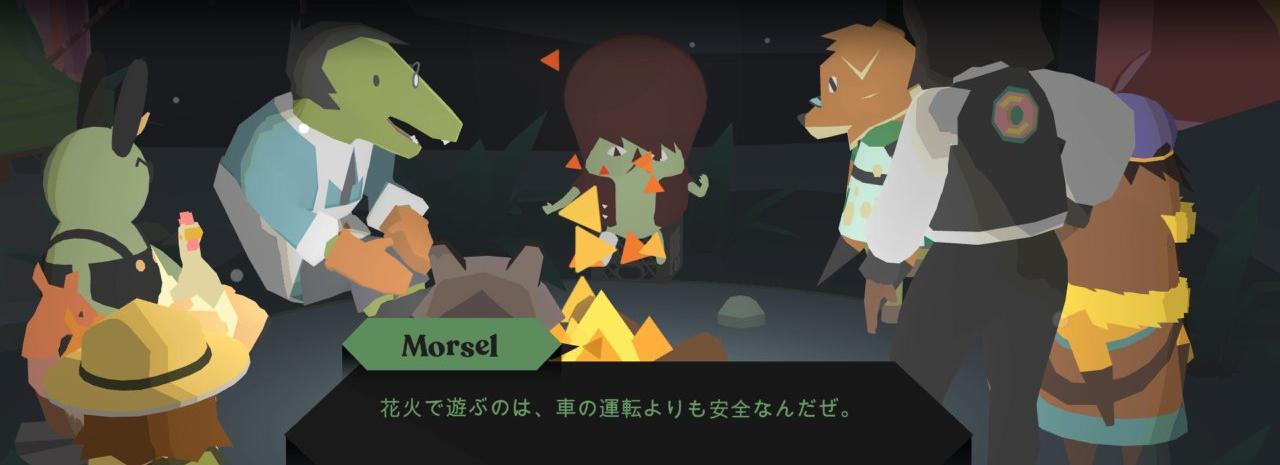
An added feature of dialogue and writing in games is that you will see a wide variety of writing styles and characteristics. You won’t just find spoken sentences in a polite, textbook manner, you will find casual conversations talking about many aspects of a central topic. Menus and instructions will be written in a completely separate grammatical style. Maps, signs and NPC directions will require you to understand longer and larger sequences of actions. This type of setting is how we simultaneously learnt our mother tongue and other topics growing up. From personal experience when we took English in primary and secondary school we would read novel, poems, recipes and pamphlets and compare how each one was written, so short of going out and buying Japanese field maps and a book of haikus, this variety can be found in RPG’s and other adventure games. Language is also made up of two massive factors, vocabulary and grammar. Even though the vocabulary may not be applicable to your day to day life, the way these unusual words are put together will match the same structure of “regular” sentences and being able to recognize grammar forms in all manner of writing styles is a useful skill to have.
In conclusion
My overall intention here is not to say to people that they have to play games or even to encourage them to broaden their horizons if they are resigned to one form of media. I only recommend that while you’re reading your book, or watching that film, don’t think about what you won’t use, think about what you can use. I would put forward the argument that anything that is written or spoken about in your target language is beneficial as long as you consistently consider what it can do for you.
This trail of thought very much leads into the way I personally teach Japanese. Whether it be related to games or not I work to find what someone wants to talk about and then establish the best route to get there. If this is of interest to you or anyone you know then by all means have a look at the Tutoring section or send me a message. I’ll help put together a personalized lesson plan to get your speaking to where you’d like it to be.
 Games & Kanji