
I think, being honest, I may have heard of the game Go but I definitely wasn’t familiar with the history, the culture or the fun that could be had playing it. Go in layman’s terms is a battle of tactics and territory between two foes of opposing colours using simple rules that are hard to master. Due to this, the comparisons to chess are thick and fast but you’ll quickly learn that the playstyle and method of winning is vastly different. The state of victory changes incredibly quickly from seemingly minor moves on a significantly larger board making for some satisfying, slow burn games. I wasn’t a fan of the game to start with but slogged through the initial stages through obligation and by the end of my long playthrough I became much more aware of the reasons this game has survived the ages.

Platforms and Language – 1/10
Hikaru no Go 3 is a Japanese exclusive released for Gamecube in 2003 and as such is difficult to get your hands on. You will need to have a hard copy of the game and a Japanese region locked Gamecube in order to play the console version. Personally I played this title on Dolphin emulator as you can find the ISOs for free. Failing that you can watch my playthrough with Longplay Archive here
The language settings cannot be changed in game due to the game being region locked meaning on both the Gamecube version and the emulator you will only be able to play in Japanese.
Usability – 5/10
Hikaru no Go 3 is very much centred around the game itself (to be expected right?) but you will find that it ties to the anime of the same name, bringing up a lot of opportunity to experience the language. The game has voice acting in certain cut scenes and throughout matches, likely due to collaborations with the existing voice actors and potentially a higher budget due to being a license game. This voice acting is clear and adds more methods of input for you to familiarise and immerse yourself. The text itself is easy to read and mostly comes in the form of push-to-proceed textboxes meaning you can read at your own pace. The catchphrases and reactions of your opponents are the only aspect that won’t give you an opportunity to review at your own leisure as they pop up whenever notable moves are made.
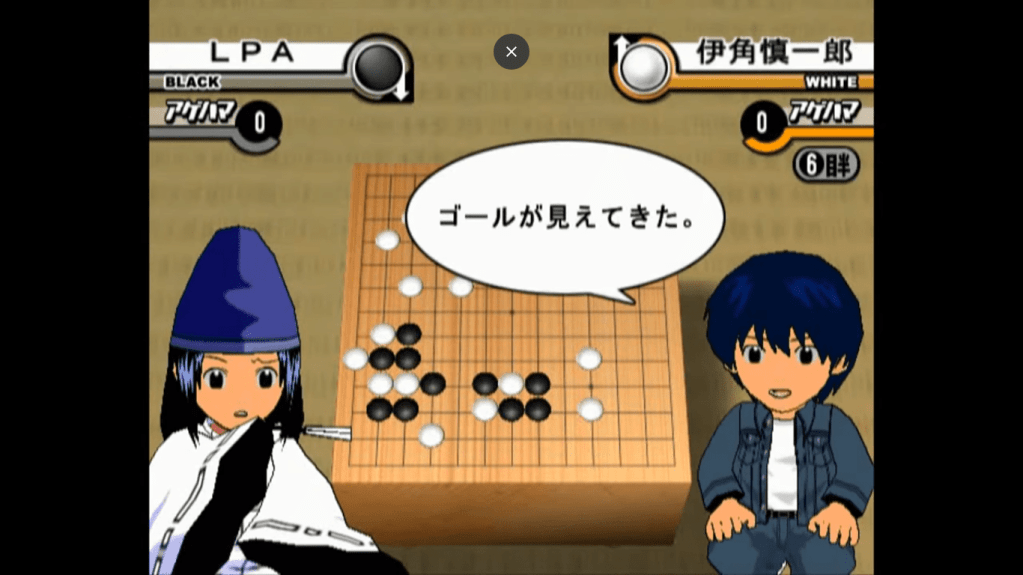
From start to finish the dialogue from the characters you interact with is well written. The overarching story of reuniting Hikaru and Fujiwara will keep you invested and eager to battle across the city and learning from each match makes you feel like your skills in multiple fields are improving. Each conversation before the match will cover the characters role in the story, their passions for Go and their affiliations as you would expect but you will also find more human and day-to-day vocabulary throughout. Certain characters really bounce off of each other as they are either friends, relatives or work colleagues so you can see their characteristics distinctly and how the dynamic affects the way they speak. Throughout the story you will see a variety of speech covering high and low formality and ranges of arrogance depending on how much your rival actually likes you. This allows you to practice textbook, conversational and casual grammar alongside many other aspects that you may not frequently see in textbooks such as sentences enders and dialects.
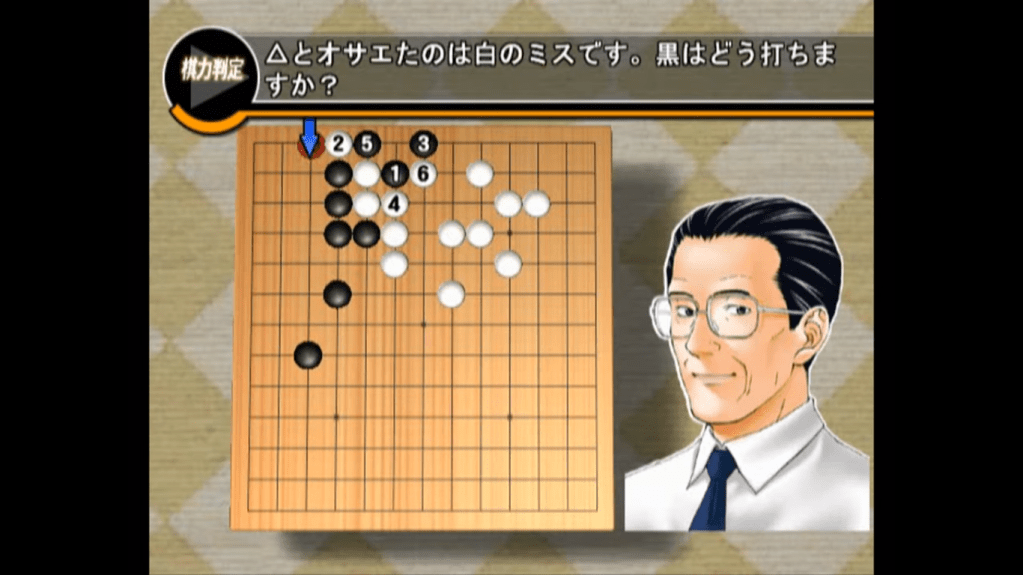
The game doesn’t feature a lot of change when it comes to game modes. You predominantly only have two ways to play, that being the main story and a local multiplayer, which doesn’t add much in the way of anything to read. However, throughout the story there are a few areas that can be visited that add more to your readability. Firstly your main hub is a space where you can discuss the basics of the game Go with Fujiwara, featuring tutorials and tidbits of certain shapes and methods that may prove effective. Fujiwara will also talk more about objectives and the story helping your understanding as you play and move around the map. Once you reach a certain point in the game you will also unlock the Go Challenge. Here you are given short, pre-set-up scenarios where you have to read and understand the instructions using both your Japanese and Go knowledge in order to complete the task at hand. These missions are brief but provide you with an opportunity to stop, think about the terminology and apply an action with short term gratification. I found this was the more memorable part of the game and if given the option would likely play through a few 100 scenarios to improve my understanding across the board.
A match in Go can take anywhere from 5 minutes to an hour so you can expect to have long periods of minimal text if you are facing a tough opponent. As stated before, your rivals will comment on particularly well placed moves but these come from a pool of repeated lines and aren’t anything to add to your study log in most cases. The games also require a lot of focus, territory can be gained and lost at the place of a stone so I wouldn’t recommend devoting attention to multi tasking. This being the case, your effective time using language while playing Hikaru no Go 3 will be short and I wouldn’t recommend using it to study intensely. I would however recommend looking into it as an exercise of culture and mental agility.
All in all, I thoroughly enjoyed going from a complete Go novice to having a foundation understanding of the rules in my time playing. Although the playthrough recording was short for this title in actuality the practice and failed matches amounted to about 40 to 50 hours of Go matches, both in game and on practice apps. I downloaded an app on my phone compatible with Japanese that allowed me to practice while commuting and had an extensive “how to play” section with all of the rules of Go broken down by paragraph. The biggest and best aspect of playing through this was not the language I learnt whilst playing (although that is of course why I do this) but more the fact that I was able to learn a new skill in a second language. This ties in with the whole mantra of using hobbies and other passions to learn and sculpt your language for usable and engaging conversations. See if you can follow along with our playthrough or play the game yourself and learn to play Go in Japanese.
 Games & Kanji