
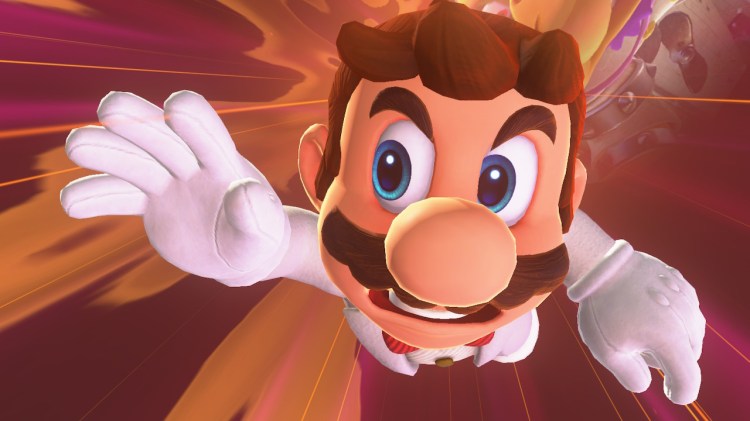
Mario Mario (Real name, look it up) is a Nintendo Icon, a Fighting heavyweight and a pioneer to all platformers. For the longest time Mario Galaxy sat proudly in my top 5 games of all time as it was a simple yet deep and original take on an already tried and tested formulae. Mario Odyssey saw this galactic leap and took it another step further. Your new pal Cappy takes the previous visual changes in headwear more literally and gives you the opportunity to mind control all manner of items around you letting you drive, spring, shoot and fly in ways previously unseen in the Mushroom Kingdom. Odyssey also brings a whole slew of new worlds, new enemies and most importantly in this case, new ways to acquire diverse and interesting language. From start to finish this was a grueling and absorbing task but I loved every minute and it triple jumped its way into it’s predecessors top 5 position, sorry Galaxy…
Platform and Languages – 5/10
Mario Odyssey is a Switch exclusive which is a limiting factor however it is a one of the must-have games for all switch owners. It can be picked up on the Switch store for about £50.00 depending on offers but physical copies can usually be found online or in any game retailers for less.
Odyssey comes with 13 language options including Japanese, Korean and Chinese. The language can be changed at any time via the options menu but will require you to exit and revert to the main menu whenever changed making quick back and forth changes less viable.
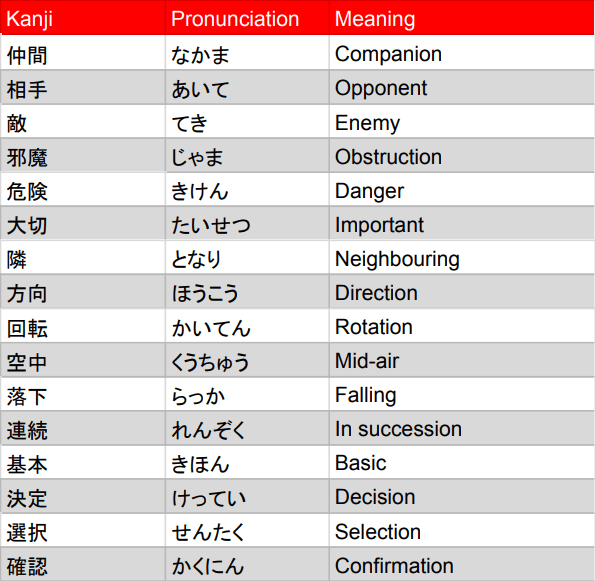
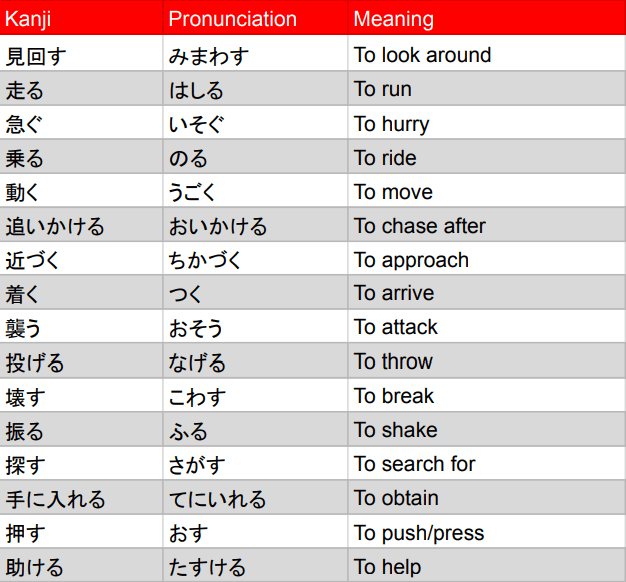
Glossary

Usability – 9/10
When people think “Mario” they may not often think “wordy”, however this entry into the series is full to the brim with conversational, instructional and descriptive language. While the silent protagonist still remains very much that way the quality and vibrancy of the written language throughout is surprisingly impressive. First of all, as with any Mario game, you can expect NPCs dotted around the world ready to give you objectives or describe your environment, but in Odyssey these NPCs are much more abundant and are the crux of a completion run. The cast of characters will often give you opportunities to add information to one of the many lists and as such speaking with everyone is definitely encouraged.

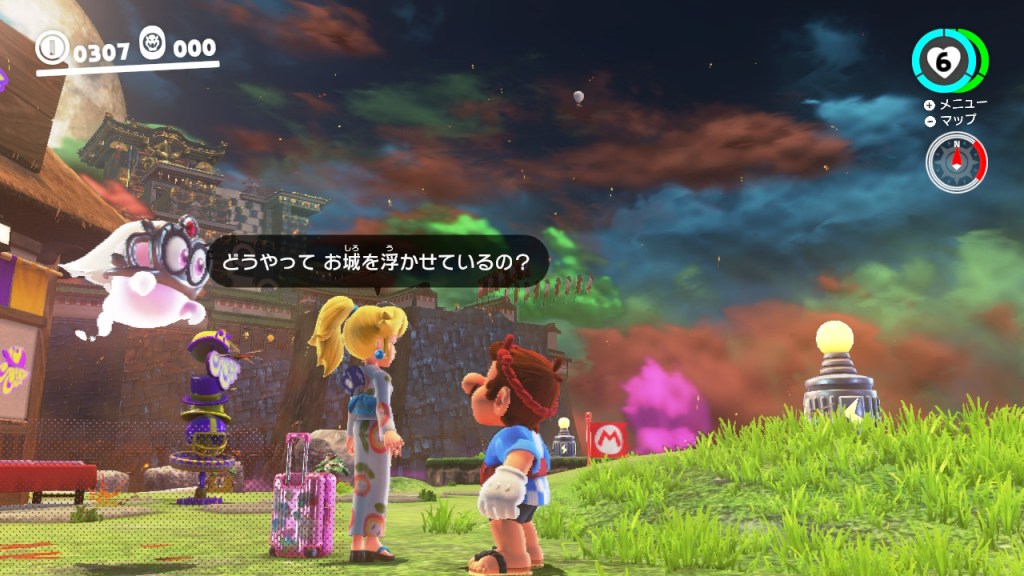
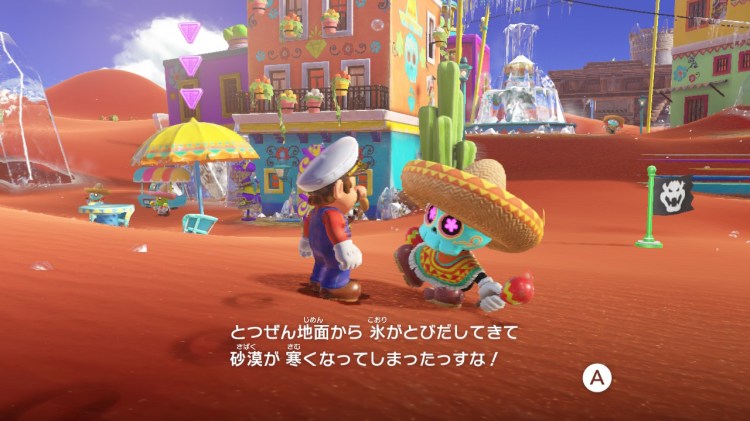
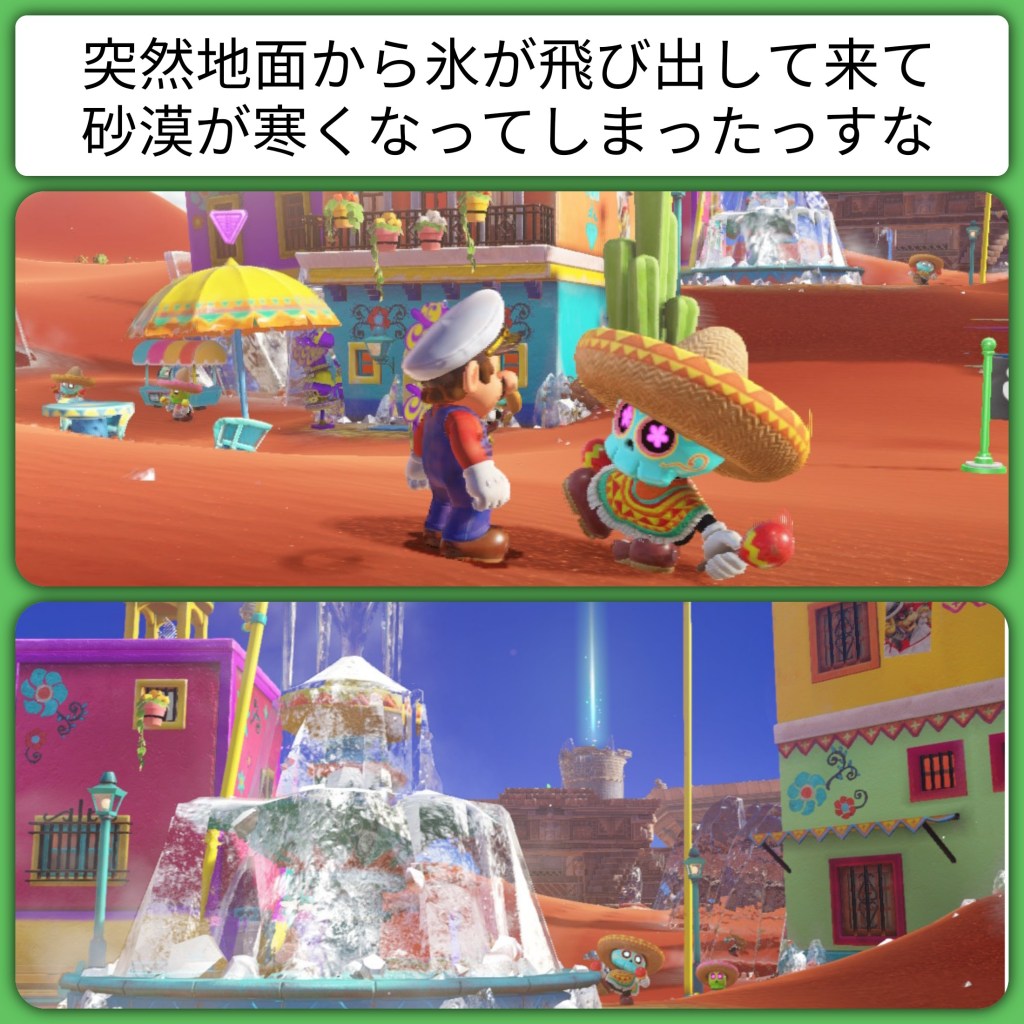
Each dialogue comes in one of 3 ways. Single lines that pop up when Mario is nearby, text boxes that require you to press a button to progress them and the all important cutscenes. The first of these options typically doesn’t require much investment of your time, often uses casual, colloquial language and grammar and rarely, if ever, affects your playthrough. This texts essentially just adds a bit of substance and character to your surroundings but when it comes to language acquisition, the more (content) the merrier. The second option stops Mario’s movement, instantly grabbing your attention, and comes with both a header for the character so you can identify who is talking and furigana above the kanji. This is the most prevalent format in which you will see and take in conversational language through the natural progression of the story and you’ll likely find that the clarity, brevity and assistance from the readings provided makes understanding the writing a breeze. The cutscenes towards the climax of each kingdom give you less freedom and control than the above dialogs but are typically a more exciting encounter. You aren’t able to stop and pause on any words or even replay the cutscenes but the nature of the game means you’ll likely be able to understand the majority anyway and you won’t have lost much in the way of understanding or learning if you missed a word or two here and there.
The biggest factor that affected my playthrough of Mario Odyssey was the extensive completion requirements. The previously mentioned lists make up large chunk of the written text throughout the game and can be experienced in a variety of ways. By using your capture abilities you can record each available controllable character and their instructions. This allows you to see verbs and actions specific to each type of movement or attack. You will find that the vast majority of these aren’t unique, however the actions are easily distinguishable with visual cues and the entries can be studied at your own volition through the menu.
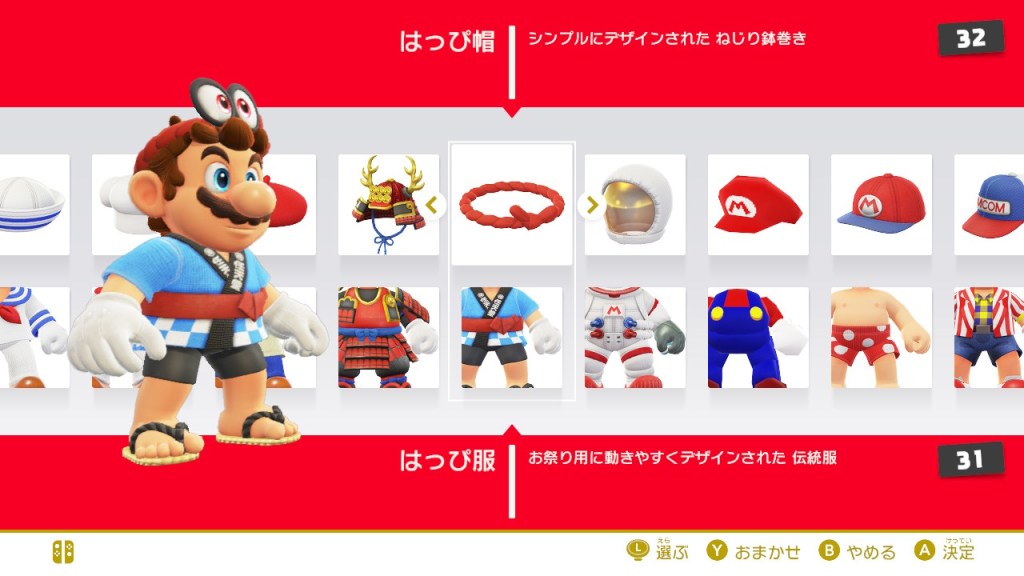
In each world you can find a specially themed Crazy Cap store where you can buy outfits for Mario (a new and very welcome feature) and souvenirs to decorate your Odyssey ship with. Both feature a brief description with the souvenirs boasting more freeform and advanced grammar. The change in locale also affects the topic of the language in these descriptions making for a good balance of kanji and vocabulary that other more objective based lists don’t offer all the while providing a common thread for related items.
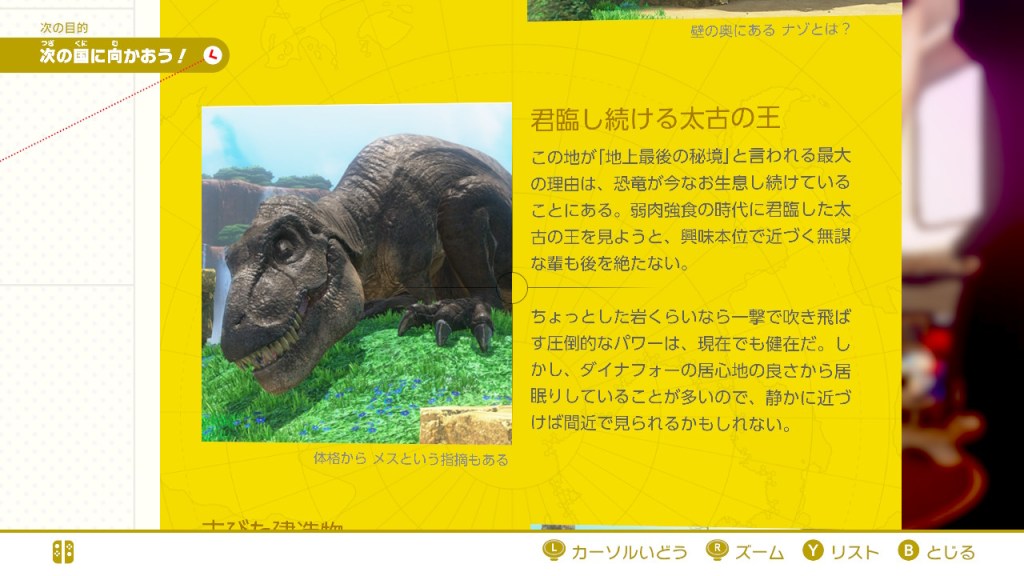
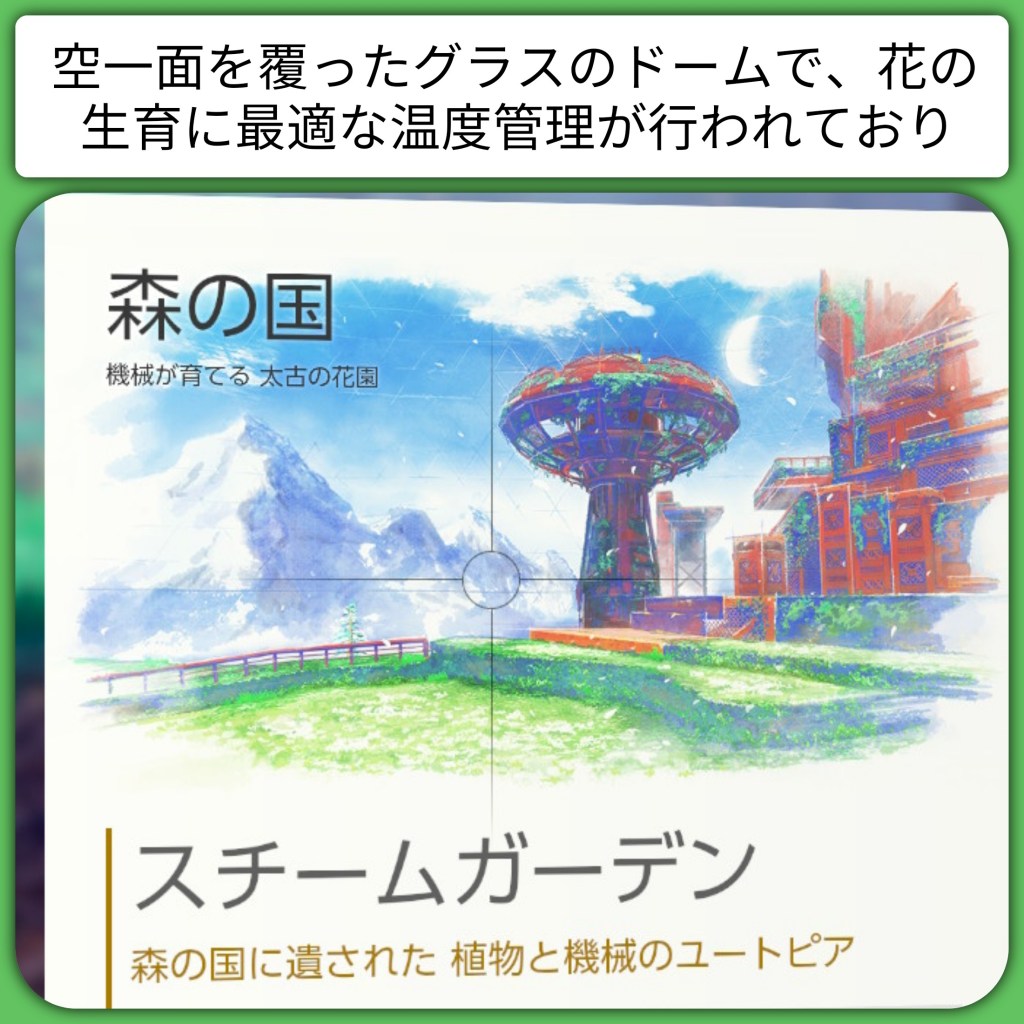
For me, the jewel in the crown was the Odyssey map. For each kingdom you have an instantly accessible map that shows your location, checkpoints and objectives. This gives vibes of tourism and exploration making for more excitement and investment into each of the story set pieces as you come across them. It also incentivises your ability to understand the text and you are often rewarded with hidden clues and secret moons. The text here is akin to a game guide (a personal favourite reference for me) but also allows you to read text in the style of historical, cultural and natural non-fiction even within this living, breathing fictional world. One notable difference with this text is that the furigana is more sparce and on a lot of cases absent entirely meaning you’ll need to step up your reading “A” game to follow it.
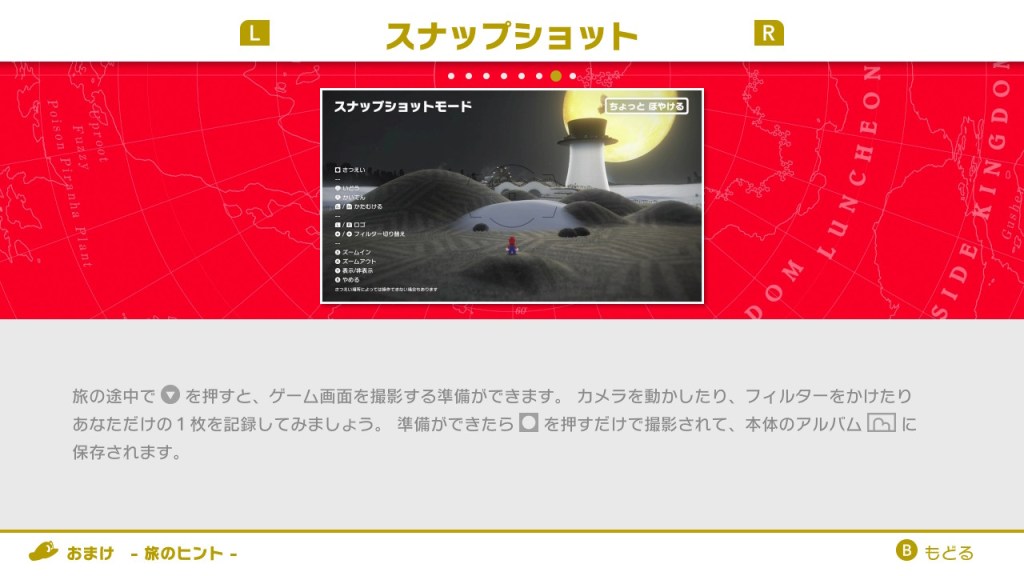
As if all of the above wasn’t enough, Odyssey also comes with a trend I’m seeing more and more in modern Nintendo titles, an in depth tutorial breakdown. This can easily be accessed at any point from the + menu and features a variety of tutorial styles including a controller map and basic actions. Some aspects of this, similarly to the capture list above, use simple verbs and singular nouns while the menu marked “Travel hints” shows a more guiding and instructive writing style. While I feel like this won’t be the most interesting aspect of Odyssey to read it is a hub for commonly used “gaming” words that can be utilized in any other titles you play.
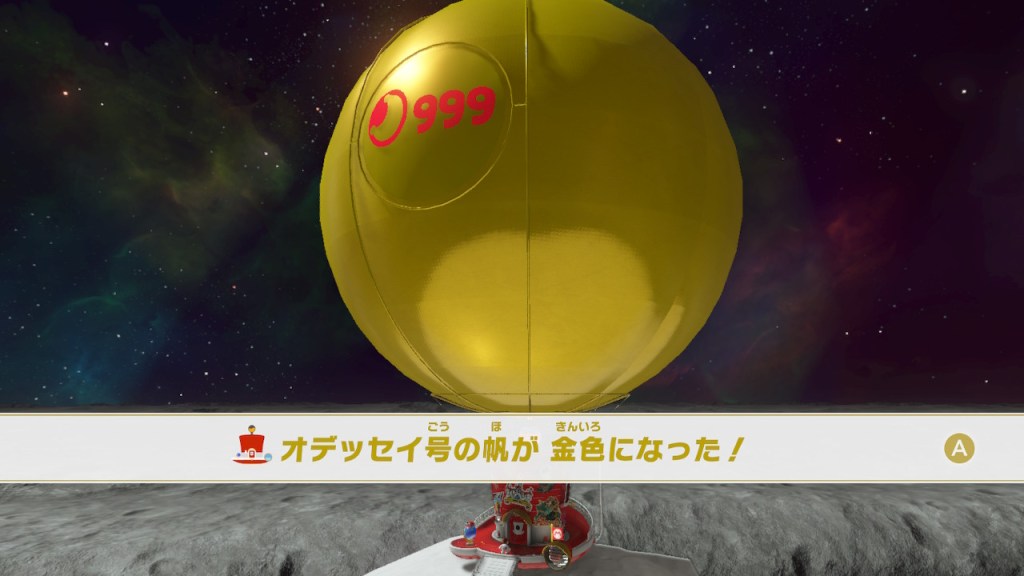
Overall Odyssey was a fantastic game to play. In the famous words of my brother when he 100% completed the game “…it’s alright”. After seeing his nonchalant review after such an accolade I knew I had to step up to the mark and get the golden sail too! The completionist nature of Odyssey is a blocker for learning at times as you can easily get by on muscle memory but I feel like the volume and quality of reading material more than makes up for this. Not only that but the length of the challenge definitely means you’ll pick up a lot of lingo, passively or otherwise. For what you may expect from a Mario title this more that meets my requirements for a game to recommend. If you have a Switch, it would be a sin not to own this title.
Challenges and Methods – 7/10
Memorizing the merchandise

As mentioned above, each Kingdom you can visit features a selection of regional outfits and souvenirs as well as an open pool of Nintendo’s historical and randomly themed suits. All in all there are well over 150 items with their own unique descriptions. Take the time to learn from each entry and memorize the vocabulary and, if possible, see if you can read from start to finish without faltering on any words or readings.
Tourist information
In true travel fashion your map will be your best friend. For every kingdom the notable hotspots are highlighted with an image, a snappy title and a breakdown of what you can expect to find. My preferred method between Moon-grinding sessions was to write and re-write the entries in order to practice my kanji writing and learn new vocab.

Previous Posts
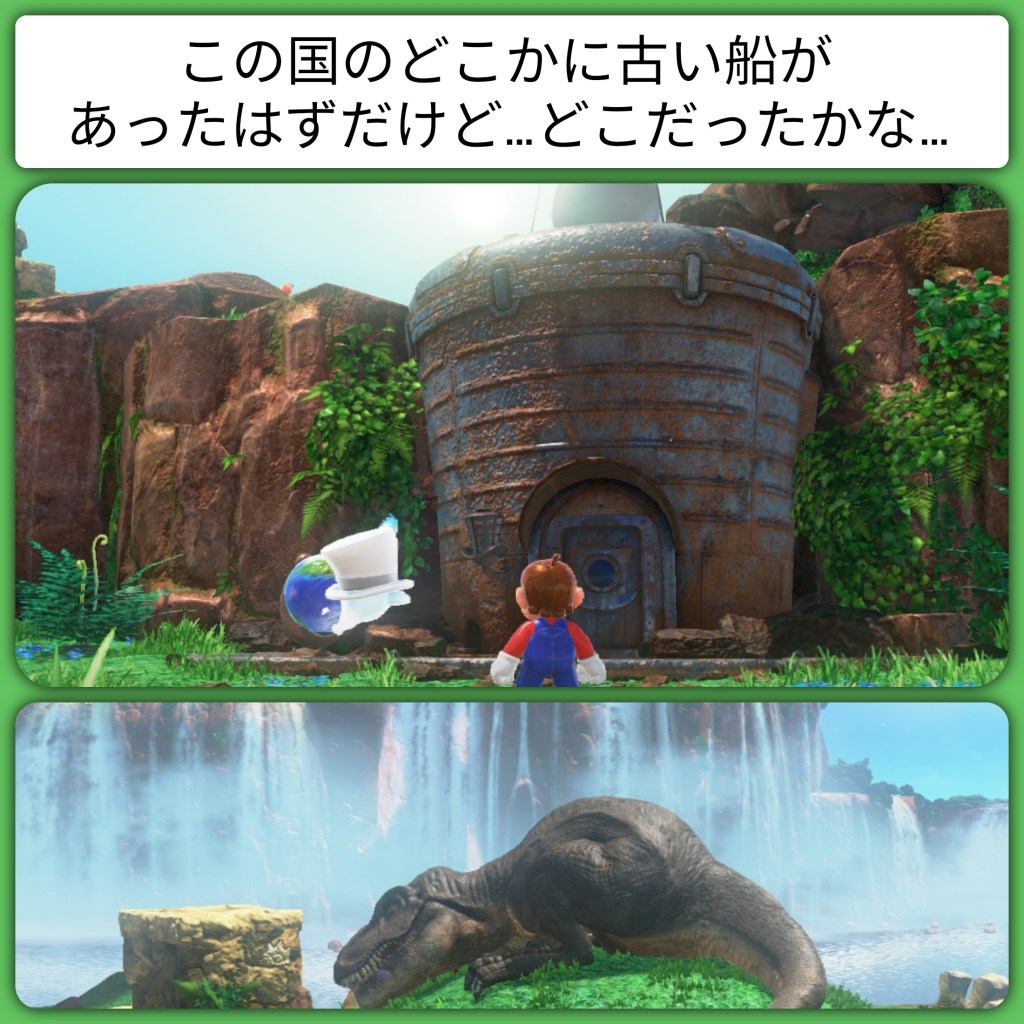
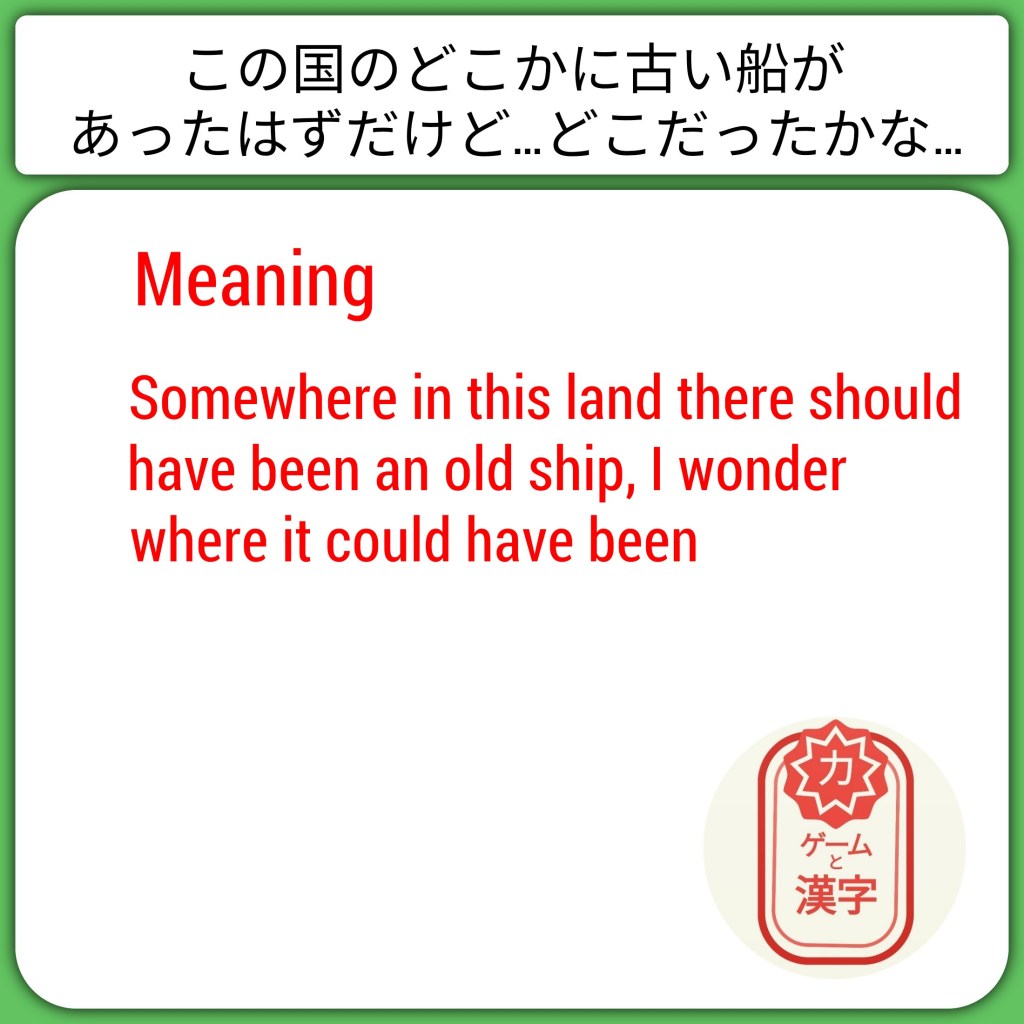
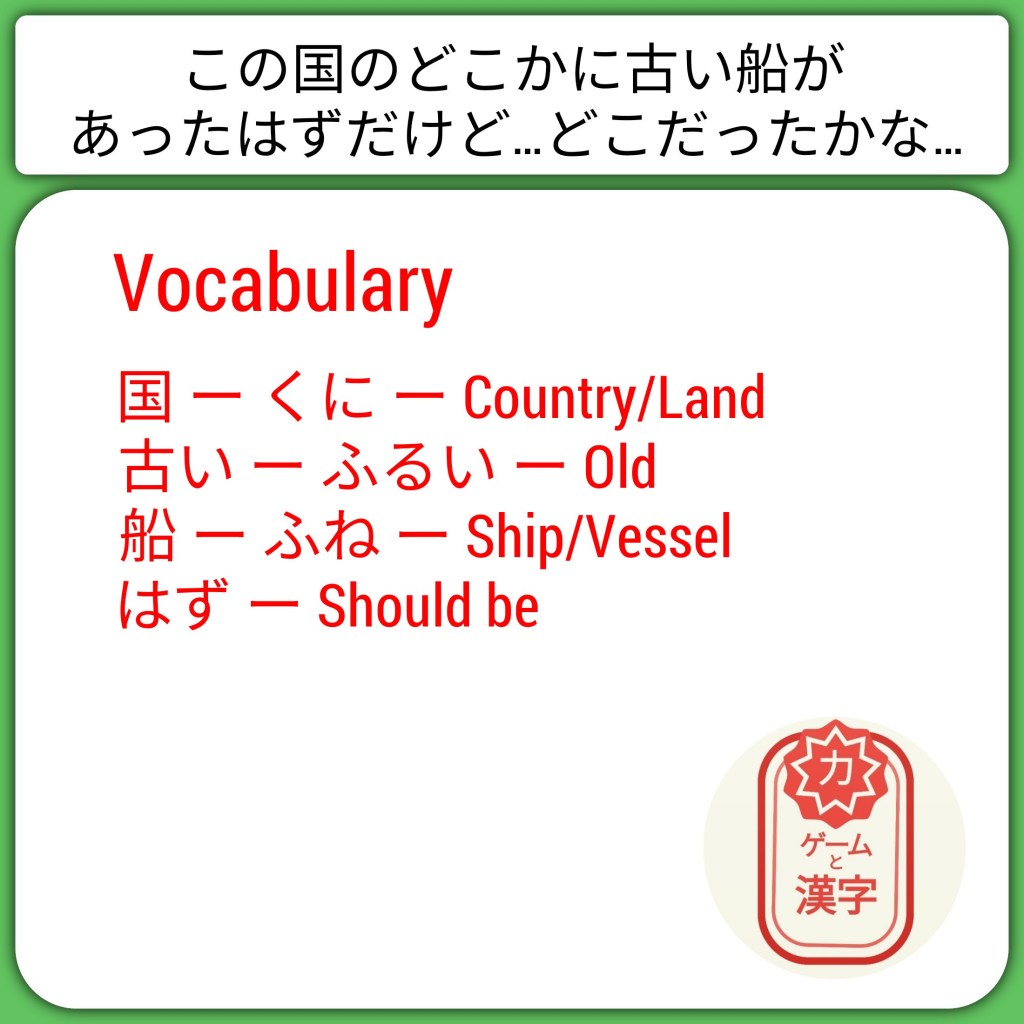


 Games & Kanji