
Many of us dream of quitting our 9 to 5 and upping sticks to the country to live a peaceful and stress free life. Stardew Valley is one of the more famous slice-of-life games that embodies this goal perfectly, and while it definitely comes with its own stresses, you can sink countless in-game days and years befriending the towns folk, raising a variety of farm animals and building your forever home. The possibilities for activities and money making schemes in Stardew valley are pretty vast meaning you can become rich beyond measure through a method of your choosing and pick up all the vocabulary that comes with it along the way. Many of you may already have played or owned Stardew valley at one point or another so there’s no reason not to give it another go in your target language. Happy farming!
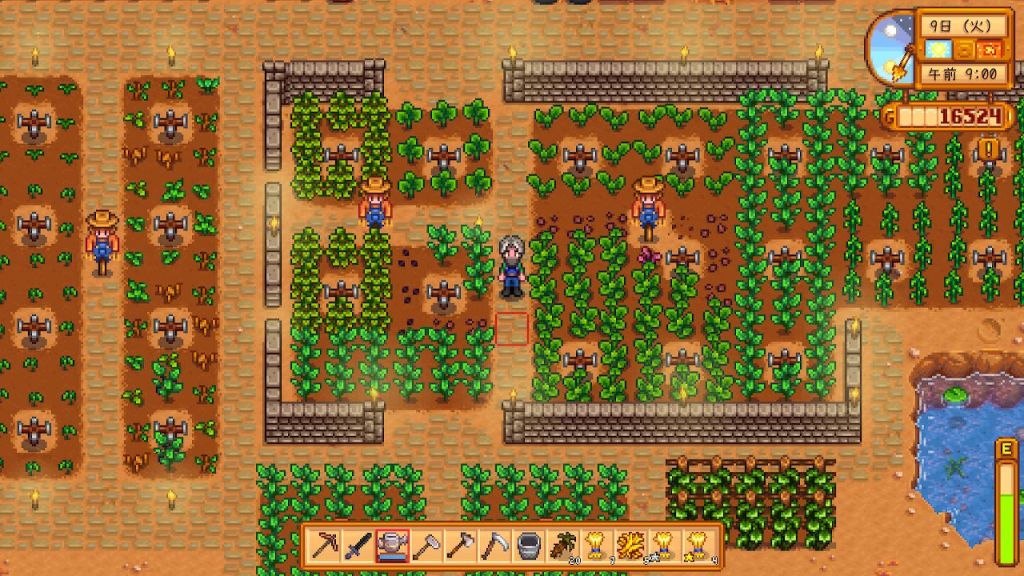
Platforms and Language – 9/10
Stardew Valley is available on every console you’re likely to have nowadays, from PS4 and 5, Xbox and Switch to mobile and PC. Depending on the platform, buying Stardew can range from £5 to £20 which is more than worth it for the sheer volume of content.
You have a plethora of languages to choose from which can easily be set from the initial main menu. Unfortunately you can’t change the language whilst in-game which typically wouldn’t be too much fuss however, due to the mechanics of Stardew, you would need to start a your day from the beginning whenever you return to the menu meaning you can’t easily switch back and forth to confirm sentences or meanings.
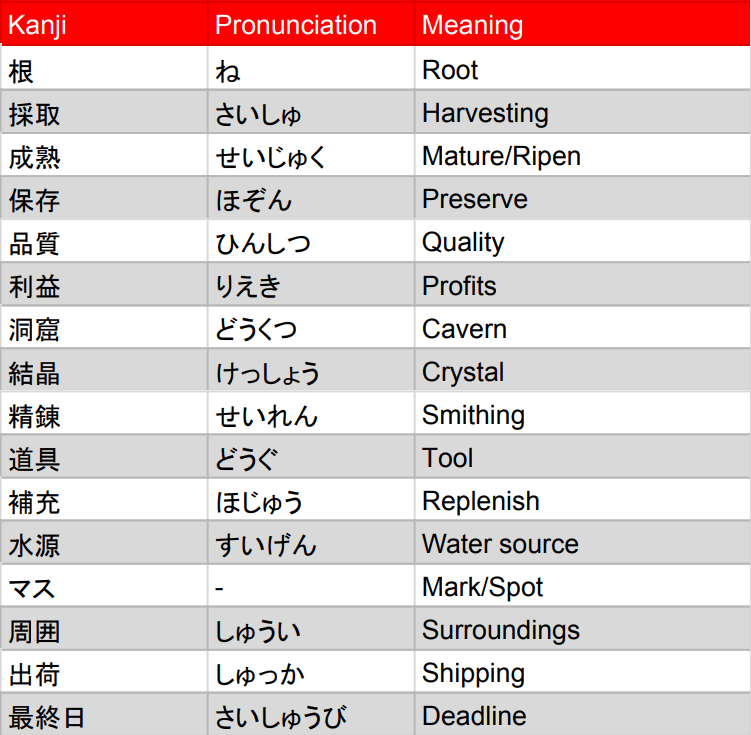
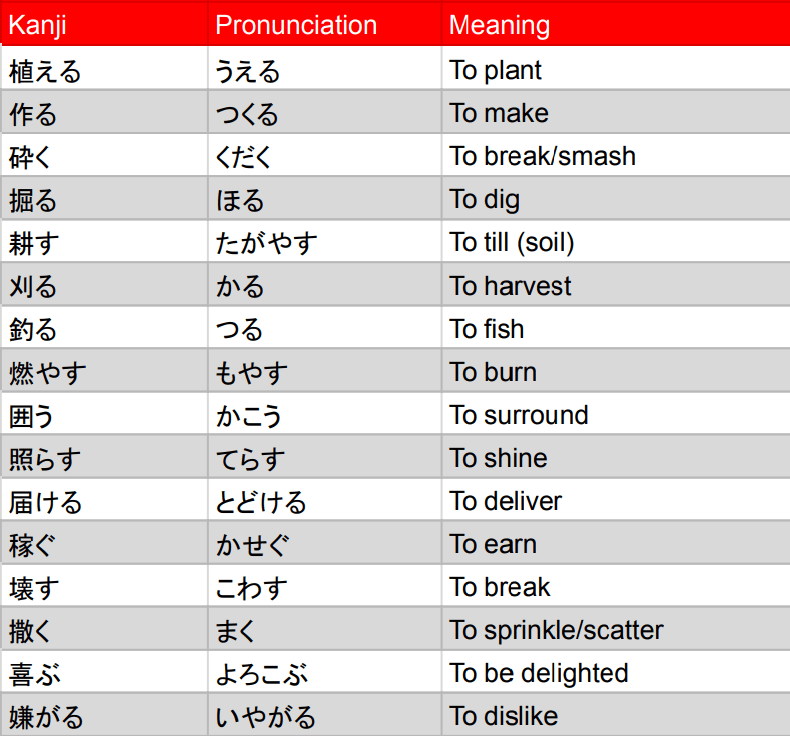
Glossary

Usability – 6.5
Stardew Valley is set in a small and homely town but it is filled to the brim with readable content. From the start of the game your initial ventures will likely involve back and forth trips from Pierre’s shop and prepping and maintaining your new farm, all of which can seem very daunting from the get go. The first and most important thing to mention for all of you avid min-maxers is that Stardew works in a day to day timeframe. 10 minutes at a time will tick away from the moment you wake up until you inevitably fall down and pass out from exhaustion in the late hours of the morning. The days are worryingly short to start with as it can easily take you an hour of in-game time to get from your farm to the nearest NPC home or even the shop. There is respite however, if you interact with an NPC or do anything involving a menu then the time will stop while the pop-up is active. This is infinitely useful and a bit of stress relief for those of you that don’t like being rushed while you read.
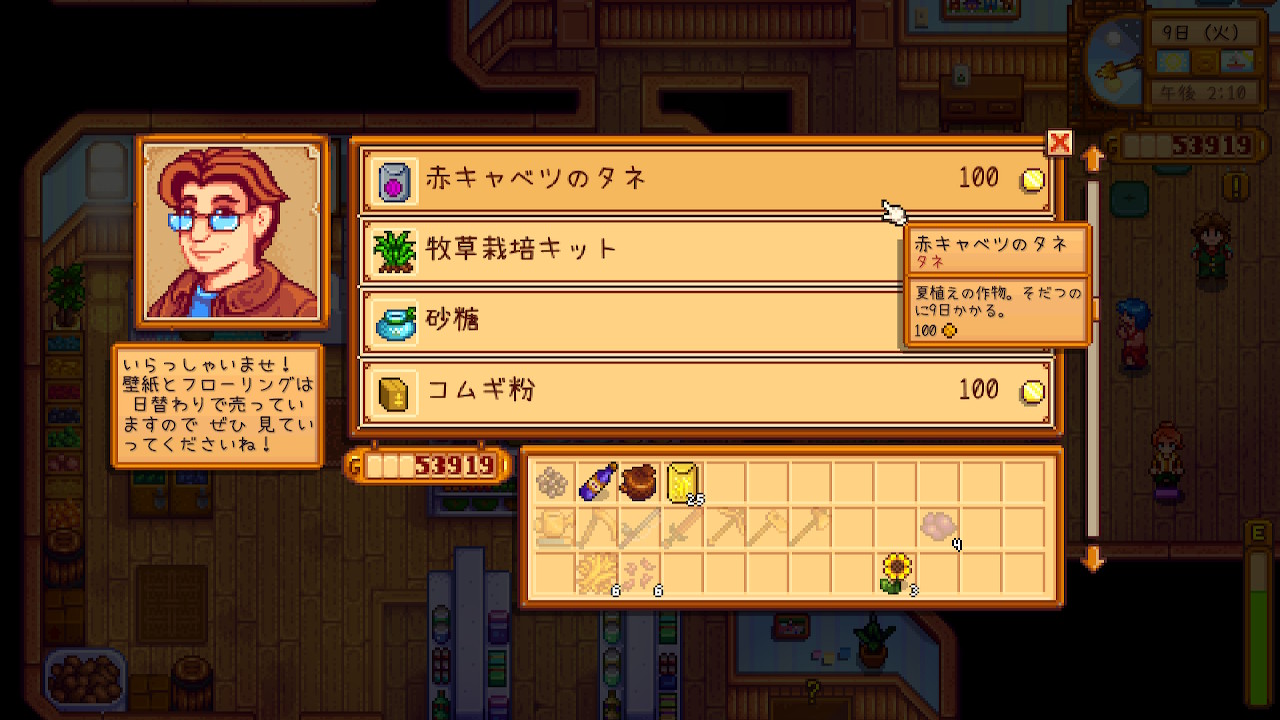
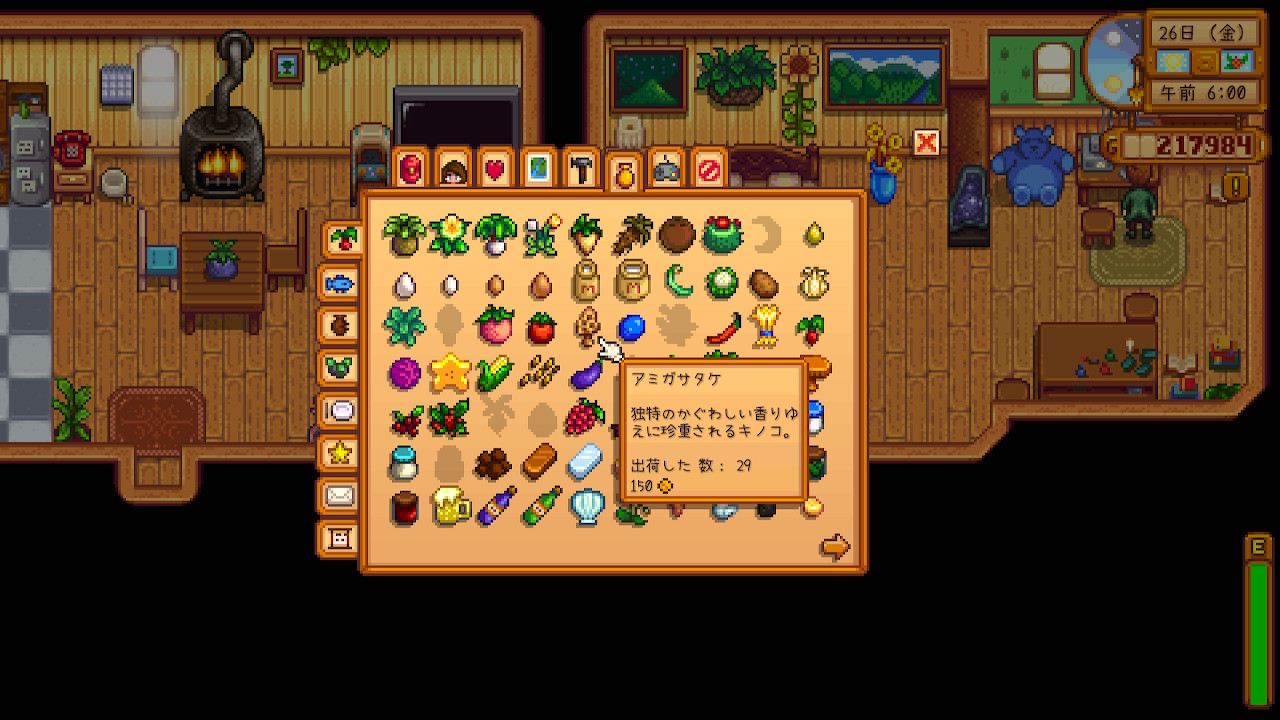
Each and every crop or product that you can obtain comes with its own name and description as you would expect in a game of this style however this by no means diminishes its usefulness. At any point in your activities you can open your menu and read through a selection of sentences in order to expand your vocabulary. These descriptions are typically short enough to be easy to digest but not too short as to be mundane. Due to the nature of Stardew the items are also easily recognisable within your day to day life therefore further increasing the benefit to learning them. Depending on which activity you most enjoy spending your time on you can also open up a wide array of categories of language such as food and drink, ores, fish, recipes and more. By following a common trend you will find more repeated words allowing you to strengthen language surrounding your characters hobbies. Again, if you’re lucky you have similar hobbies meaning you can expand this new lingo into cooking, crafting or fishing outside the screen.
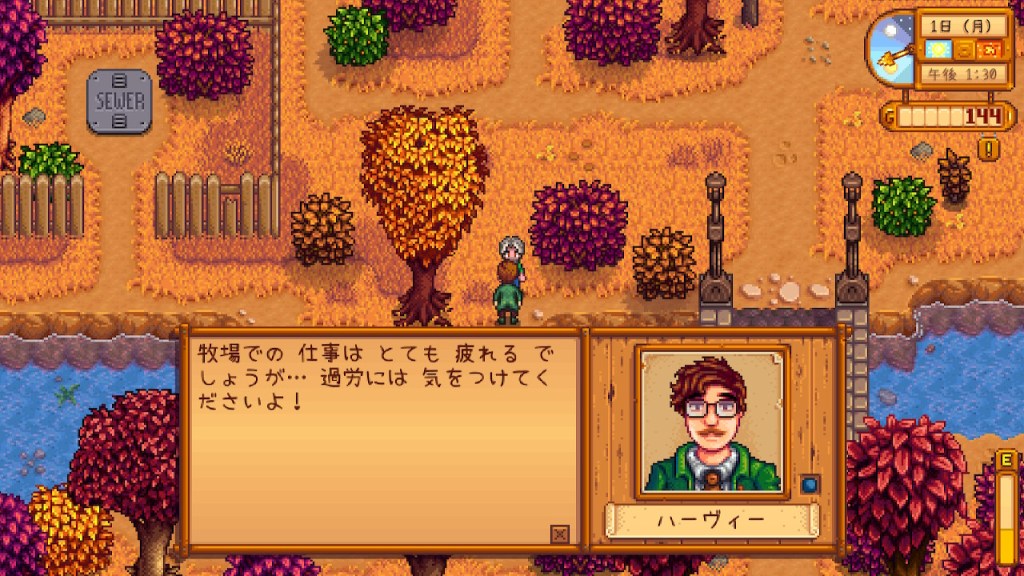
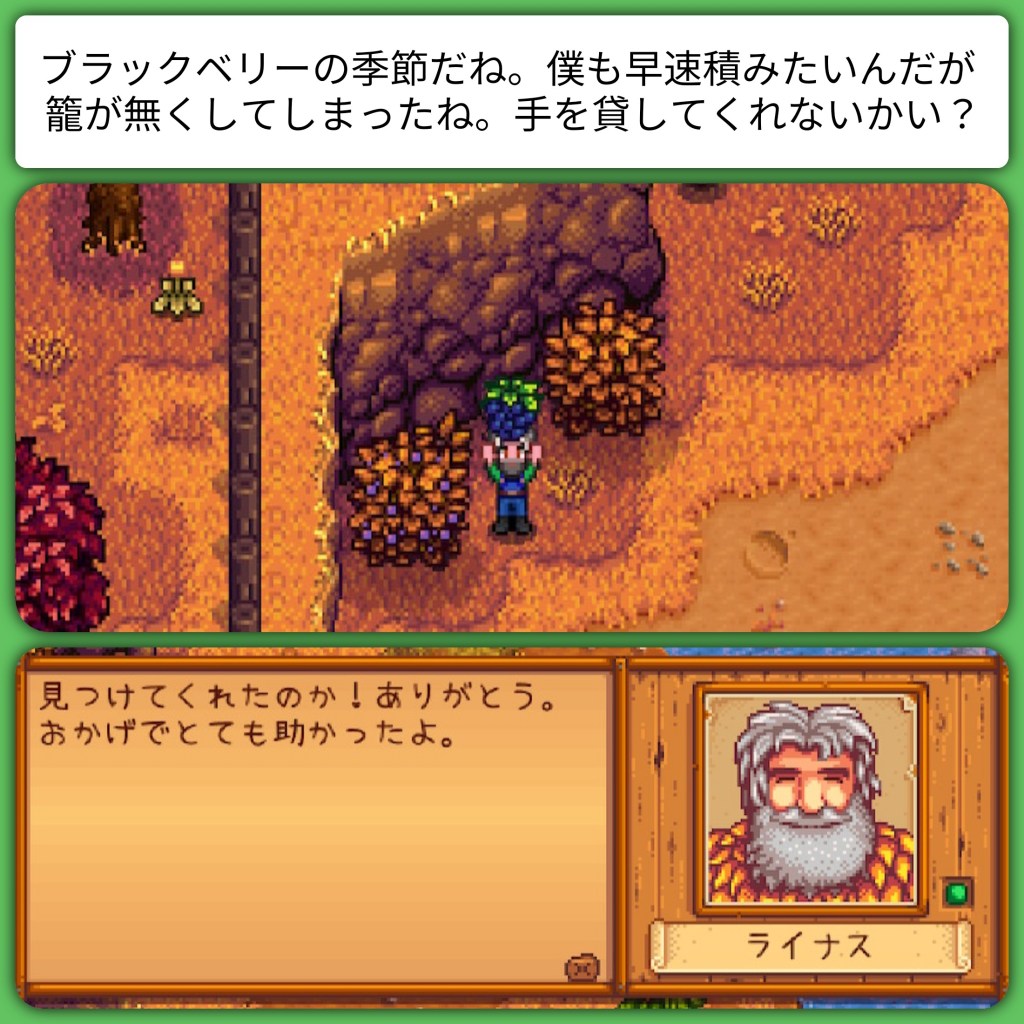
The characters in Stardew are likeable (for the most part) and feature heavily all throughout the narrative of the game. Each one also has their own personality trait that can either tie in with the above mentioned products or can unlock a new wave of vocabulary. One such fine example is befriending Elliot. He’s a linguist and speaks more eloquently than most of the other townsfolk and as such his quest line and phrases carry different ways of speaking. On a daily basis you can speak with each townsperson twice to see a brief greeting or musings from them and you can also give them gifts which, depending on your research into they’re likes, can illicit a more emotive message of delight or disgust. If you’re interested in supplementary reading check out the Stardew wiki in Japanese here or head directly to the residents page here for gift specific tips.
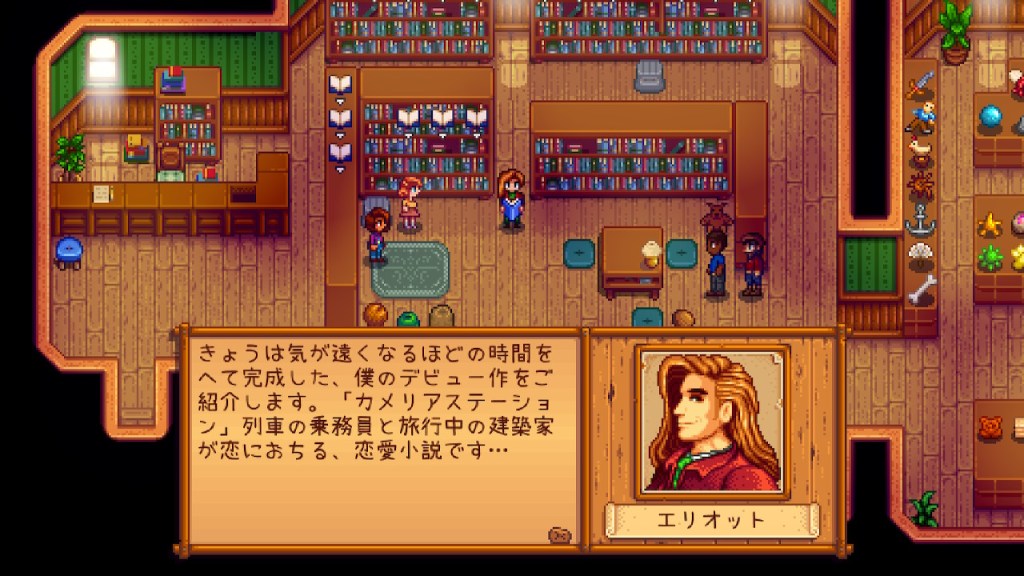


The NPC events, as well as the story that progresses over time, are much more conversational. It’s important in a lot of cases to read the detail of each scenario and understand the quests or multiple choice actions that will affect how your friendship with that character will progress. This adds incentive to making sure you know exactly what you are doing and also gets you more invested in the lives of the characters which arguably hold the most weight in terms of readability. If you play your cards right you can even develop a deeper relationship and start your own family, with many perks such as free food, farming chores and someone to talk to who you won’t have to chase through the town square.
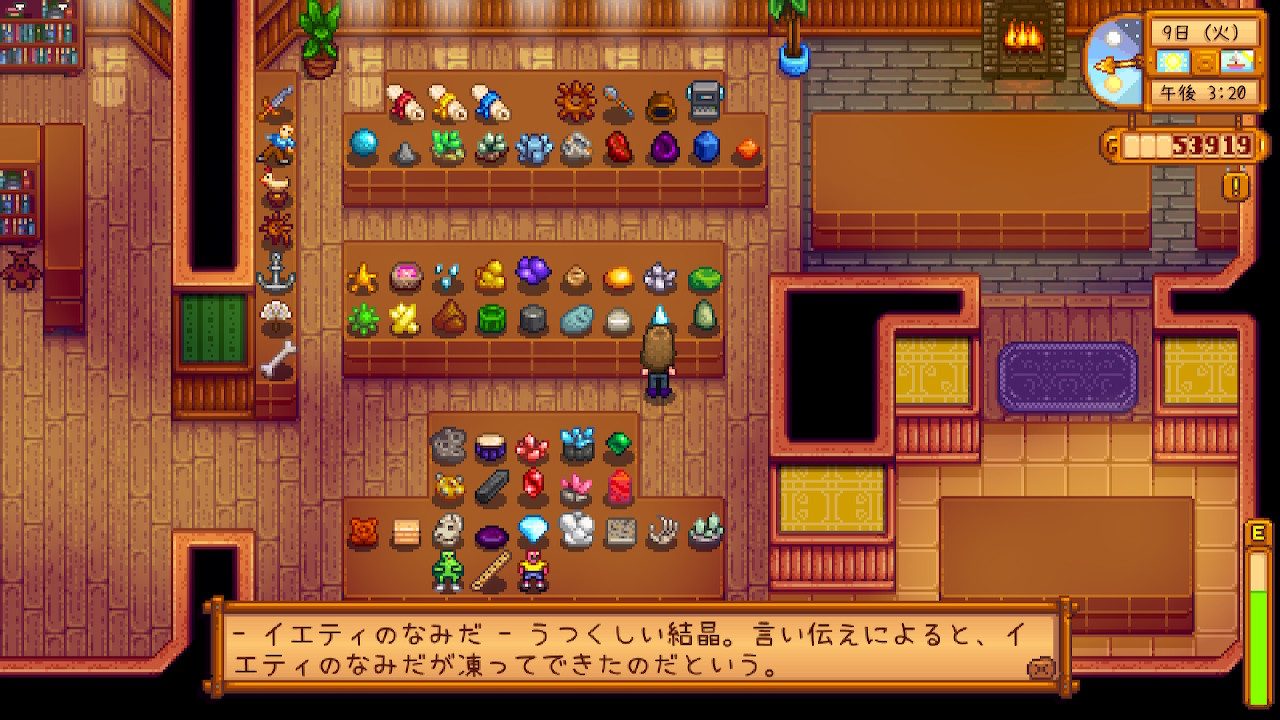
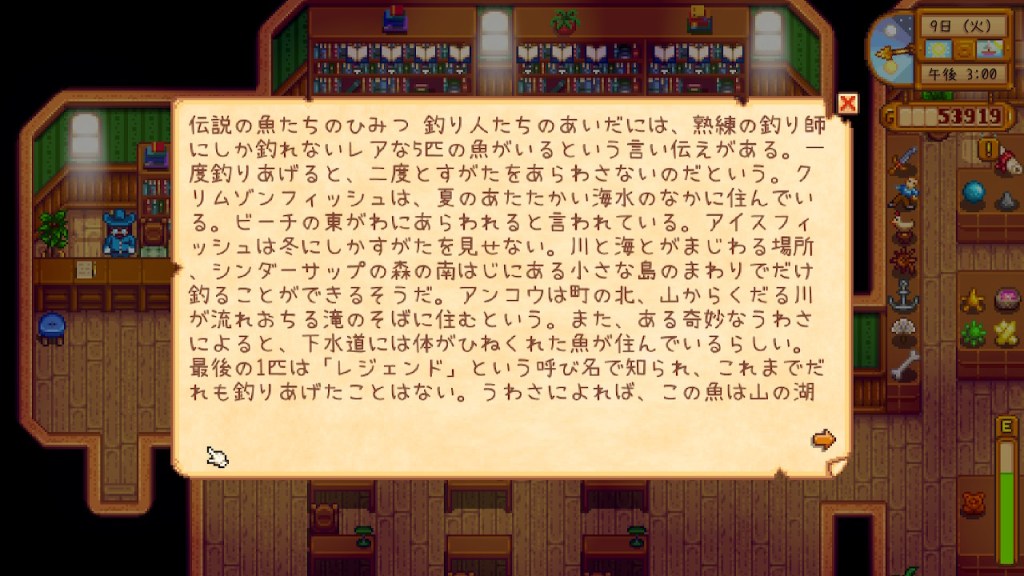
Aside from the produce and conversations there are many miscellaneous items to read. Most mornings you will received letters from your fellow townsfolk and family back home. You’ll also be encouraged to flick on the TV in the mornings and “read” the TV shows to get your daily weather reports and fortune readings so you can plan your day effectively. Throughout the town you’ll find workplaces of some of the residents but one building in particular that resonates with me is the museum. Here you can donate all manner of oddities you find in the mines and “worm spots” in exchange for history book entries. These are the most wordy aspect of Stardew, often boasting a full page or more compared to the usual text boxes which typically don’t have more than 6 to 10 lines.
Stardew Valley is a fantastic game to study with on paper however there are a few bug bears that I personally feel detract from the efficacy of the game. Time is the biggest crux as, unless you are in a menu or in conversation, it will tick away at an alarming rate. This means that if you haven’t planned effectively you may run out of time and miss some important objectives. Even if you do plan well ahead, you’ll be under a consistent pressure to get everything done in an efficient manner. This can be more than just a little distracting and can pull you out of an immersive mood as you’ll need firm focus and a good memory to get everything done. One solution to this, which may not be a positive for some players, was to have an invested study/reading day and choose not to sleep when the time comes, however even this is hard to avoid temptation if something particularly lucky happens. All it takes is one lucky harvest or a good trip to the mines to change you mind on whether you’d want to reset or not. However if you do decide to play in this way it allows you to spend a day learning without detriment to your progress or wasted time.
Another downside is that the tasks of farm life are monotonous and habitual. It is easy, especially with the above mentioned time constraints, to develop strong muscle memory in order to complete more and more chores over time. As your abilities as a farmer increase your quick reading ability may also improve but it is less likely that you will bolster new language if you skim read or ignore certain text. The last notable point is the language clarity and kanji level. Even though Stardew has some very mature themes the writing style would suggest that Curious Ape’s target audience was younger. N4 and N3 words you would expect to be written in kanji in other titles often show in hiragana which can actually lead to some reading difficulty at times. The font is also quite unique and can be especially small on the Mobile and Nintendo Switch versions. If you are familiar with the kanji then this can be navigated however searching up finer radicals for kanji you may not know can prove troublesome.
Stardew Valley’s positives far outweigh the negatives. The menus are clean, the content is usable both in and out of games, the gameplay is vibrant and satisfying and you can easily pick it up regardless of the consoles you own. I would recommend it to any lifestyle or sim lovers in a heartbeat however if you are very tactical or meticulous with your gaming then Stardew may be more of a curse than a blessing. While I love this game I personally found it hard to detach from perfectionism and struggled to be productive unless I purposefully kept myself within one of the many useful menus.
Challenges and Methods – 6/10
The museum of many wonders

Stardew valley is full of artefacts, some of which are probably not what you’d keep if you found them yourself (who keeps a rusty spoon, honestly). While the number of items with good descriptions is vast in this game it’s often better to have a more concise and interesting collective of items. As such, the assortment of oddities you can add to the museum make for some interesting reading. You can also pace yourself throughout your playthrough based on how many items you’ve found from the roster.
The socialite
Depending on how you’d like to play, socializing can be a bit of a rarity. However, the more you speak with your fellow townsfolk the more immersive and beneficial their language becomes. More than the rest of the game, discussions with your peers will benefit your spoken abilities. Take the time to read, or even write out, their text boxes and consider how you would reply in each scenario. The variety of townsfolk you develop your relationship with will certainly strengthen your speaking vocabulary if you’re diligent.

Previous Posts




 Games & Kanji