
*Trigger warning: Sensitive topics*
Doki Doki Literature club falls into an interesting genre of games known as visual novels. Aptly fitting as this title is more like a book than a game but that by no means detracts from the emotions and thrill that you’d get from a typical adventure. The very nature of Doki Doki is exactly what put me off playing it in the first place. At a glance you may consider it to be a sickly sweet, gumdrops-and-roses, slightly one dimensional book-fest but, as those familiar with the games premise may know, it has a severely dark undertone and an unsettling but gripping finale. I’m glad that I gave this game a shot and quelled any misconceptions I had because there were genuinely moments where I wanted to throw my TV out the window. Happy reading…
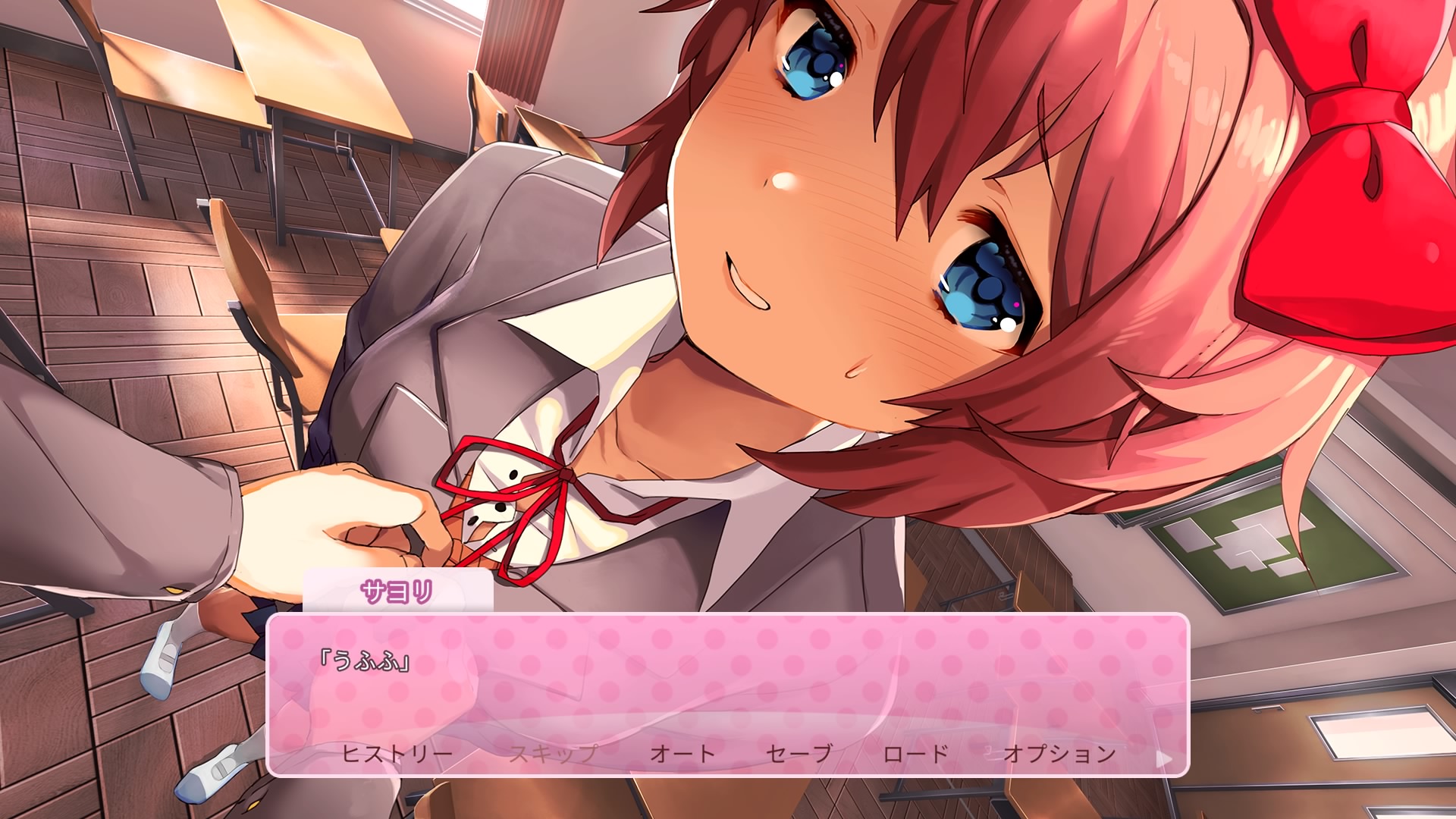
Platform and Languages – 7/10
Doki Doki is available on PS4, PS5, Xbox One, One S, PC and Switch for anywhere between £5 and £15 depending on sales at the time.
The language options are varied and easy to change on a whim from the settings menu at any time. With just a few button presses the menu and text boxes you are on can be changed back and forth as many times as you need with minimal delay.
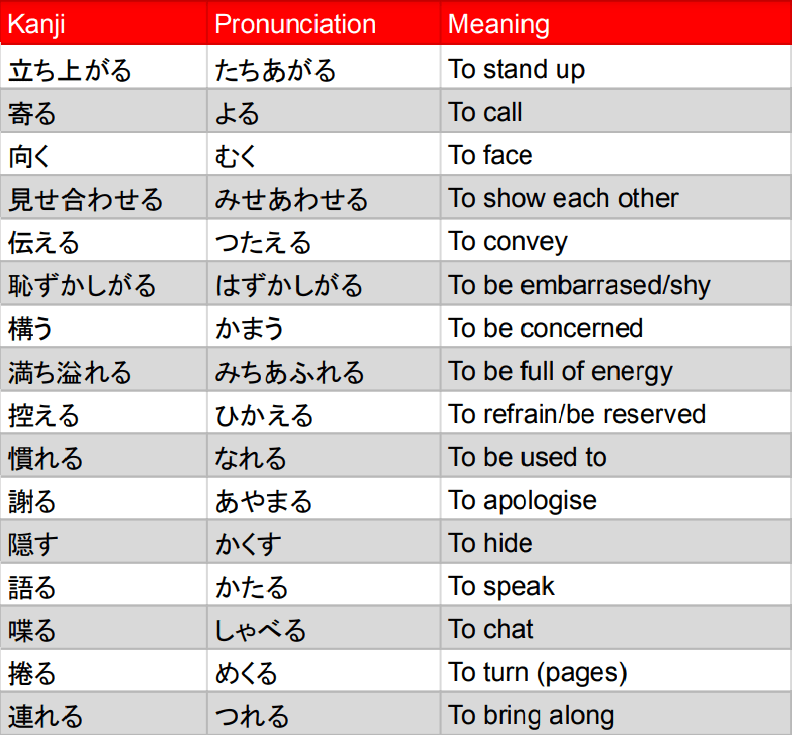
Glossary


Usability – 9/10
Being a visual novel Doki Doki is, as you would imagine, very word heavy. For those of you out there they may not typically be into reading, either physically or digitally, this may seem like it wouldn’t be for you but I’m certain you could find more enjoyment and benefit than you’d expect. Doki Doki is 99% story and 1% player dependant actions. Being frank, the changes to the story are mostly minimal anyway, however your input has another brilliant effect in that it makes you focus more on what the hell is happening all while adding to your sheer discomfort as the chaos unfolds. The early stages of the game were a bit of a slog to get through. I was already aware of the later twists and turns but until “things” started to happen, getting invested was quite difficult without any actual gameplay. I was noticeably better able to practice my reading towards the final chapters simply due to me wanting to understand every line of dialogue, much to my displeasure.
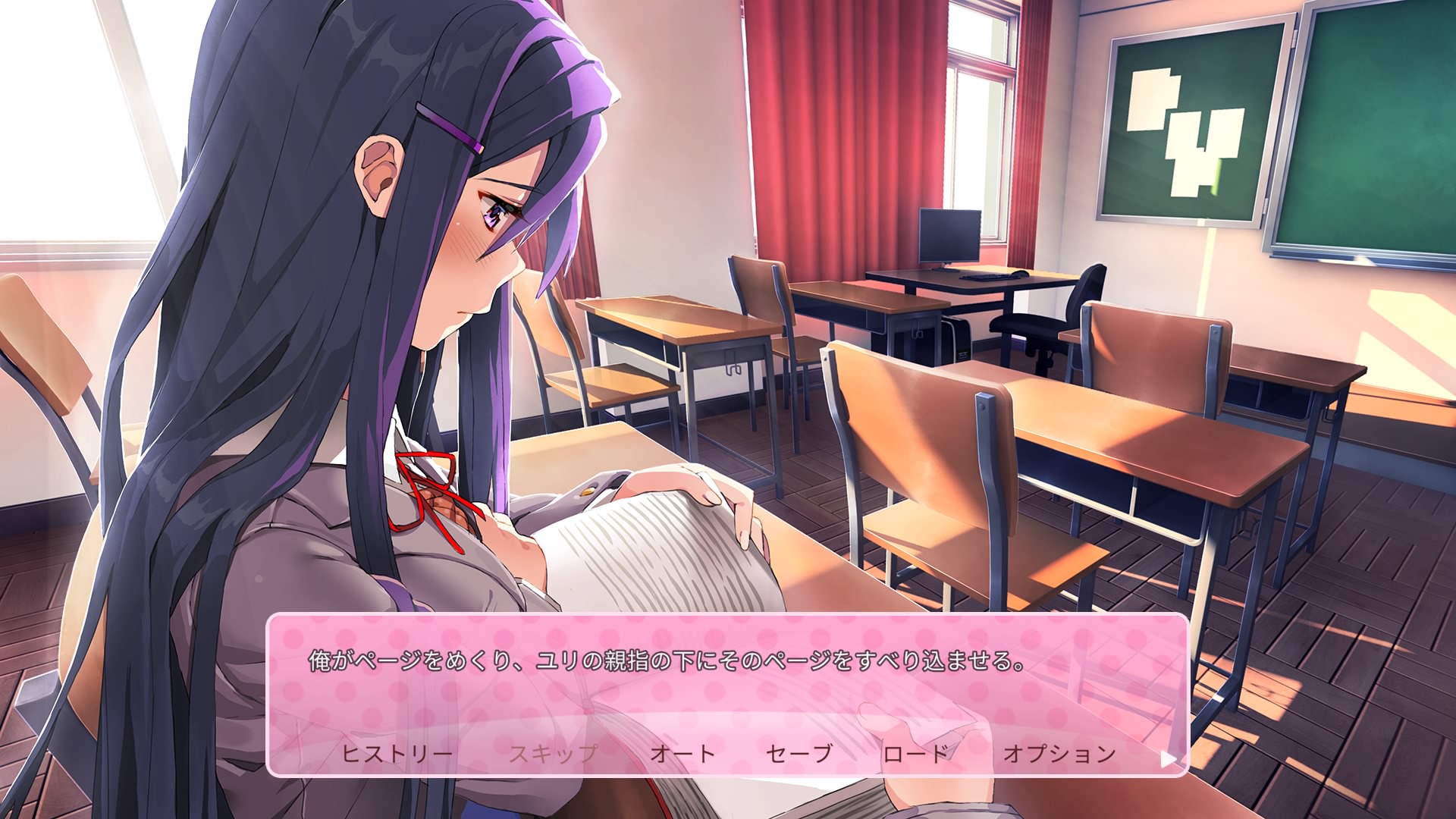
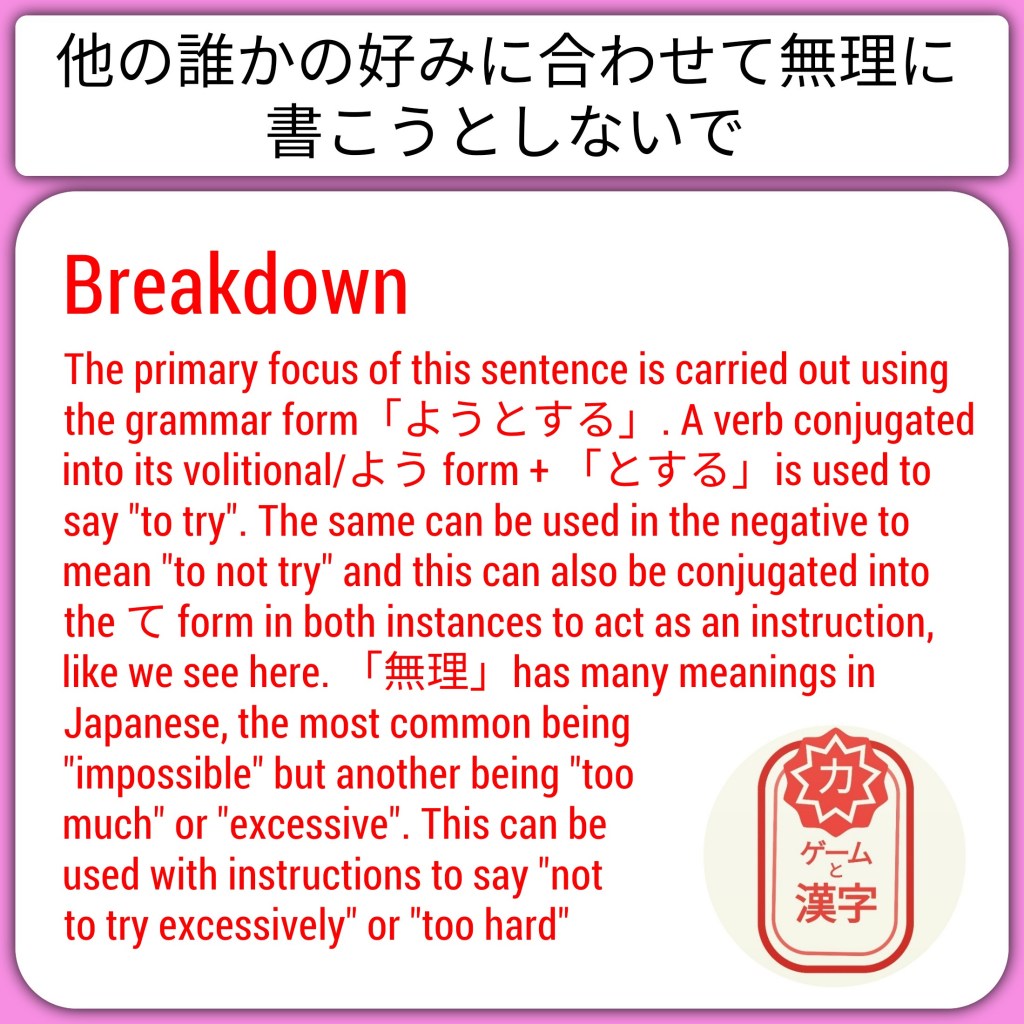
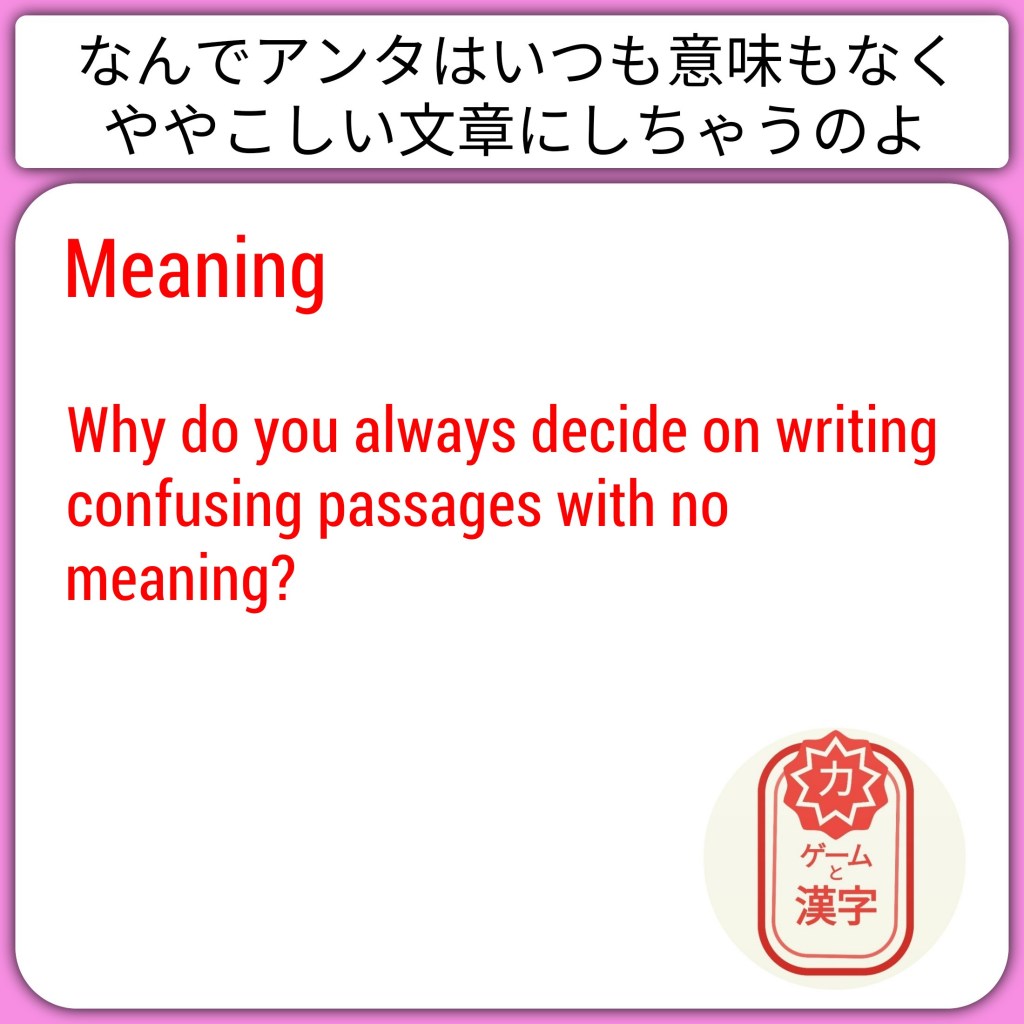
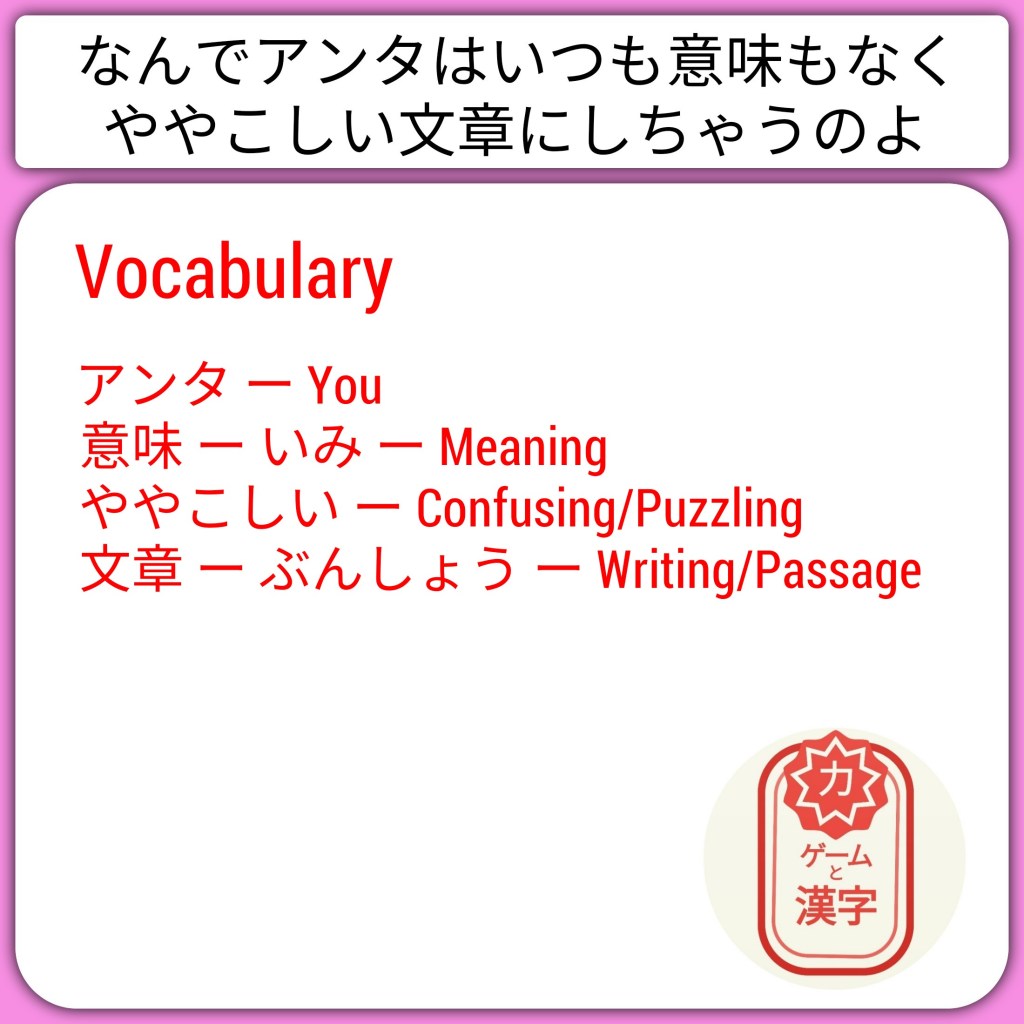
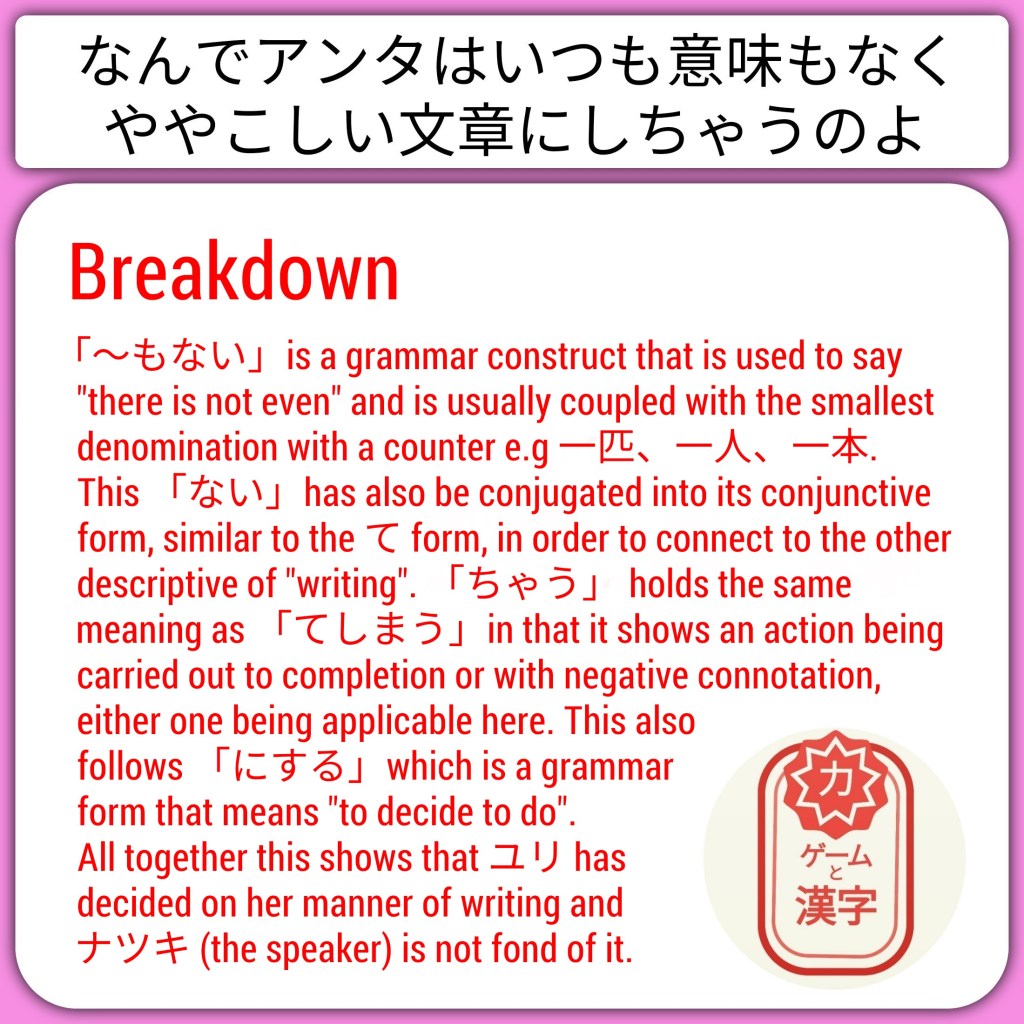
The text you’ll see throughout Doki Doki is predominantly made up of two parts. All character dialogue is shown in clear, headed text boxes and then, once per day, you and your fellow club members will exchange hand written poems. Aside from this you’ll also find items to read in the menus and user interface as well as a little “writing” minigame where you can select single words and watch as chibi versions of the girl jump for joy at harrowingly morbid vocabulary. You will find that the bulk of text is easy to distinguish which is very welcome considering how much reading you’ll be doing. The poems on the other hand are slightly more frustrating to read (To the point I had to rant about it in another post here) but with time, and further investment into the story, they become much more rewarding and familiar to read.

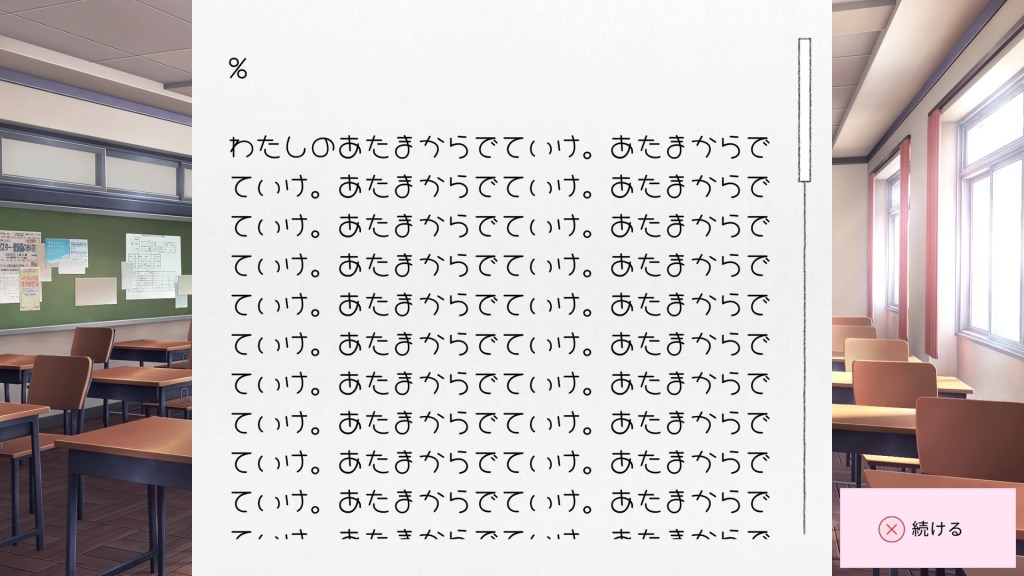
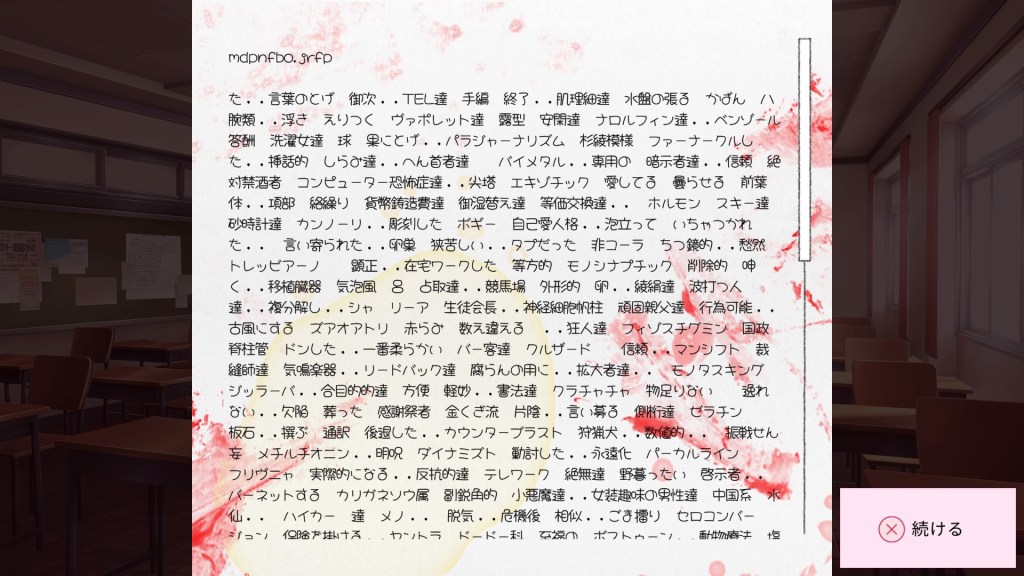
The poems are a notable part of the story for a number of reasons. The first and most important factor is that they are a more stark representation of the personalities of each character. Poems from Natsuki tend to be shorter and simpler but hide a dire hostility while Yuri’s poems are quite metaphorical and depressingly descriptive on the state of the world. While reading these poems it becomes significantly easier to put your mind into a setting where you both consider what is written and also what is trying to be said, all while in a different language to your own. In understanding these poems it also strengthens your reading of each characters interpretations of their work and their responses to your comments in their dialogues before and after the poetry exchange. The poems towards the end-game become increasingly disturbing and show a clearer picture of the unravelling of certain characters and hidden motives of others. There is no need to worry about keeping a record of these poems either as they are stored in the pictures menu on the main menu, here you can read them at your leisure if you want to dedicate more time to studying them.
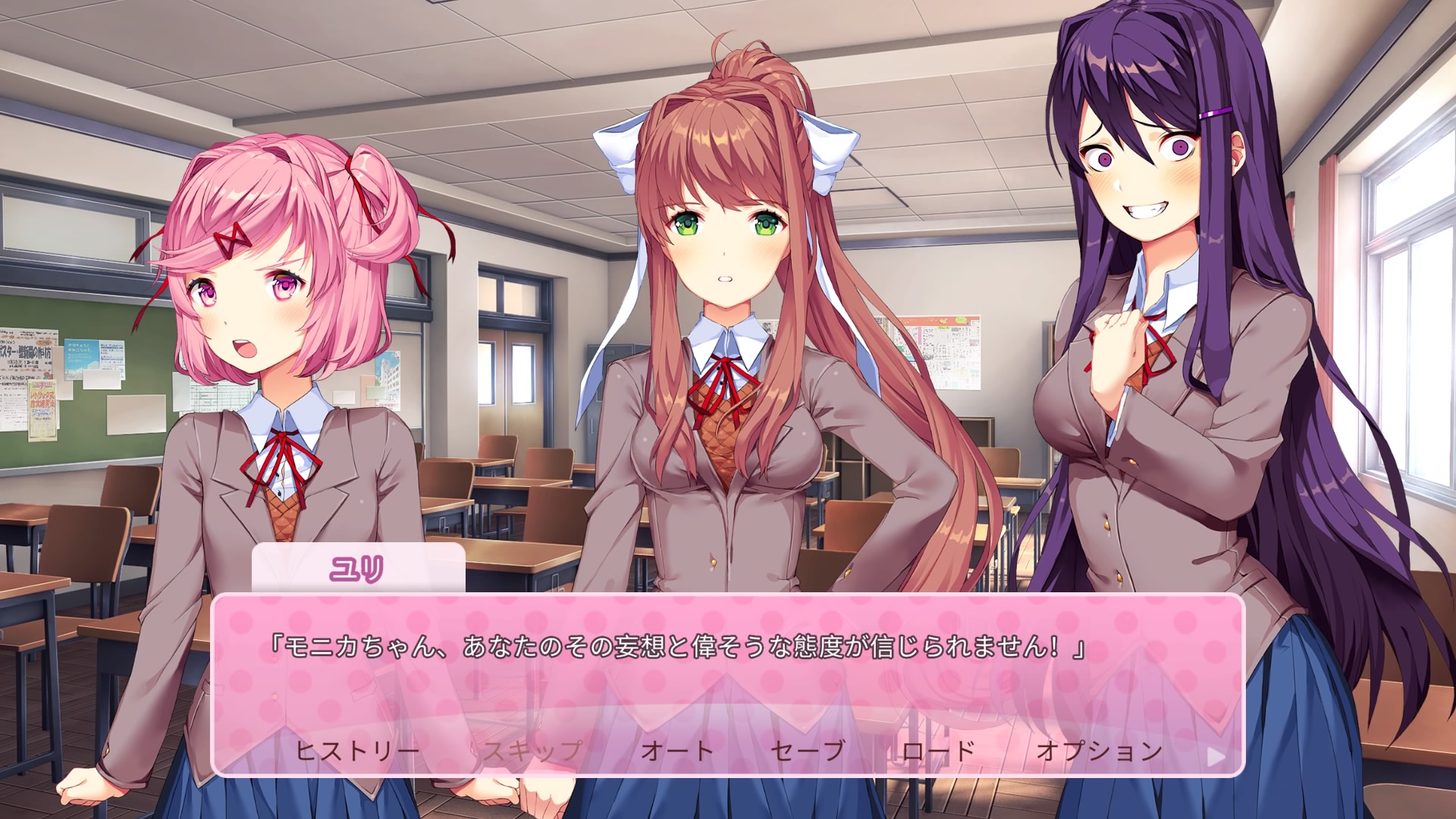
It’s no surprise that the dialogue itself is incredibly useful for language learning. The main text boxes will include spoken sentences as well as descriptive narrative of character actions between speaking. This is both handy in letting you know what people are doing, as their sprites rarely physically move on screen, but also adds another variety of written text. The narrative text also acts as an inner monologue allowing you to see representations of internal thoughts in Japanese that may be useful to replicate in your own day to day lives (hopefully not under the same circumstances). The speech of the other characters is wholly colloquial with varying degrees of formality. As such you can gauge each person’s manner of speaking and personality while picking up a wider selection of vocabulary. The more mundane discussion points surrounding the running of the club, who’s attending and the act of sitting an d reading for extended periods of time are repetitive to a certain degree, especially when the story starts to loop, but this again acts as a benefit as you can review familiar words at the start of your playthrough and rely on your dictionary less as you go on. Being heavily text based you can expect a lot of new vocabulary, even if you consider yourself an advance level learner, and I would recommend learning this as it appears, both due to the repetition and natural day-to-day usability of the vocabulary.
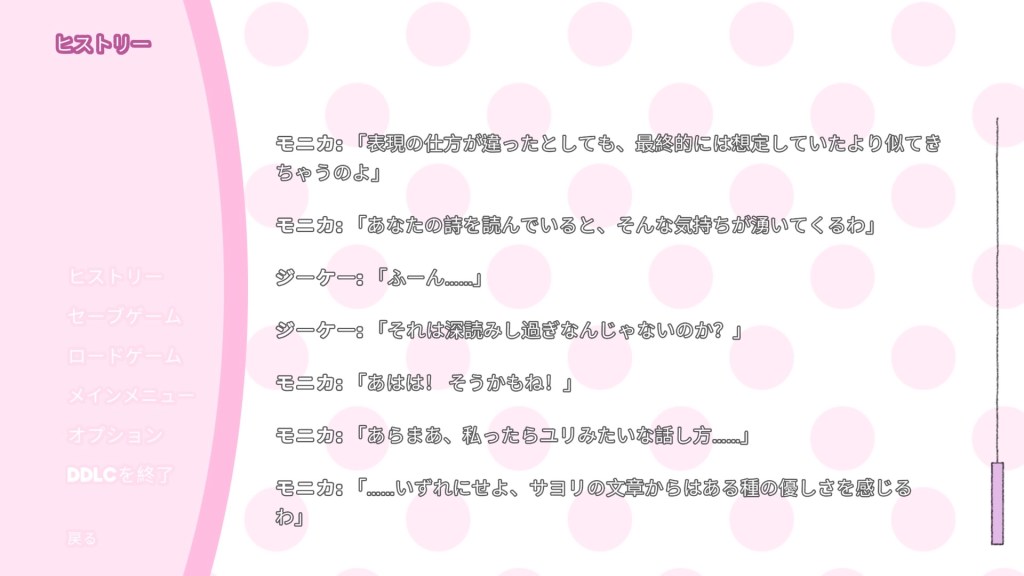
On the topic of repetition, one such feature that I found myself using time and time again was the history page. There are potentially a thousand lines of text to look through by the time the credits role and you may think “I don’t want to progress, there are words I don’t know” or “I don’t understand the context of what’s being said”, well, Doki Doki has you covered. At any point you can open up the history page from the start menu and scroll through the previous lines of text. This makes reviewing and revising phrases easier but also helps if you’ve lost track of the discussion and need to recap what’s been said before. This also makes for a much easier screen to write from if you want to write out particularly useful dialogue. For an added little easter egg, if you open the history tab following scenes where broken text and symbols are showing you can see cryptic messages that pre-empt the finale.
Japanese as a language has many pitfalls when learning. You can learn how to read hiragana, katakana and then kanji meaning you can confidently read a sentence out loud correctly, however, ensuring you have the meaning of the sentence correct, especially when advanced grammar is involved is a step above that. Doki Doki has a great combination of 2 of its tools, the history page and being able to change the language options on the fly. This means that you can read through the history in Japanese, write what you believe the meaning is and then reread it in English to confirm. I’ve yet to see another game that allows you to do this.
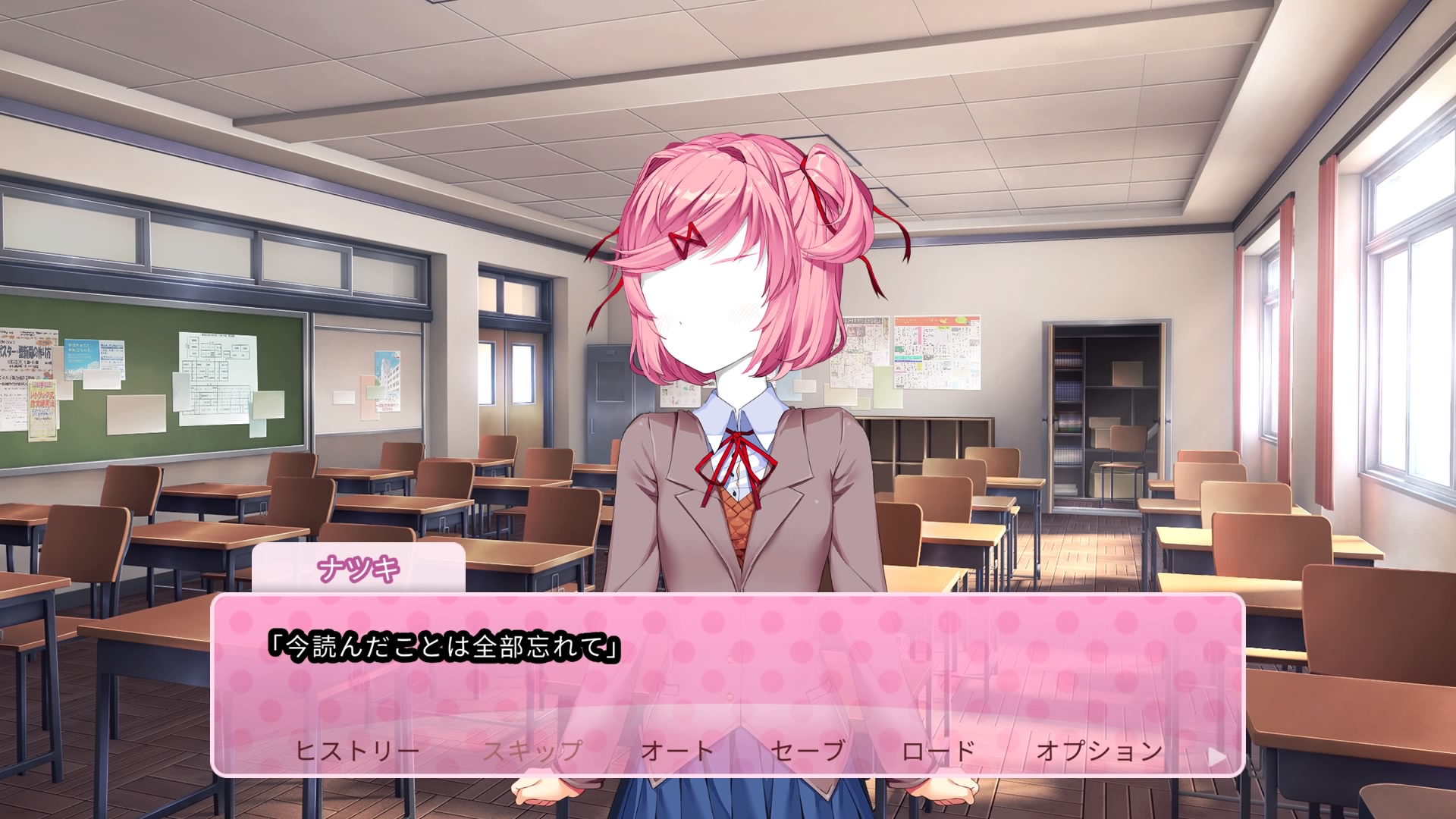
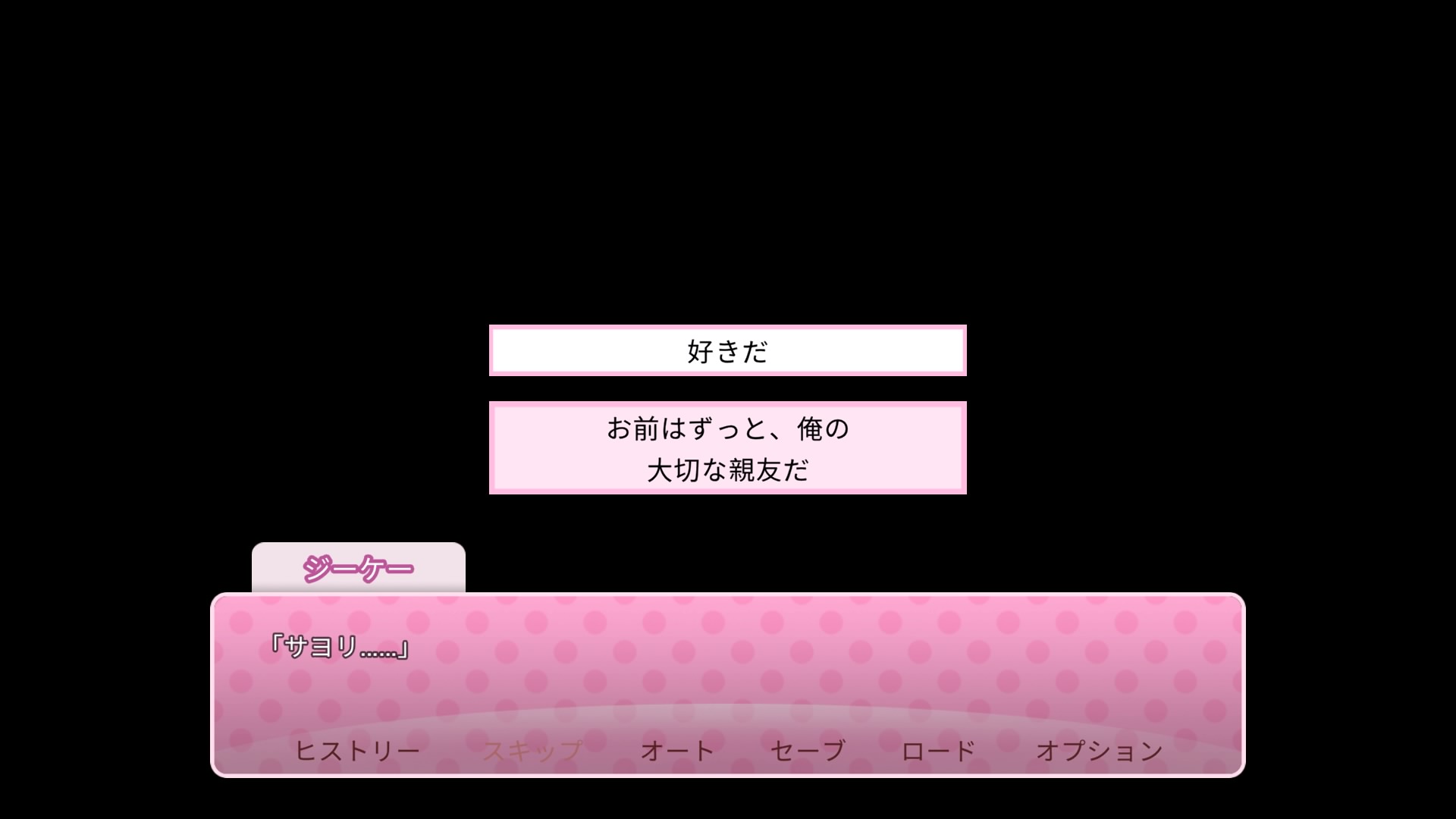

The topics of Doki Doki are pre-warned from the start. Themes of depression, grief, bullying and eventually suicide are prevalent which generates a lot of discussion surrounding emotions, relationships, perspective and purpose. All in all, the subject matter is hard to swallow but is much more relatable than you may find in other games that are more based in fantasy, activities or occupations separated from your own lifestyle. We all feel stress and sadness at some point in our lives making the story much more visceral when the horror starts to show between the cracks. While Doki Doki is not for the faint of heart I would highly recommend it. It’s one of those rare games where the writing is the star of the show which makes it brilliantly put together for avid learners. As I say, while the start was slow I was fully invested by the mid-point and did everything I could to read each phrase. I wanted to read everything which is exactly the sort of quality I search for nowadays.

Challenges and Methods – 7/10
Understanding rather than reading
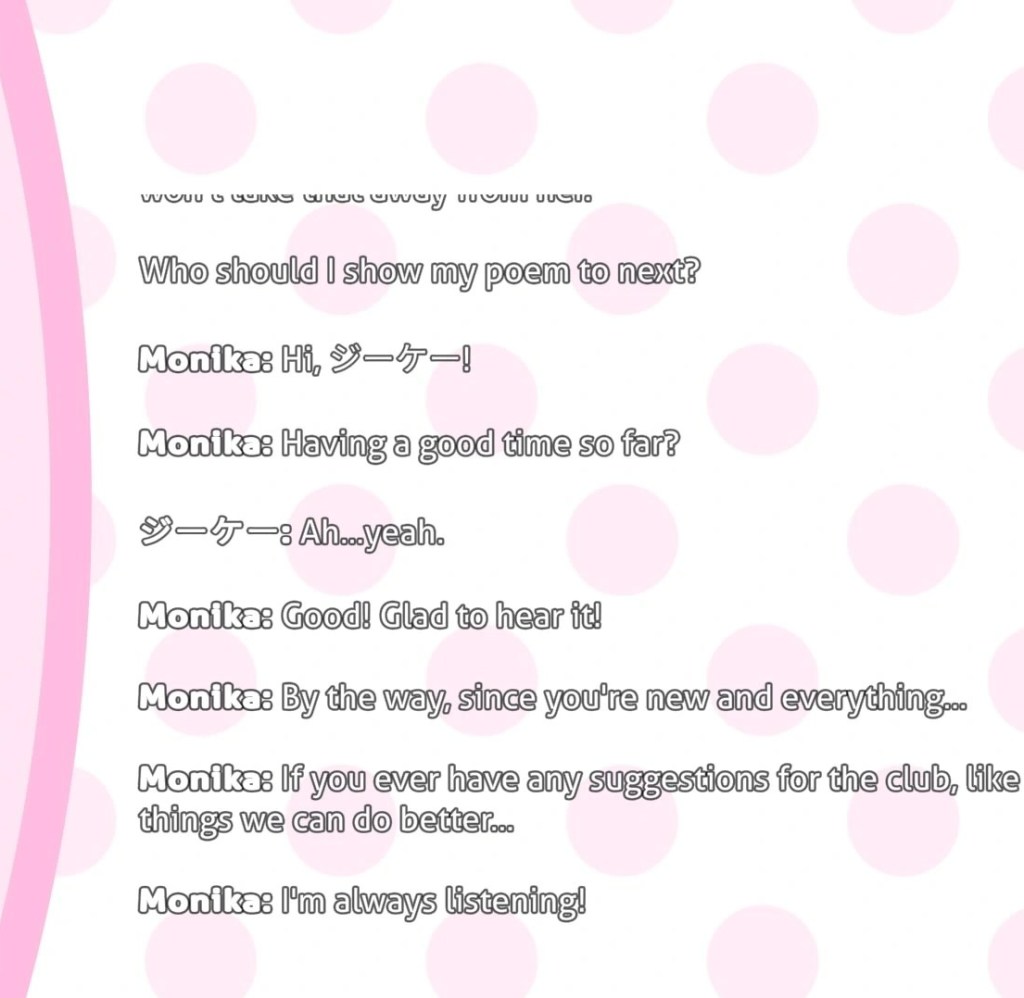
The above mentioned history page is a rarity in games. As previously mentioned, this combined with the ability to change the meanings back and forth is incredibly useful adding an extra layer of confirmation to your learning. You can also utilise this as a challenge to motivate yourself. See if you can write a full screen of history out and for an added challenge write what you think the meaning is in English. When you change the language to English you can confirm if you were right or not against the translation.
Public speaking
When playing Doki Doki it is remarkably easy to skip dialogue when it’s tough. You could genuinely complete the game by pressing one button repeatedly so extra care is needed to remain vigilant while playing. Writing is one way to do this but the sheer volume of text will give you an RSI. I found that speaking each line out loud ensured I was taking the language in and made sure I couldn’t cheat past any vocabulary I didn’t know, highlighting holes in my knowledge. Give it a go, doing different voices for each character is entirely optional…
Previous posts




 Games & Kanji