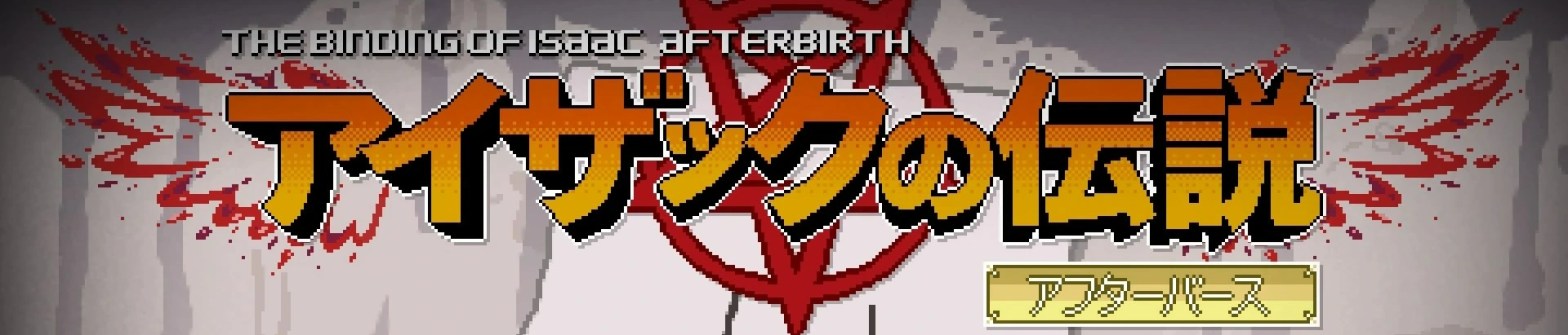
For those of you who have a passion for interesting rogue-likes coupled with a macabre interest in religious themes and game references, you’ve found yourself a beauty here. The Binding of Isaac was one of the OG Ed McMillan games released on Flash platforms in the early 2010’s and has grown both physically and metaphorically over the years. Every couple of years a new slew of items, bosses and floors is released in increasingly graphicly named DLCs, the latest of which, Repentance, coming out only a few years back, adding hundreds of additional hours of playability. Much to my dismay I had completed each iteration 100% (Quite a feat) prior to new DLCs being released and then begrudgingly entered the fray to do it again each time. I’ve always loved the simplicity of the game play and concept and how it leads to ever complex combinations of physical modifiers resulting in awe-inspiring game breaks. Aspects such as this will keep Isaac forever in my heart and I thoroughly encourage everyone to try it (If you can overlook all the poop references…).

Platform and Languages
Isaac is available on PS4/5, Xbox One/S, Switch and Steam. The base game is only £10 with each additional DLC being reasonably priced and frequently on sales. The complete Repentance pack is a little closer to £50 but depending on how much of a fan you are and what you want to use the game for it may not be entirely necessary to buy every DLC.
The language options are oddly limited. From the main options menu you can choose between only English and Japanese, which is strange as this is an option reserve typically for games made in Japan and released into the UK and USA. Unfortunately you can’t change the language settings while in a run preventing you from verifying meanings on the go.
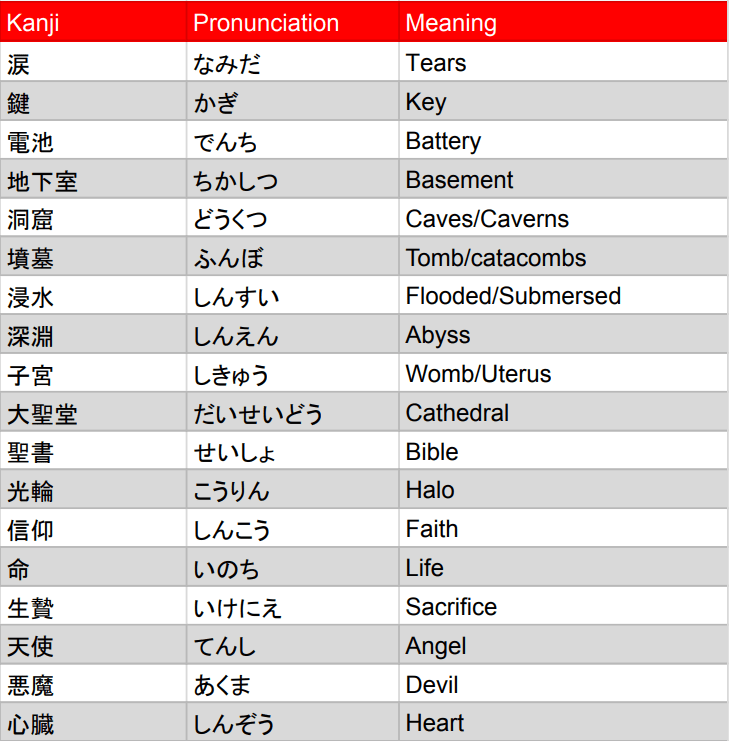
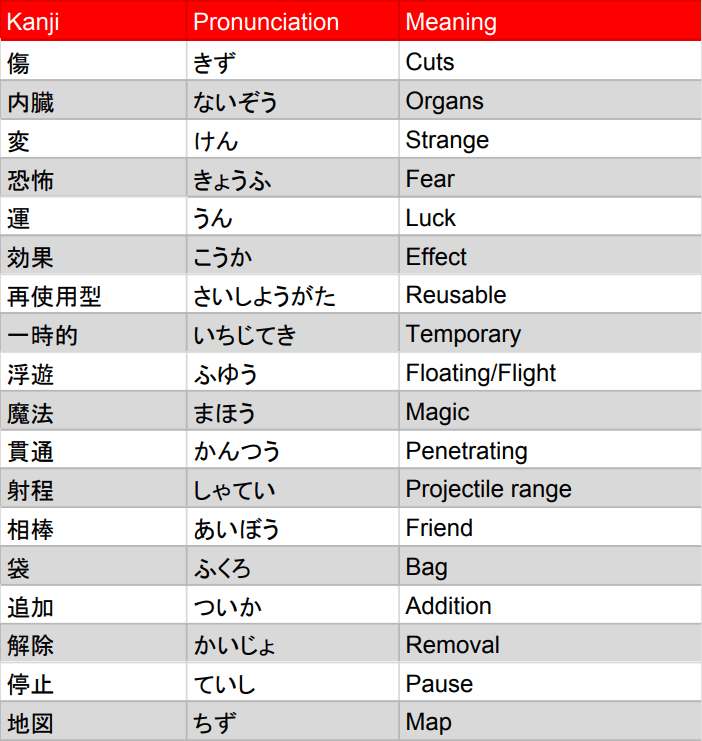
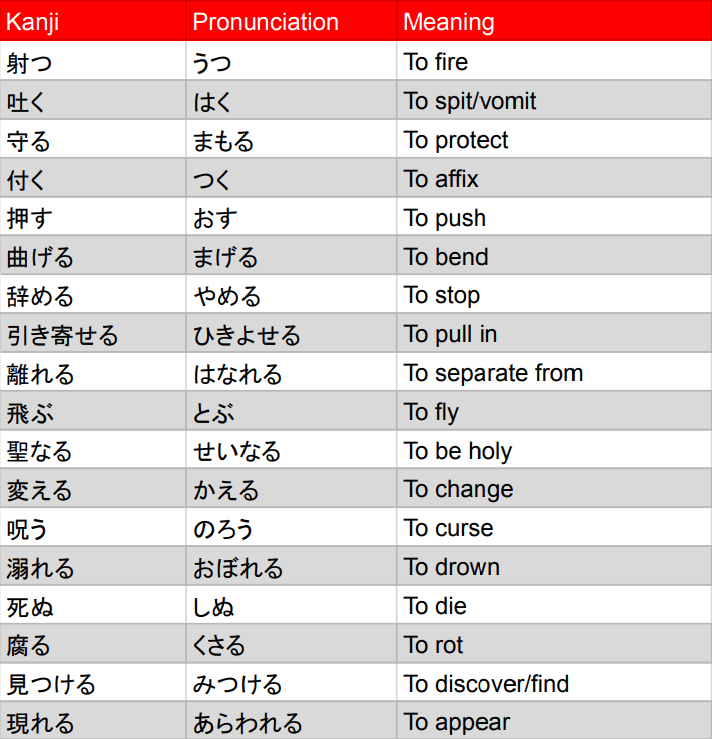
Glossary
Usability
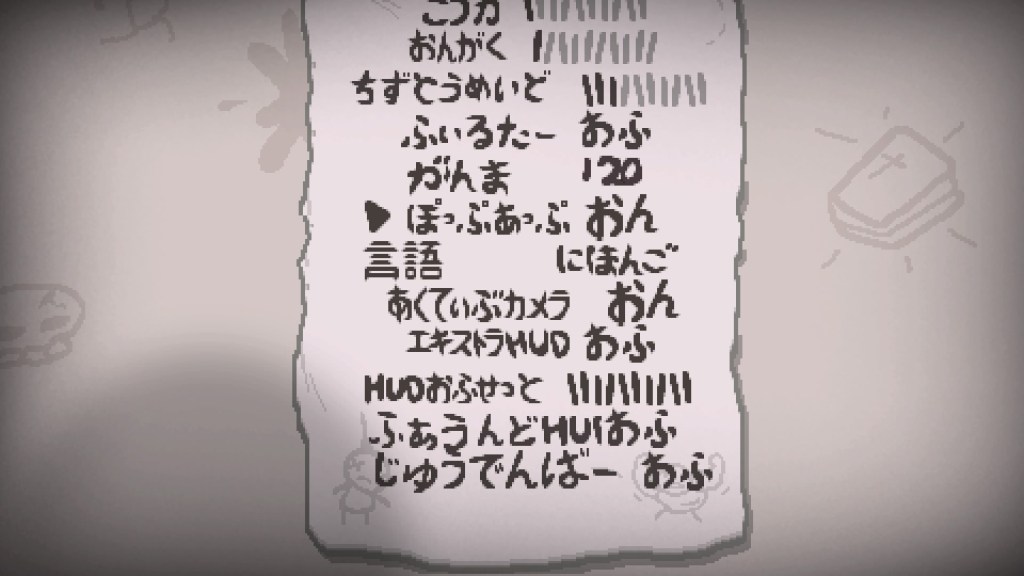
We’ll start on the options menu, as this is the first thing you’ll see when you change the language to Japanese. You’ll notice things are not as you’d expect. First and foremost, in the menus accessible from the home screen there is a lot of hiragana. This wouldn’t be considered weird in itself if it weren’t for the fact that a lot of the words are English loan words and should be written in katakana. This comes across as a poor translation and gave me bad omens for the state of the rest of the game, however I did notice that the quality of translations did noticeably improve with added DLC pack.
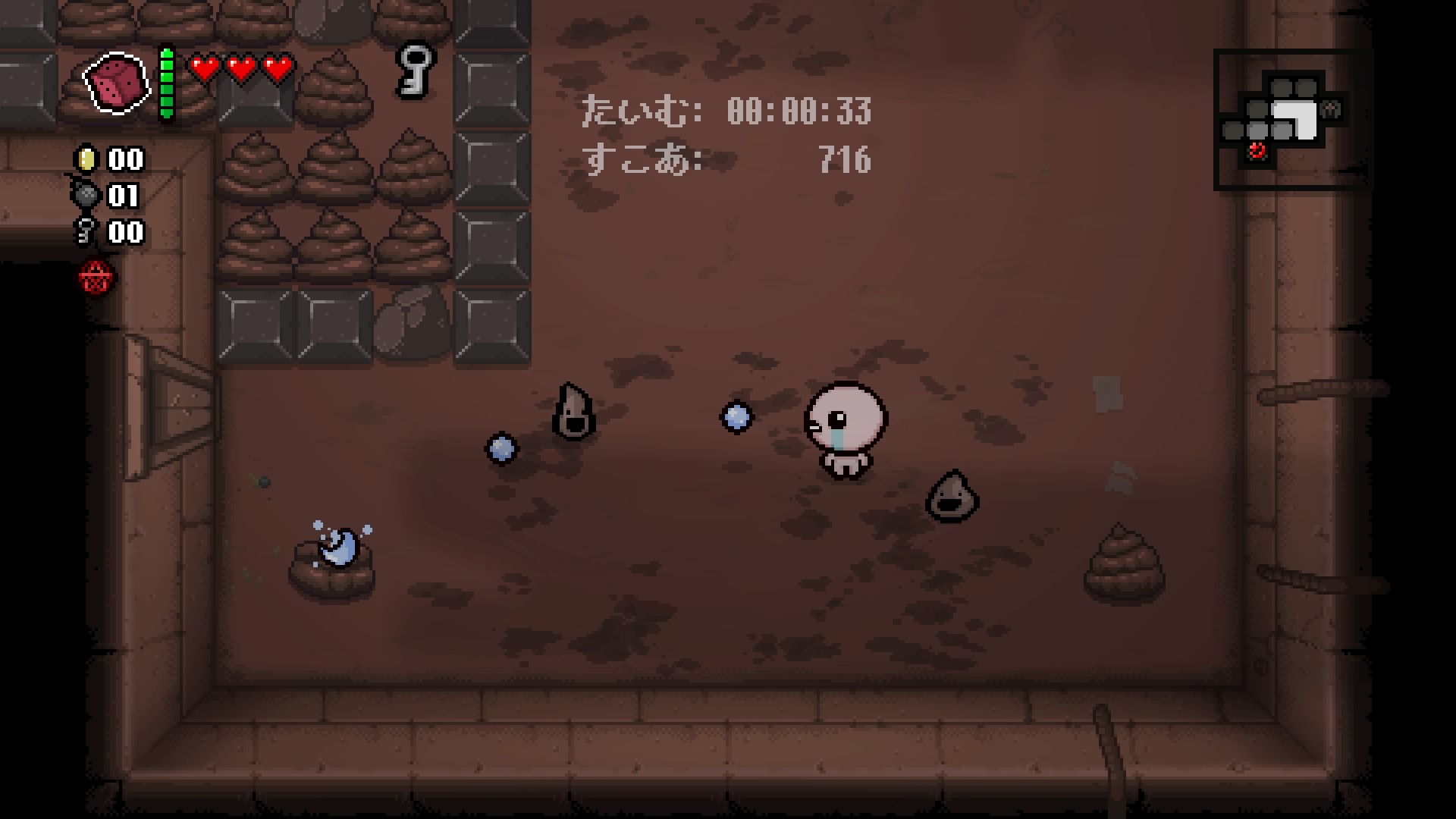
At a glance The Binding of Isaac isn’t exactly a word heavy game. Even the story is mostly provided through visual, contextual clues. As such, each run you partake in doesn’t feature a lot of language. For the most part you’ll only see the names of items you pick up a few times per floor, their descriptions the name of the location you’re in. You’ll even find a few parts of the game that still remain in English, such as the boss names and some headings. That being said, this doesn’t necessarily mean that Isaac is dead in the water. There is still a lot of strength to using it as a language tool if used right.
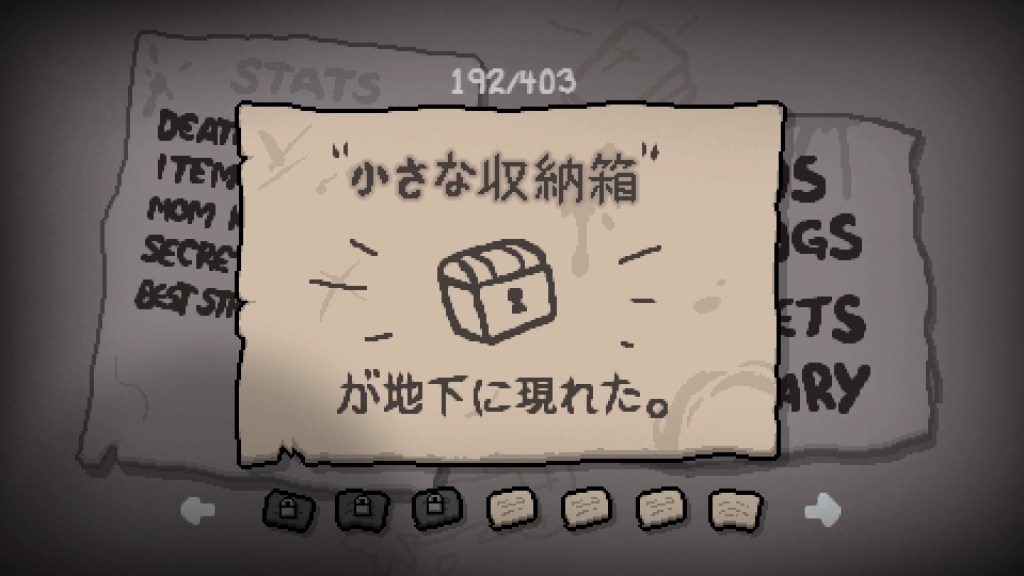
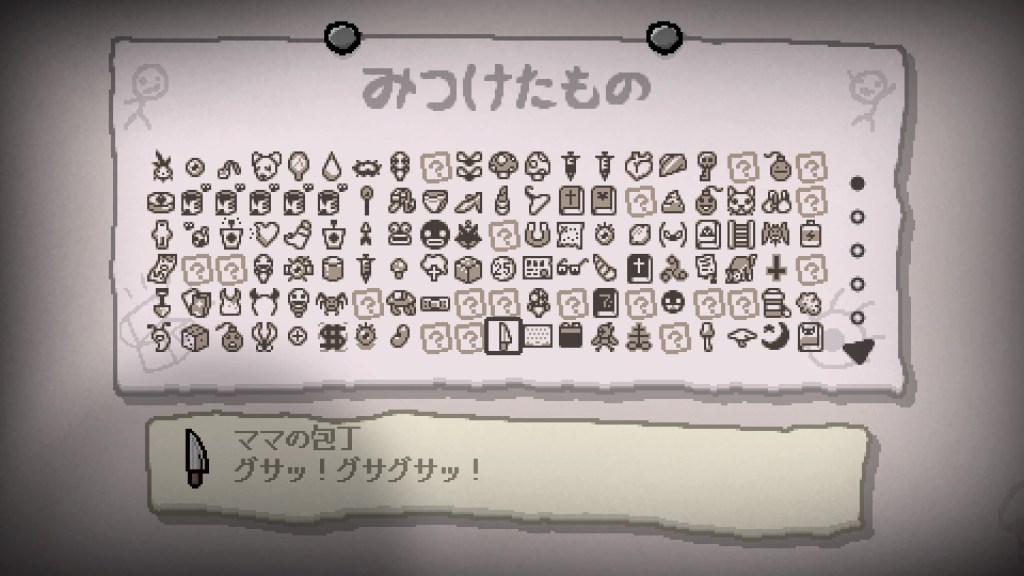
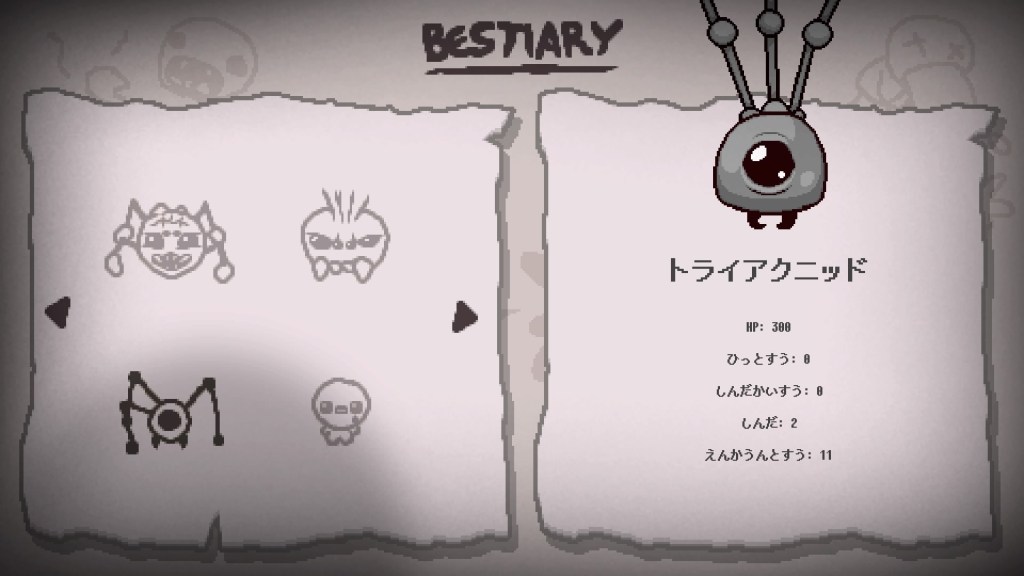
Isaac’s biggest benefits come from it’s stats page. Here you will find the bestiary, secrets and item pages. The bestiary features pages of each of the discovered creatures with a few brief descriptives of how many you’ve killed and encountered and the creatures name. The vast majority of creature names will be written in katakana (A happy separation from the menu mentioned above) which is great practice for beginners looking to strengthen their reading of names and loan words. The secrets page is split between early items, written in English and the later DLC items which luckily have been updated accordingly. Here you can find some item descriptions, events and a sprinkling of verbs.
Lastly, the item page features every item you have discovered so far which, depending on your progress, can be gargantuan. In total, if you own all DLCs you can unlock and read through 716 items. Each one with it’s name and a short 1-2 line description. There’s a healthy amount of kanji and verbs with a few pieces of comical word play throughout to reward your understanding. While the sentences are short (So short in fact I couldn’t even find an example to use for a grammar post) the quantity will keep you busy and each one is incredibly varied across themes of physicality, religion, science, technology and more. In my mind it’s reminiscent of a simpler Pokédex from Pokémon meaning it has a decent amount of efficacy for new learners. If however you do fancy something a bit wordier you can find more detailed description within online game wikis such as the one linked here.

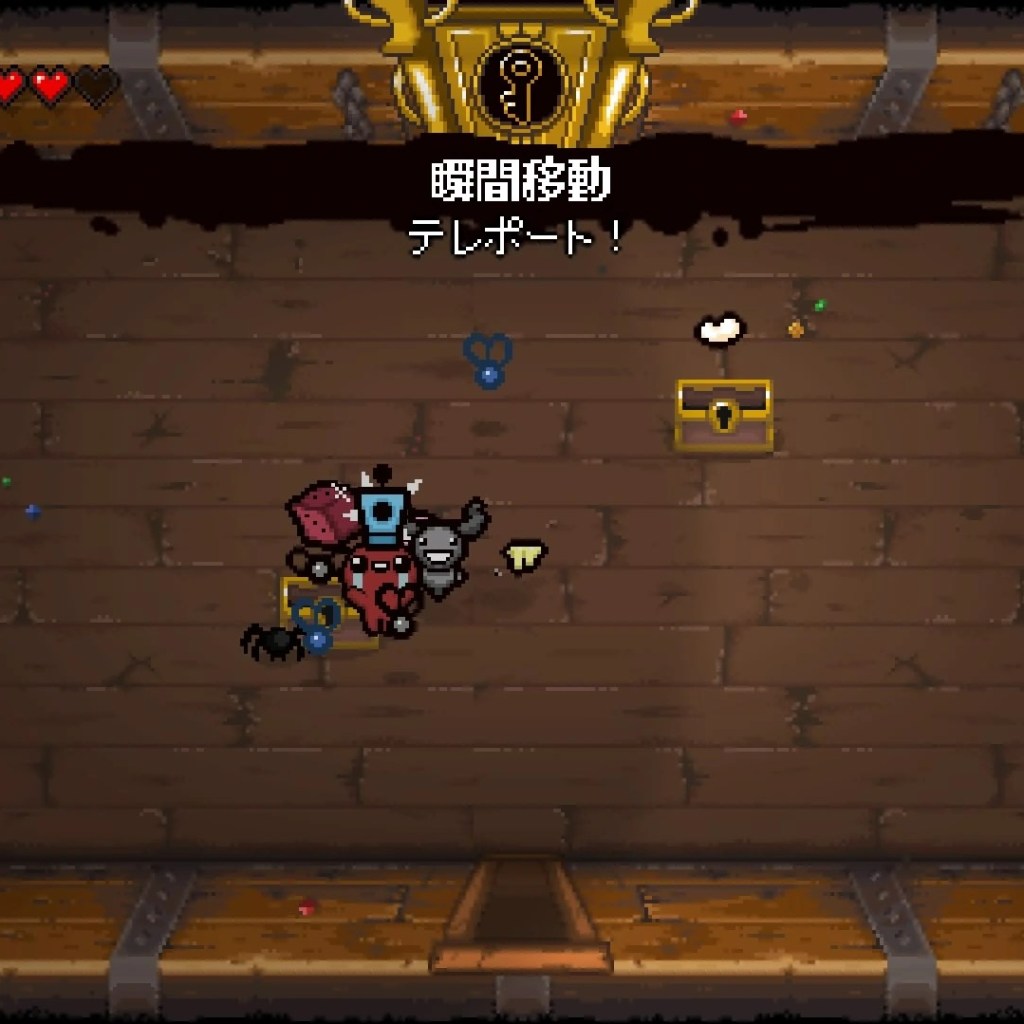
One other aspect to consider is that the writing style can at times be difficult to follow. When Rebirth was made following the initial Flash version of Isaac it was decided that a 16-bit retro style would be used instead. While I genuinely think it makes the game look better it does mean that reading some of the kanji can be a nightmare. Relatively open and clear kanji aren’t too bad but if there are more than a few radicals certain kanji can be indecipherable so you’ll have to rely on your knowledge of vocabulary and surrounding words to fill in the gaps. This coupled with the fact that some text boxes that come on screen only show for a number of seconds will have you either scratching your head or dismissing the text completely. It is easy to slip into playing through muscle memory for games of this style and you’ll often find that you give up trying to read when the tension picks up. This is when thinking about how you could use the tool rather than thinking of the tool itself comes into play.
To start, try only reading parts of the game that remain on screen indefinitely, writing down any words you haven’t previously seen. In doing so you can commit new words to memory making it easier to recognise them and read them when you are mid-run. I often have a notebook or whiteboard to hand when I’m playing games but noting things down while you’re avoiding enemy tears and bombs is not only going to get you killed, it likely won’t be clear or useful. As you play through a run get into the mindset of noticing when text comes on screen, think of the utility or group its a part of and plan to review it once you’ve inevitably been killed.

Overall, The Binding of Isaac is a great game and, while it isn’t a stellar game for learning, it is a perfect example of how you use a tool, not its inherent benefits. You’d be forgiven for not intensely learning during each run but, much in the same way as Celeste, Smash Bros or Donut County, the reading you can do between gameplay can be incredibly useful for the right audience. Again, if you’re at the point in your studies where you can read and digest chapters of books and articles then this won’t give you much more than a few saintly words you’d scarcely use, but at the end of the day it’s easy to pick up and put down again and is jolly good fun.
Challenges and Methods
Lists and groups
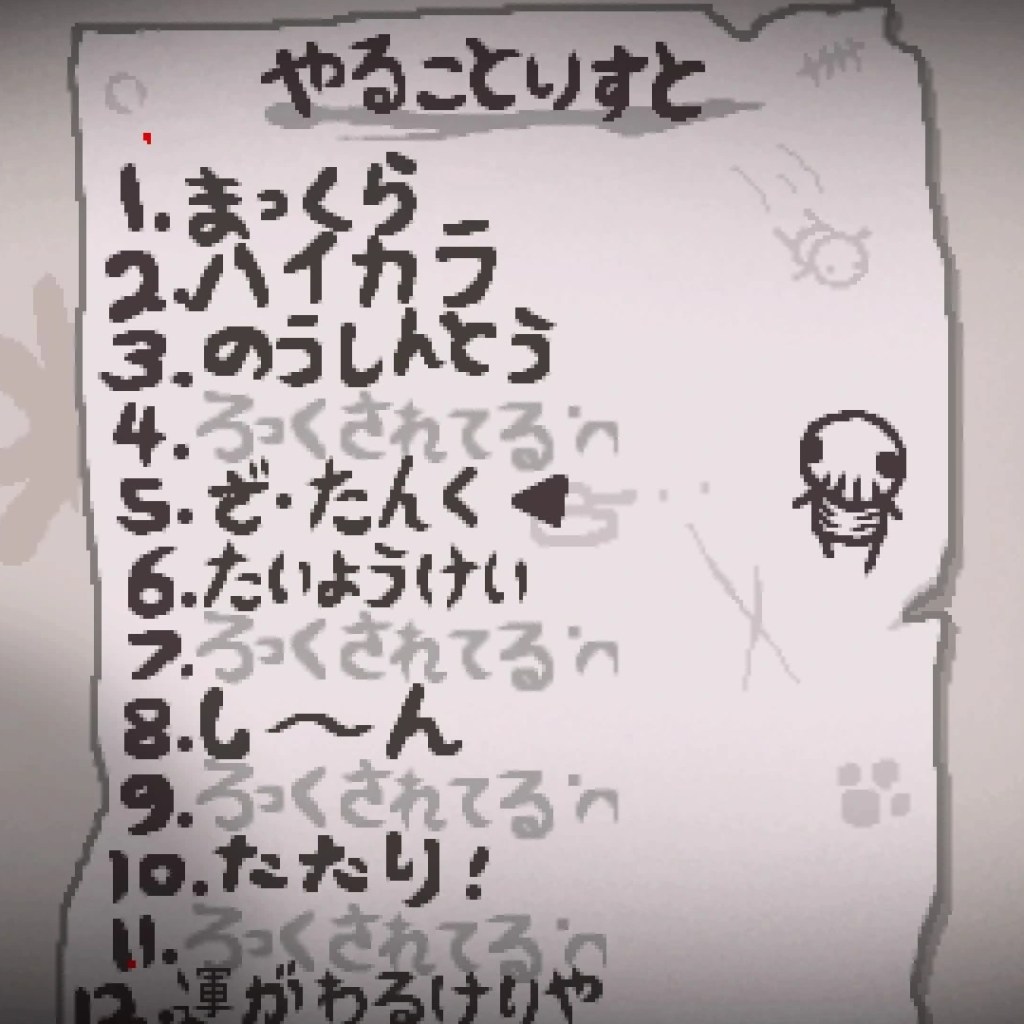
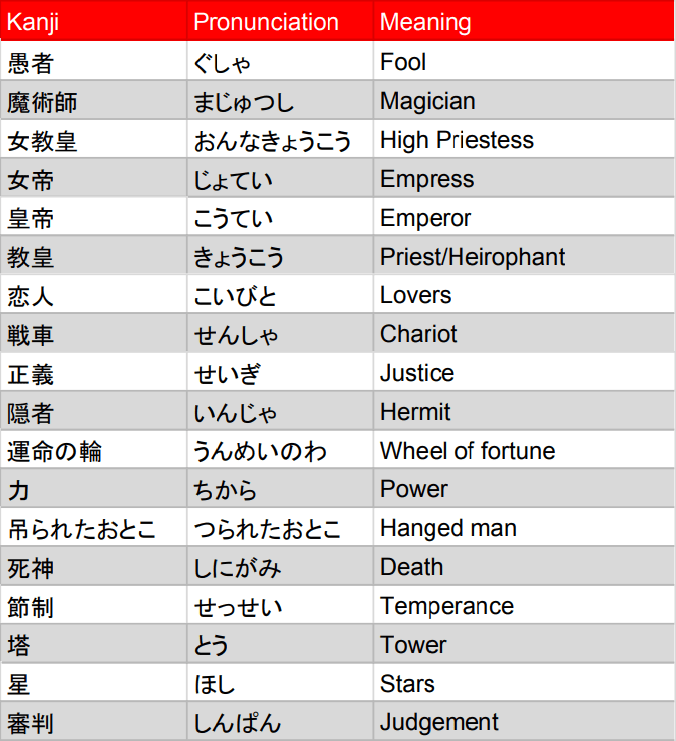
There are many groups of items found in The Binding of Isaac that can make memorisation easier. You can take the time to memorise the names of challenges (Even working out the kanji that could have been used), stat names and even smaller items like the pills and tarot cards. The tarot cards are a good example of words that while seen in a run may be difficult to look up but if you look them up ahead of time you can test yourself on the fly.
Spaced repetition
As stated above Isaac can be easily separated into two distinct parts, gameplay and more readable content. Spaced repetition is a good way to build any vocabulary so it can be effective to read through a number of item descriptions, learn new words, play a run and come back to review the same items. Test yourself to see if you remember readings and meanings and unlock more content along the way.
External Links
Translated guides

The Binding of Isaac Rebirth: Cards and runes guide
A guide for cards, runes and other consumable items within the Binding of Isaac: Rebirth and its DLCs, including routes to unlock each one if applicable.

Links to guides
Roberunu’s Japanese Game guide – https://roberunu.com/isaac_repentance/
At Wiki’s Japanese Item guide – https://w.atwiki.jp/isaaac/pages/105.html
God Bird’s complete Japanese guide – https://god-bird.net/data/isaac/isaacindex.html
 Games & Kanji