
Dice have been an implement within games for thousands (literally, look it up) of years. While they are usually associated with board games, there are many video games that have thought to use them too. Fewer games have used them as an entire premise for their gameplay and even fewer still have done as fantastic a job as Dice Hunter. The creators of this intriguing title thought “How do we take something as simple as playing with dice and make it better?”. The simple answer, slap a load of monsters and magic onto it! Dice Hunter is bright, quirky and, for all it’s random nature, plays out as an incredibly fun and strategic adventure. The art style is unique and the inclusion of various mythical creatures, each with their own characteristic powers, is the icing on the cake. If you fancy taking a gamble on a mobile game that’ll keep you playing then this might just be the jackpot.
Platform and Languages
Dice Hunter is a bit limited when it comes to platform as it is a mobile exclusive but is also not available for IOS so it’ll just be us Android users enjoying this one. It’s free of charge to download aside from the usual micro-currency and “no ads” selections in the shop.
The language settings are found in the settings menu in the bottom left portion of the screen. There are 14 languages to choose from in total and each one can be selected in moments (following a brief reload). Do note however that you are unable to change the language settings in any screen other than the main hub.
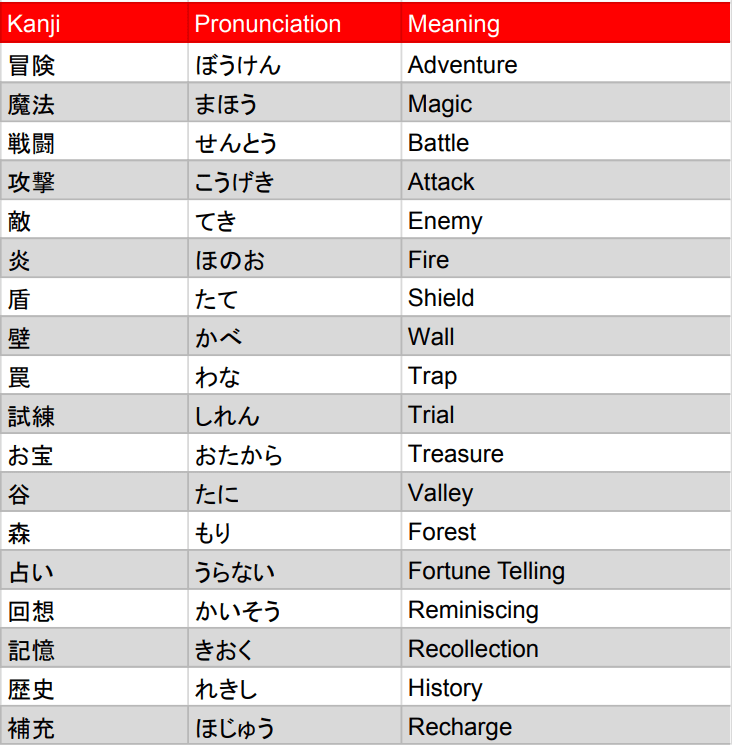
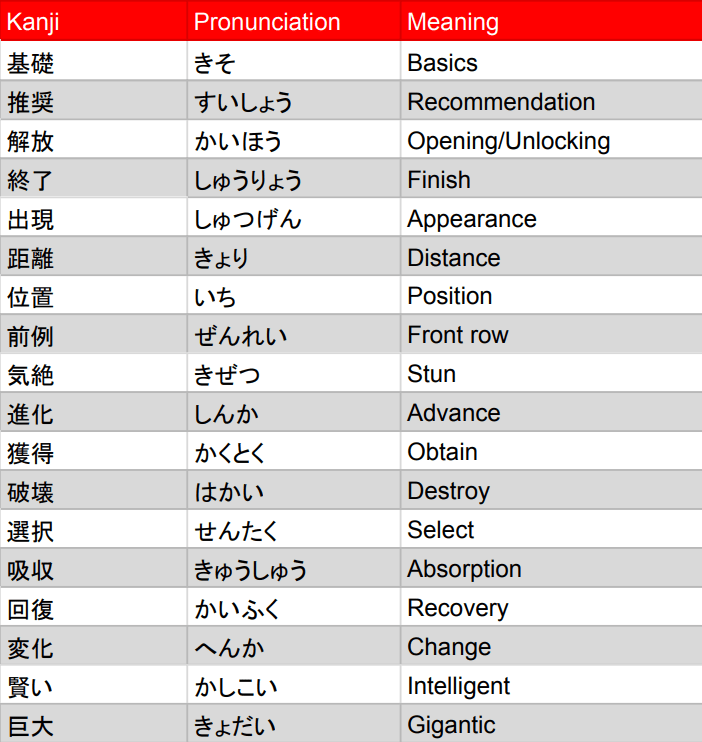
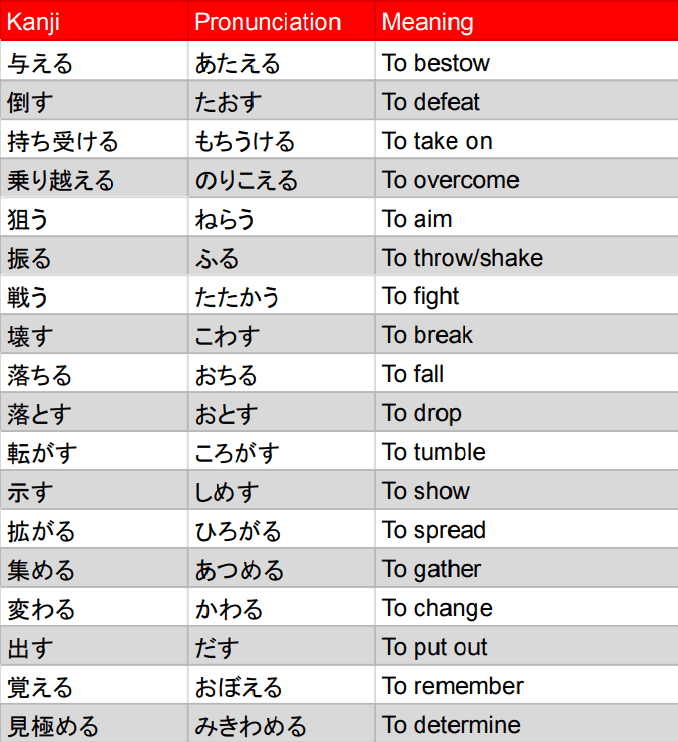
Glossary
Usability
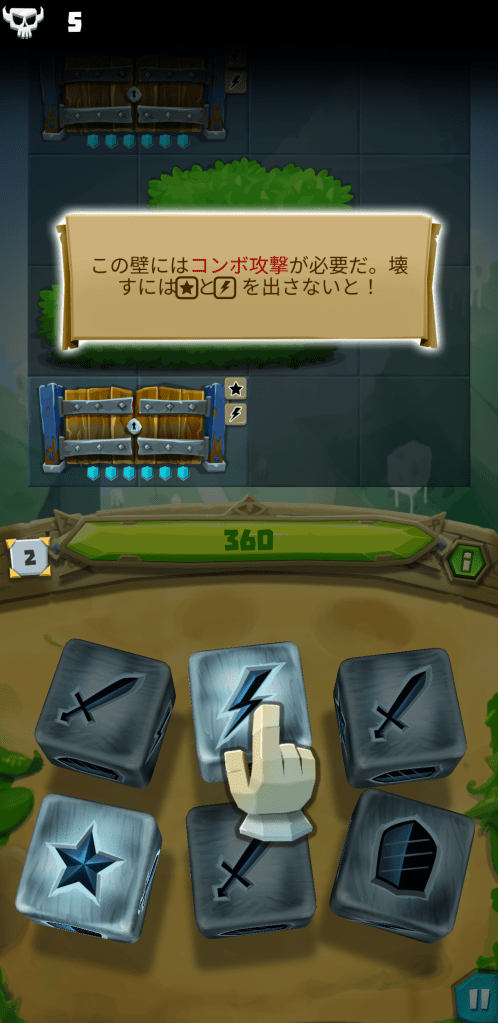
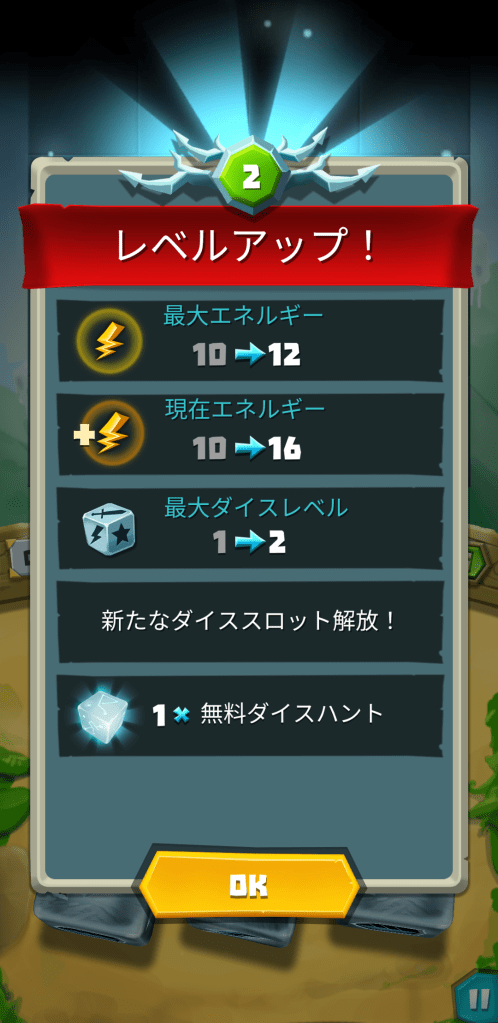
Dice Hunter is broken up into two major parts. The gameplay itself, where you’ll fight up a tower of monsters and obstacles, and the rest of the hub, where you’ll manage your tasks and dice. The gameplay is not the wordiest, in fact, aside from a few easily missable prompts and the loading screens, there’s nothing at all. The only exception to this would be the tutorial, which does in fairness provide a lot of the required vocabulary for how the gameplay works. While you will spend a lot of time in the actual gameplay this doesn’t detract from the usefulness of Dice Hunter as a whole. The stages can act as a brief reprieve and offer a measure of satisfaction as you build your dice box and strengthen your monsters.
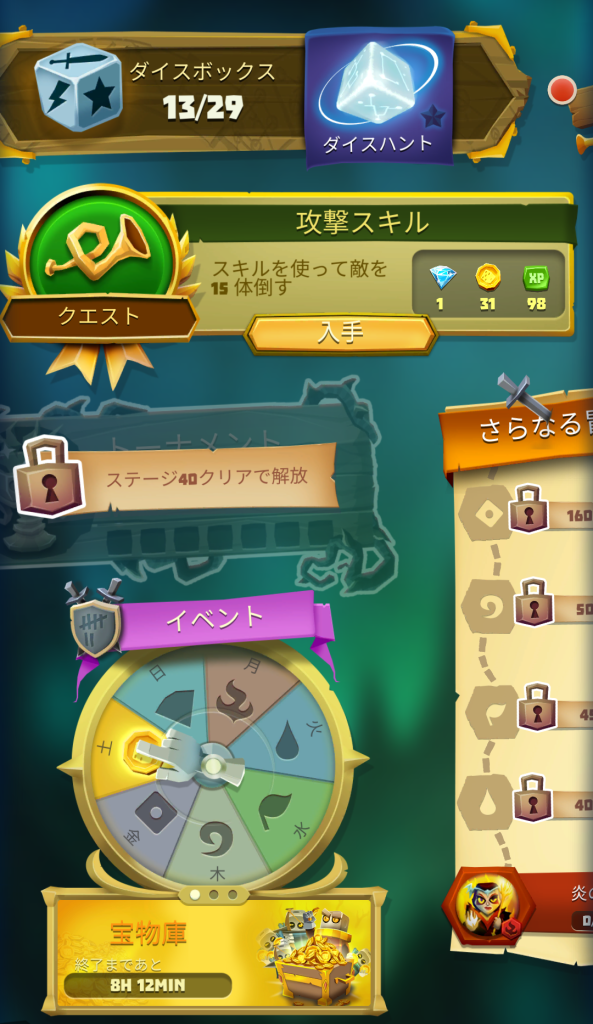
The hub holds a cacophony of useful sections, from notifications and events through to unlockables and goals. The quests, patrols and notice board are regularly updated and feature sentences of variable but digestible lengths. Of these the patrols are probably the most difficult but tend to be more punny and descriptive which can add a little levity to your studying.
The quests tend to be a little more basic and feature a lot of katakana or simple vocabulary. The notice board is a lengthier middle ground between the two. It’s less focused on the monsters themselves and more on updates or events.
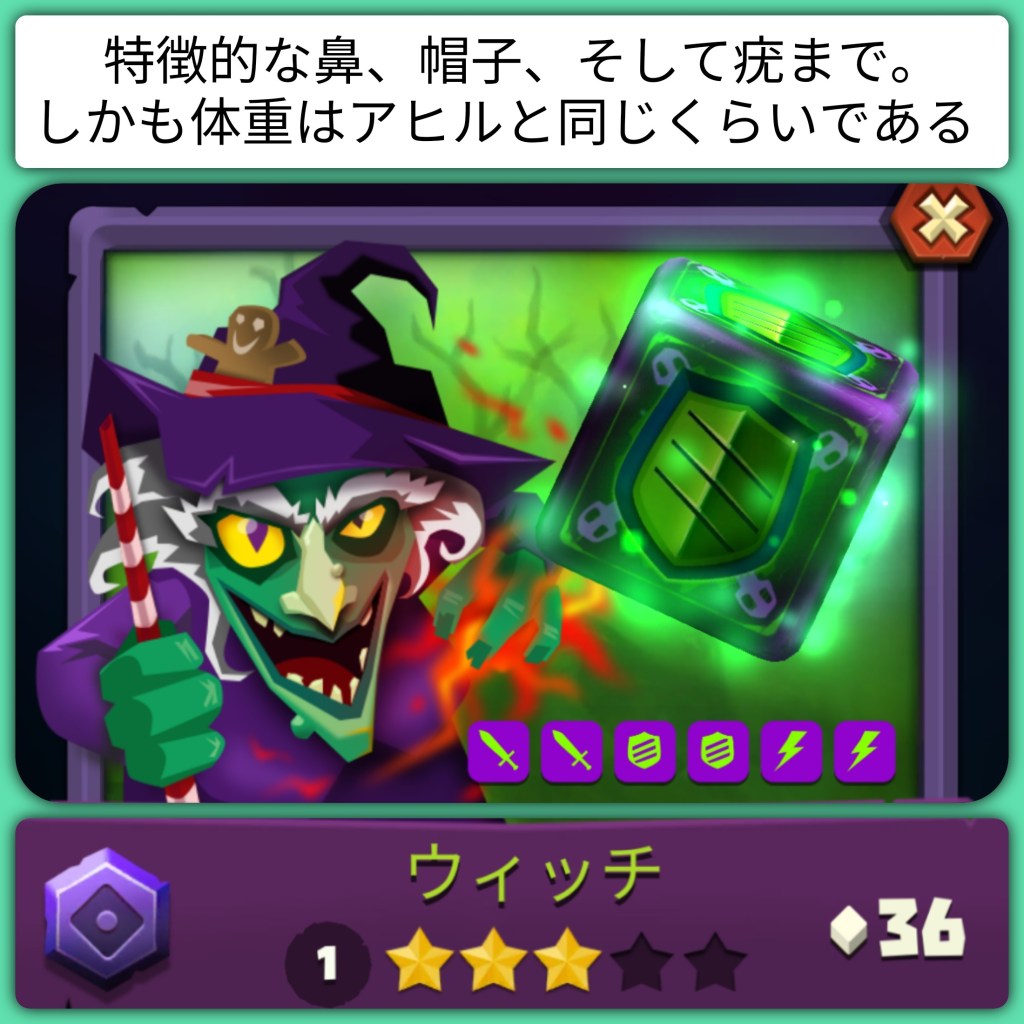
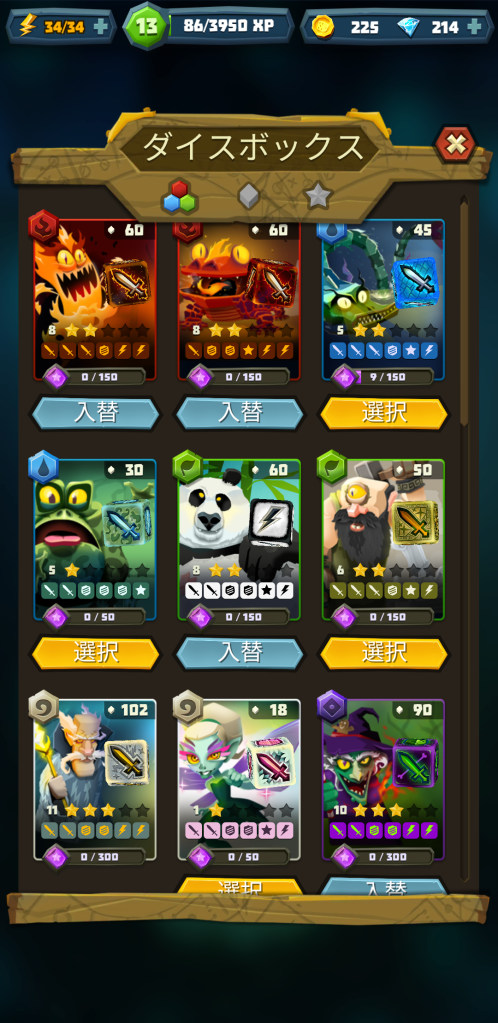
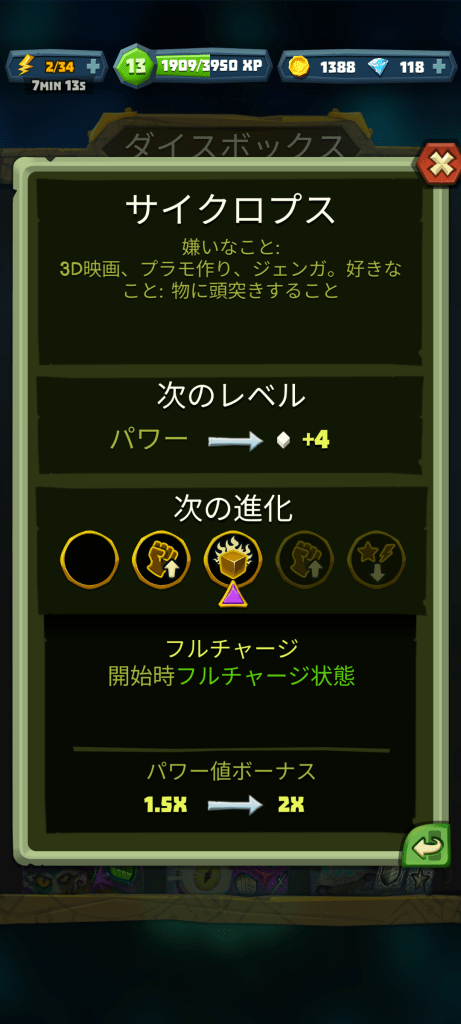
Next up is the dice box. While there aren’t a huge number of dice to collect, each one holds a decent amount of details. The front of each card shows the name of the monster and a description of their special skill. Do make sure you use the green arrow in the bottom right corner to flip each card, it’s easily missed but on the other side you can find a funny quip about each monster and a further breakdown of their skills. By tapping and holding on the circles under “次の進化/Next upgrade” you can see how each individual upgrade functions too. Reading through these cards is not only an interesting source of vocabulary, but understanding each aspect will help you to better use your roster and provide a more satisfying gameplay experience.

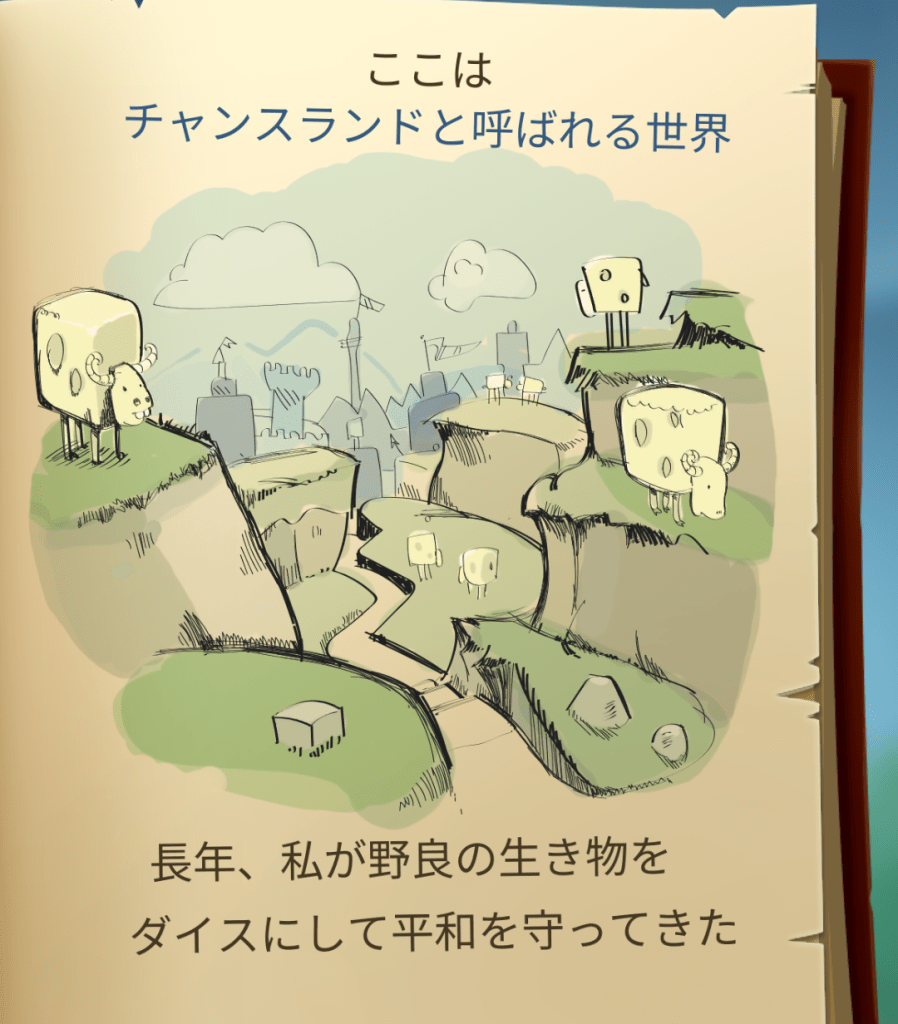
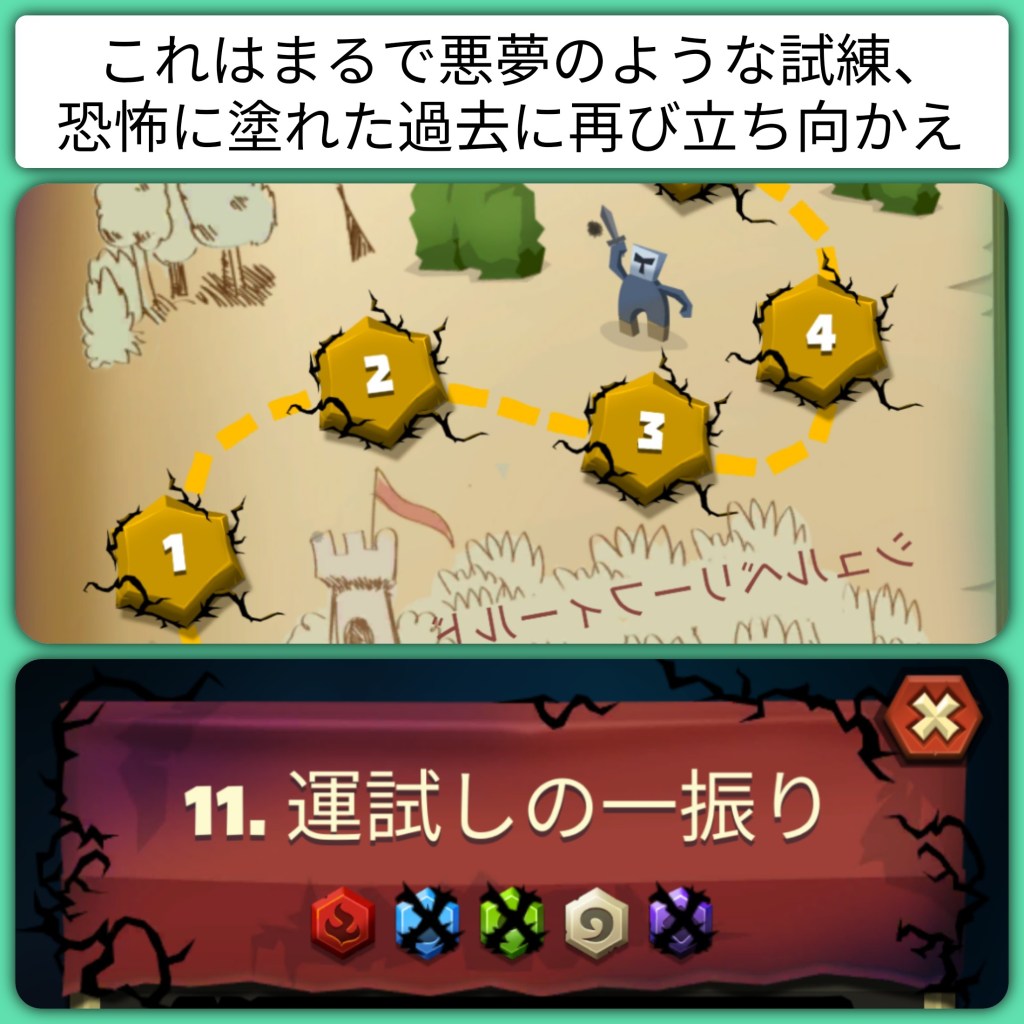
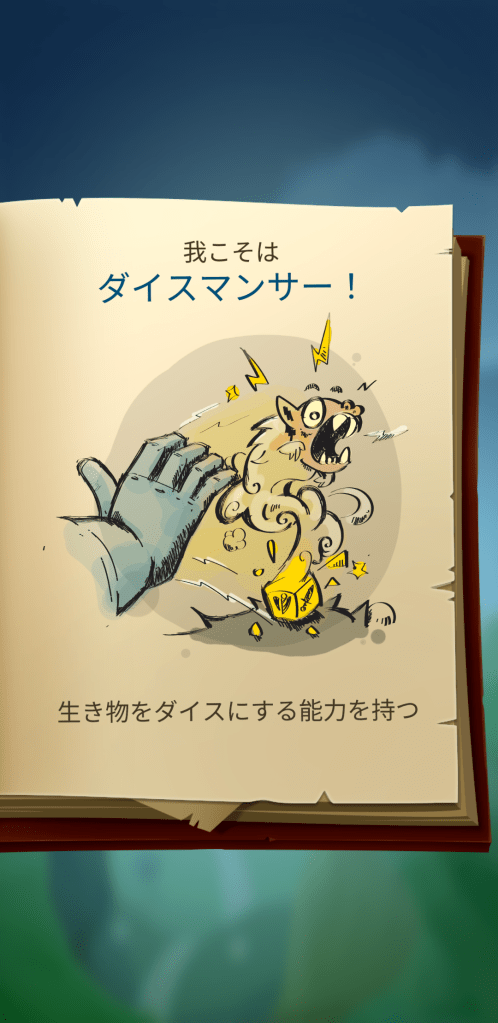
Aside from the already abundant items above there are a few more nifty aspects to Dice Hunter that will keep you reading. The story is disappointingly sparce, not because it’s lacking quality but rather because it’s charming and imaginative and I want more of it. Occasionally between each chapter you’ll get a couple of scenes of painted parchment following the chase against the evil villain Snake-Eyes across Chanceland. The story isn’t narrated but the text is clear and entertaining to follow, I do wish that it could be reopened through some sort of archive but, alas, once it’s gone it’s gone for good until you’ve cleared the next section. Make sure you soak up all the goodness from these before you close them!
Between each of the levels and journeys back and forth to the hub you’ll get a healthy number of loading screens. Loading screens may not seen like much however the ones in Dice Hunter fall into the category of some of my favourites (Gosh I’m sad). When a loading screen shows a short but useful hint your brain will instinctively start to piece together some of the words you know and analyse what is being said. The challenges that follow are where the fun comes in: 1. Read the hint before the screen moves on and 2. Apply the hint (providing it’s not stupidly simple, like “hit enemy to win”. If you do struggle to read quickly then these are a good opportunity to recognise the same hints and see if you can improve each time you come across them, improving your reading pace and motivating you to comprehend quicker.
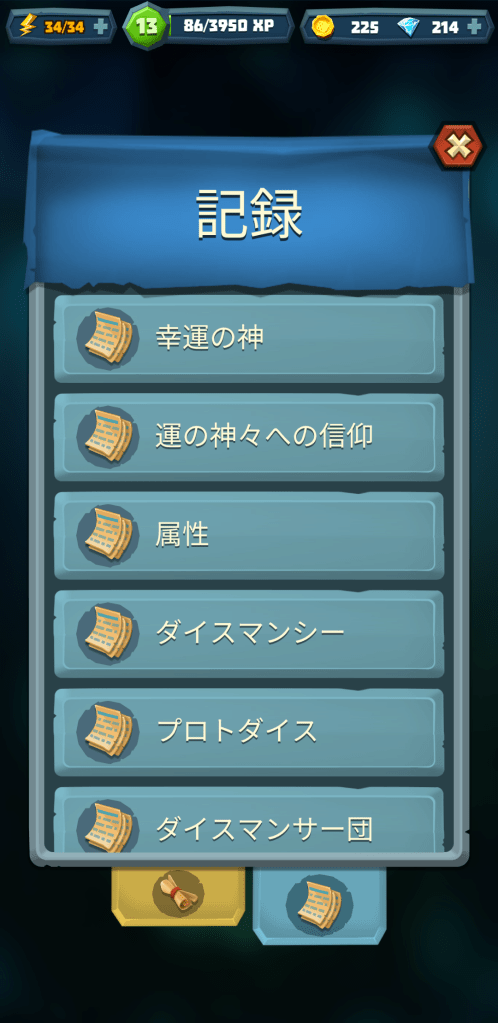
Lastly for this chunk we have the memoirs and notes. As you navigate the map you’ll notice that certain levels hold a scroll or scrap of paper. For each one you uncover you’ll be rewarded with a dense block of text, great for all you intermediate and above readers to sink your teeth into.
The memoirs details the back story of your player, his dealings with the aforementioned Snake-Eyes and a surprising amount of lore for what is essentially dice being thrown about.
The notes are equally packed full of text and focus more on found musings relating to the elements of the world and the functions of magic.
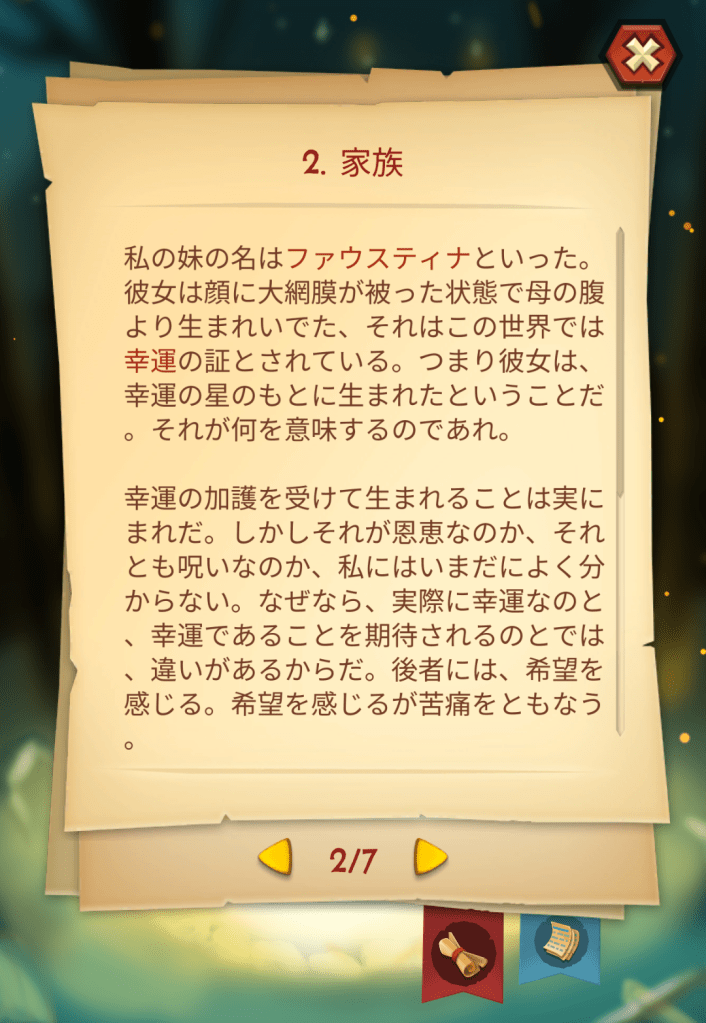
Overall, Dice Hunter is suitable for a diverse level of Japanese learners, especially those with an interest in fantasy or history. The text is not imperative to the gameplay but it is present and almost treated as a reward in many cases, this makes it more of a welcome gift than an intrusion. There may be occasions where you could expend everything you have at hand to read, so you may have to grind a little to earn more content, but this is definitely well worth the push. I would highly recommend this as a casual but beneficial addition to your mobile library.
Challenges and Methods
Fill your box of tricks
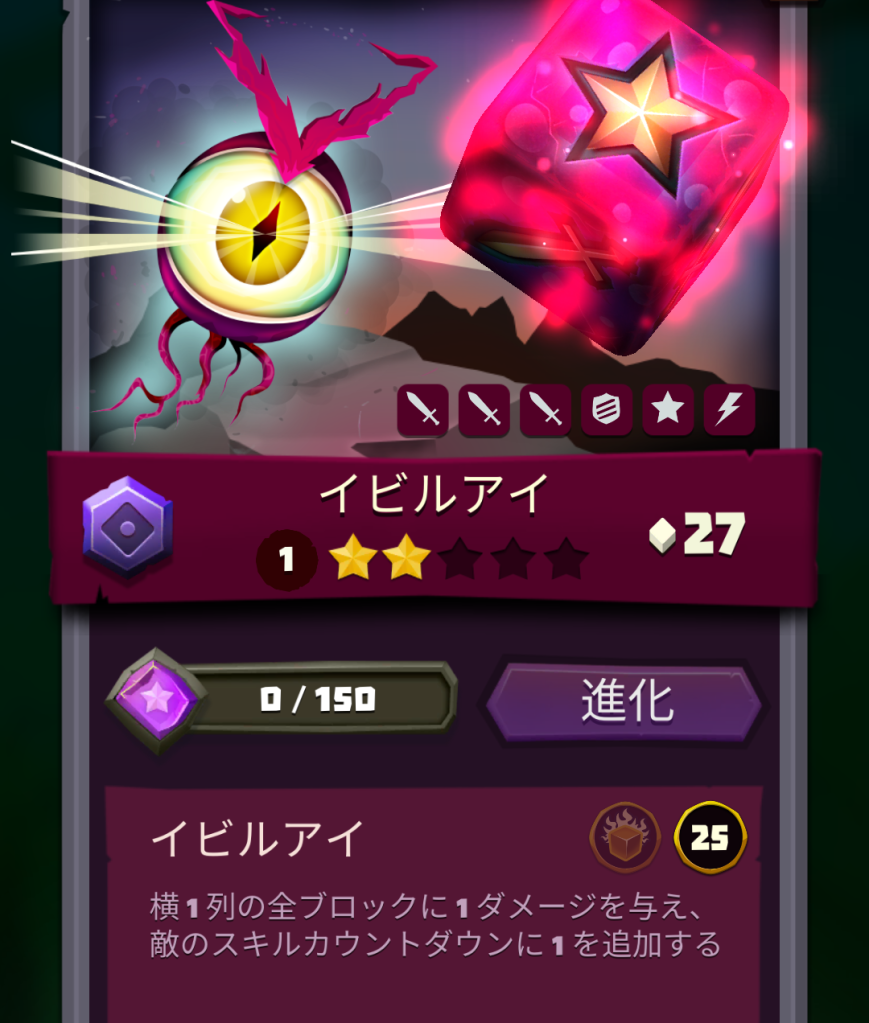
Each unlockable dice in Dice Hunter has a certain charm and personality to it. It’s rewarding to unlock new cards and even more rewarding to be able to read every detail on them. Make it a habit of learning all of the vocab on each card as you unlock it and check in regularly to brush up on your skills and confirm you’ve remembered everything. If you’ll feeling particularly sadistic try challenging yourself to only use dice that you can read in full and take them out of your team if you forget anything.
The scholar
The memoirs and notes section from the hub is by far the biggest and most useful part of the game. The language is also easily the harder part to grasp. There’s a heap of non-JLPT kanji and lengthy sentences so expect to have a hard time if you’re not use to reading stories or novels. The benefit here is that the rest of the game provides a lot of the context that will help you pick these scrolls apart. Remember you can also flick back and forth between Japanese and English to confirm if you are translating and understanding each line correctly.

Previous Posts


Additional images
 Games & Kanji