
If you’re anything like me, you likely wouldn’t have gone out of your way to play word puzzles, especially in this day and age. When I was significantly younger (Before the advent of mobile games) I would infrequently come across a bumper puzzle book and would flick through it to kill some time while travelling or sat in a waiting room. Ironically I do love a sudoku, which for all its Japanese-ness, never included a lick of language. The beauty of a good word puzzle however is that it strengthens the mind, adding to your vocabulary and word related problem solving. So it only stands to reason that the same thing in your target language would be just as efficient.
Platform and Languages
There are many types of Japanese wordsearch, both in the mobile app stores and online. The one I’ll be reviewing today, Colm Canavan’s Japanese Wordsearch, is available on both Android and Apple mobile devices completely free.
The app itself is in English aside from the Japanese text. Funnily enough, there isn’t even an options menu in the entire app, let alone the ability to set it into Japanese or any other language. I suppose in this case that’s almost to be expected!
Usability
As stated above, there are a number of similar apps available that can generate a Japanese wordsearch for you. For me personally, this one was the simplest and most rewarding. From the get go it offers a lot of freedom in regards to the size and difficulty of each puzzle but first and foremost you’ll get a selection of hiragana, katakana and kanji meaning you can adjust your playtime to scripts you are either more comfortable with or need practice in.
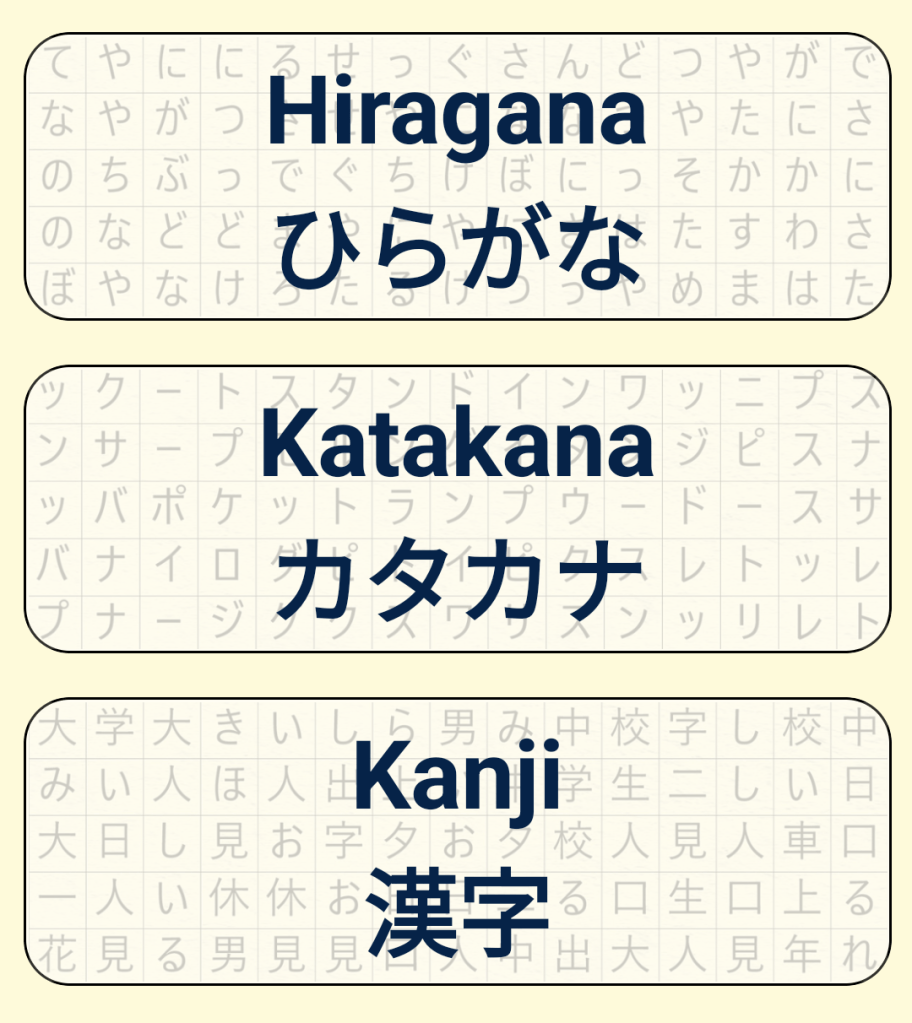
The selections past this either alter the size and shape of the board itself, the duration of the puzzle or the difficulty of the words generated. However I will say it is a little arbitrary in regards to vocab selection, with no real measure of the words you’ll expect to see. You’ll see under the character level a number of available words and you will likely see similar or shared Kanji words coming out on successive plays but there isn’t anything to tie these to anything akin to a JLPT ranking.
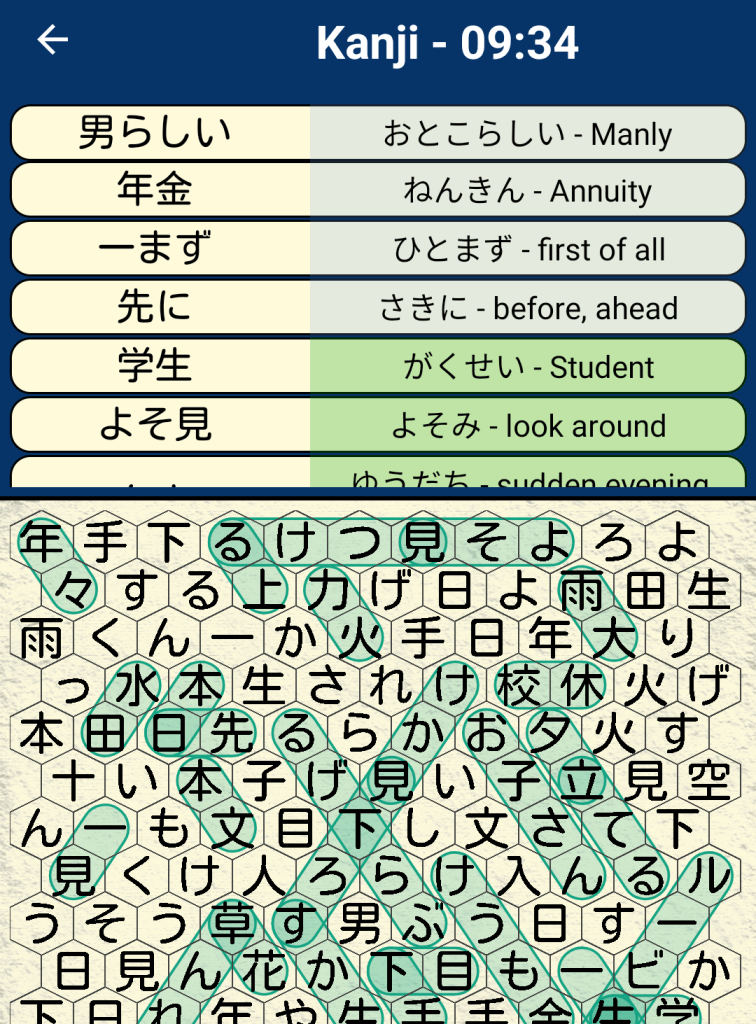
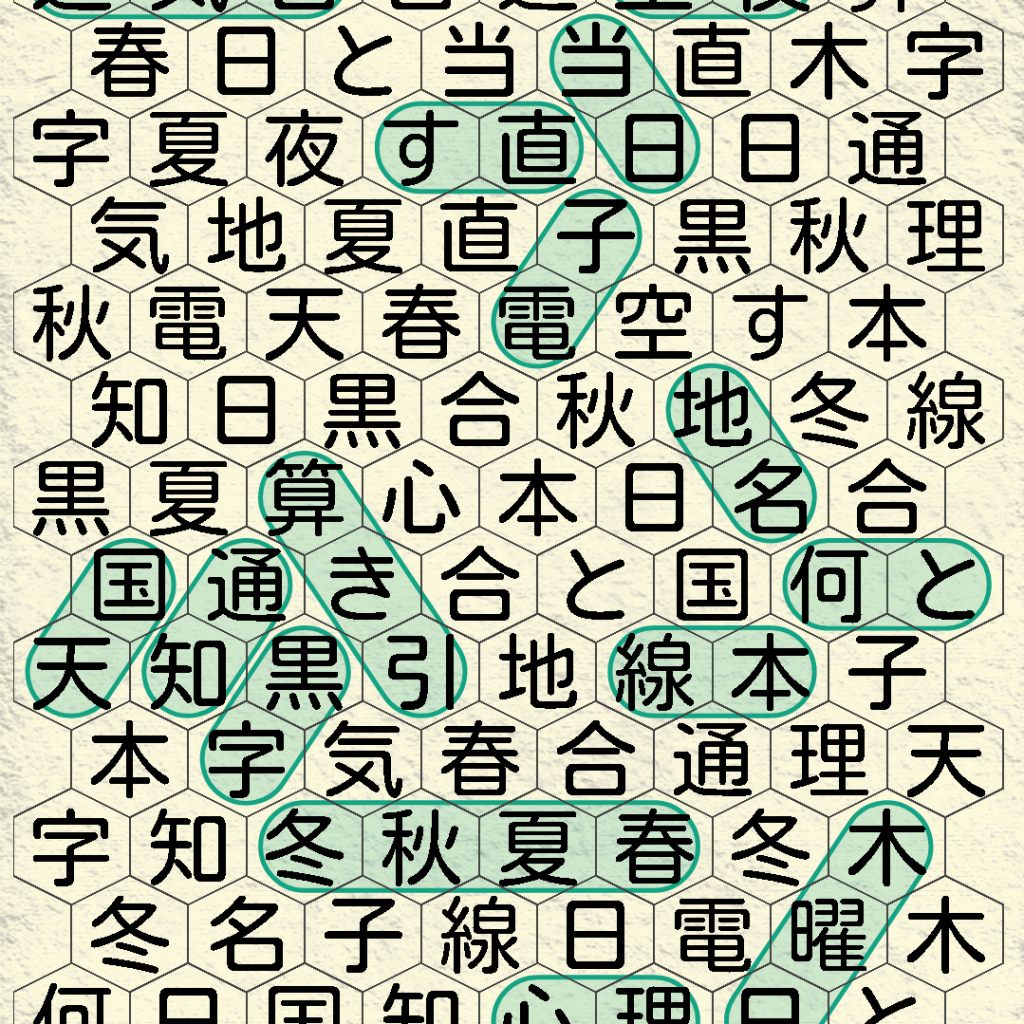
Once your wordsearch is produced you’ll be faced with a window showing a selection of words and the board itself. The word bank features pronunciations in hiragana and a description for each entry. It also allows you to scroll through your complete or remaining words, allowing you to review items you’ve found or move onto new words if you’ve gotten stuck. The board features many characters, because of course it does… It’s a wordsearch, plus the UI and clarity are nice so there won’t be any ambiguity in reading the kanji.
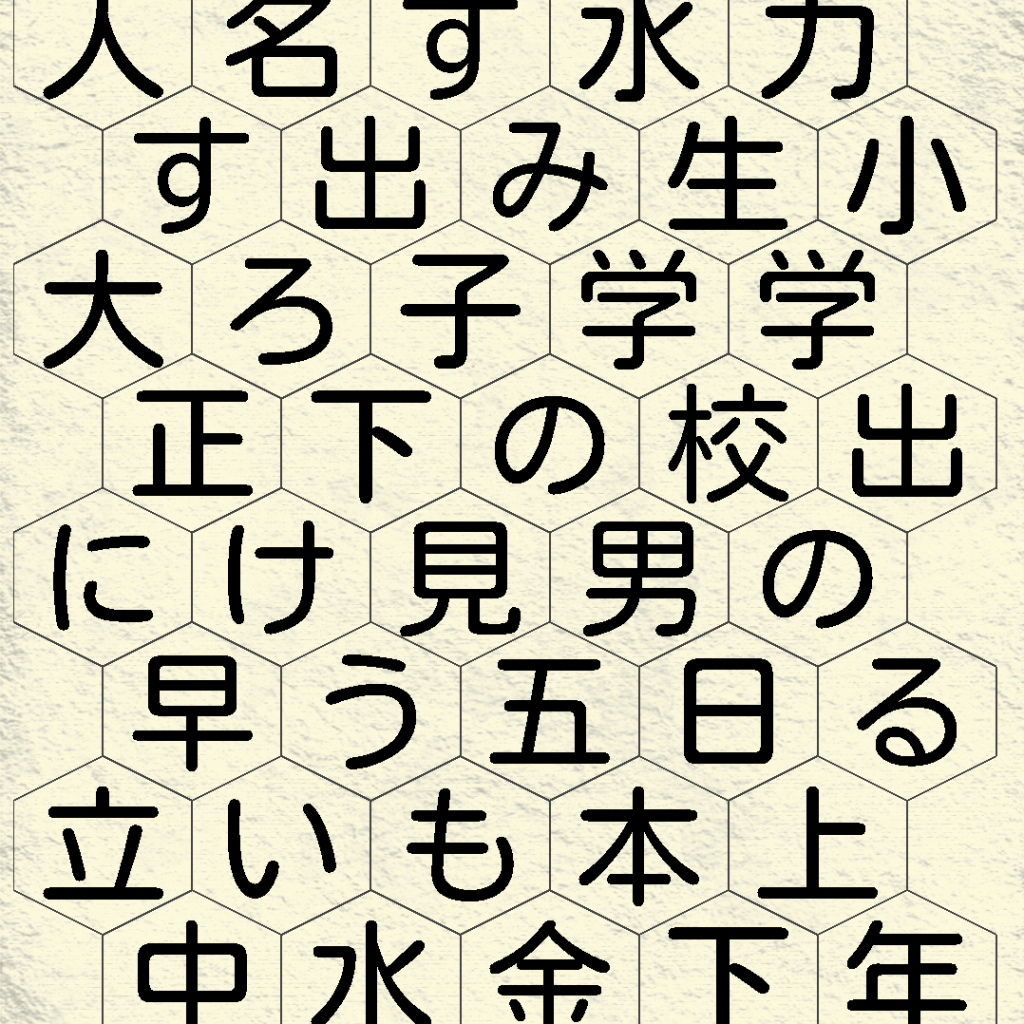
The major upside of this wordsearch app is the convenience. You are able to set up parameters that suit you (after a little bit of familiarity building) and play simple wordsearches without ads or distraction, online, offline or wherever you fancy. Mixing up a variety of levels, word difficulties, game lengths and even cell shapes can keep things fresh all whilst giving you thousands of words to find. The advantage of applying yourself to this is that the game is literally based on character recognition. While it won’t be the same mindset as when you’re studying kanji from textbooks or dictionaries, this new take on looking for and linking kanji will boost familiarity and is surprisingly engaging for how simple it is.
This app can easily be used in replacement for a vocab lists but essentially follows the same premise. You view words, attempt to commit them to memory and then move on. This way however you are forced to focus on one particular word, possibly even saying it in your head as a constant reminder, until you’ve finally found it. You’ll even get an SRS-esque effect (try saying that 5 times while you’re pissed) from repeatedly completing and starting new wordsearches. As if that wasn’t enough, just like with regular wordsearches, you’ll find words crossing over frequently. For a language like Japanese where kanji are attributed meanings rather than pronunciations this gives an abundance of words using the same kanji and shows you their readings at the same time, further strengthening your readings and familiarity.
While Japanese Wordsearch isn’t going to teach you any sentences or interesting grammar points, it is very good at what it sets out to do. If you fancy something that’s low maintenance and builds your vocabulary then you absolutely must add this to your mobile game roster.
Challenges and Methods
Time attack
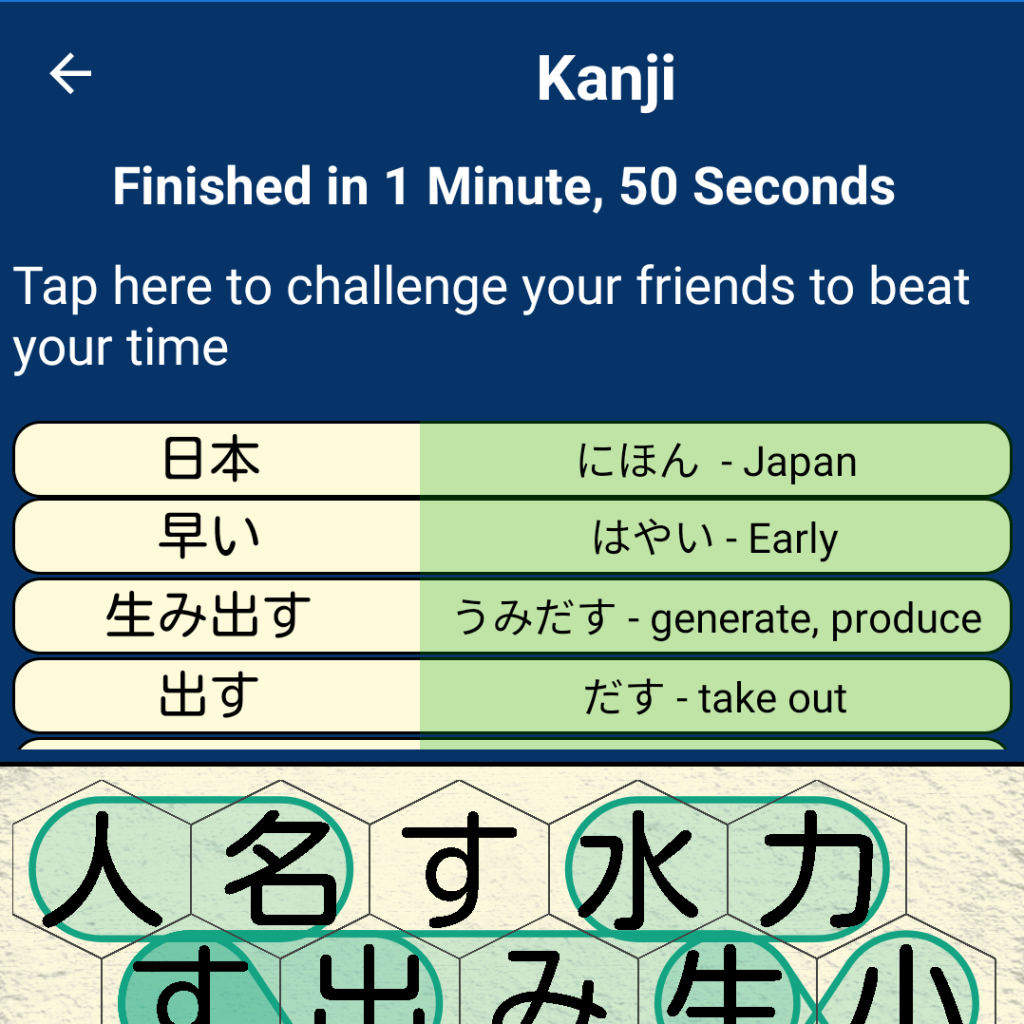
The gamer in me has to pin a challenge to anything with a clock, and when I’m looking to motivate myself there is nothing better than a little healthy competition (In this case it just so happens to be with myself). If you’re feeling comfortable with a difficulty setting see if you can best your previous times. For smaller searches this won’t feel like too much but when you have a much larger board this becomes a rapid way to push your skill to the next level.
Don’t cross over
This one may seem unusual but it’s been a little challenge I set myself and managed to encourage myself to get another 4 or 5 runs out consistently. While solving, do what you can to ensure you don’t cross over any words. In many cases there are a lot of options however as the number of words increases and the word level goes up options become limited. If you fail, try again. Simple as that.
 Games & Kanji