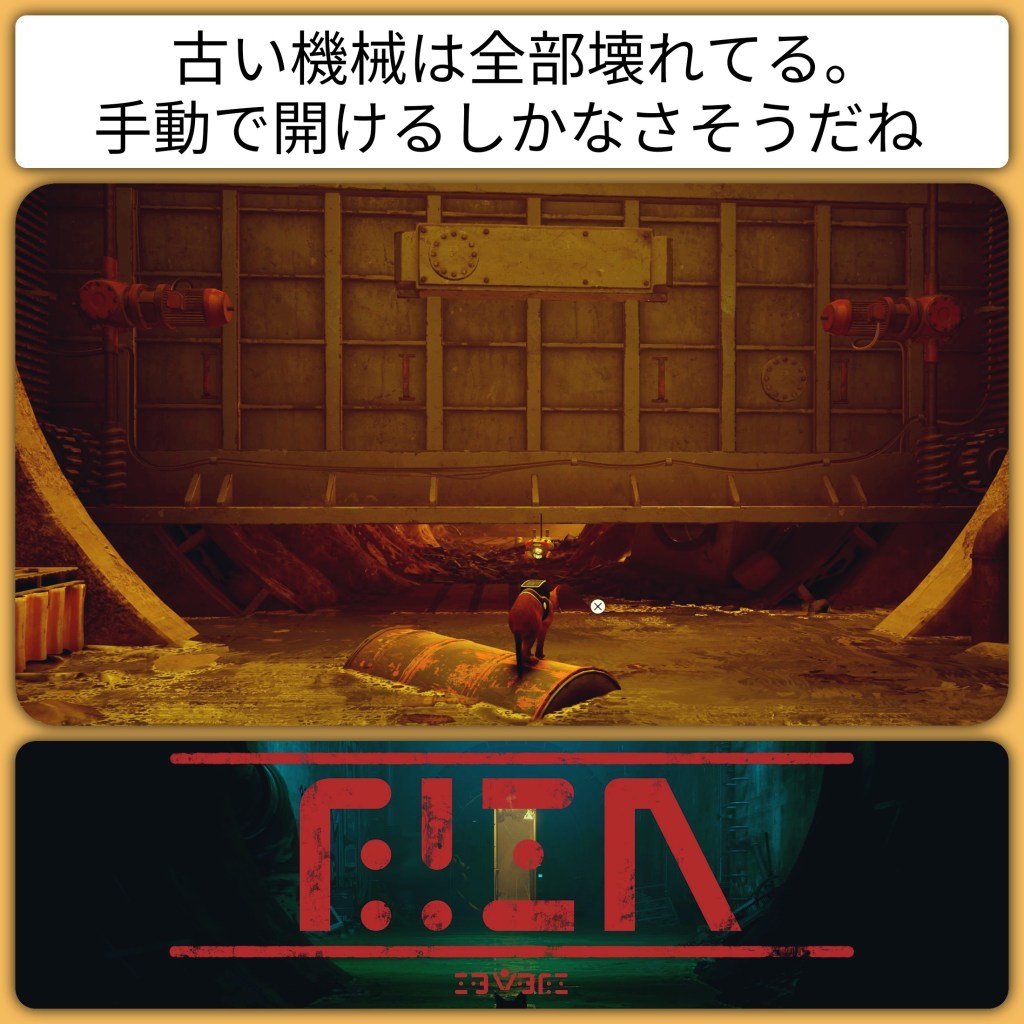
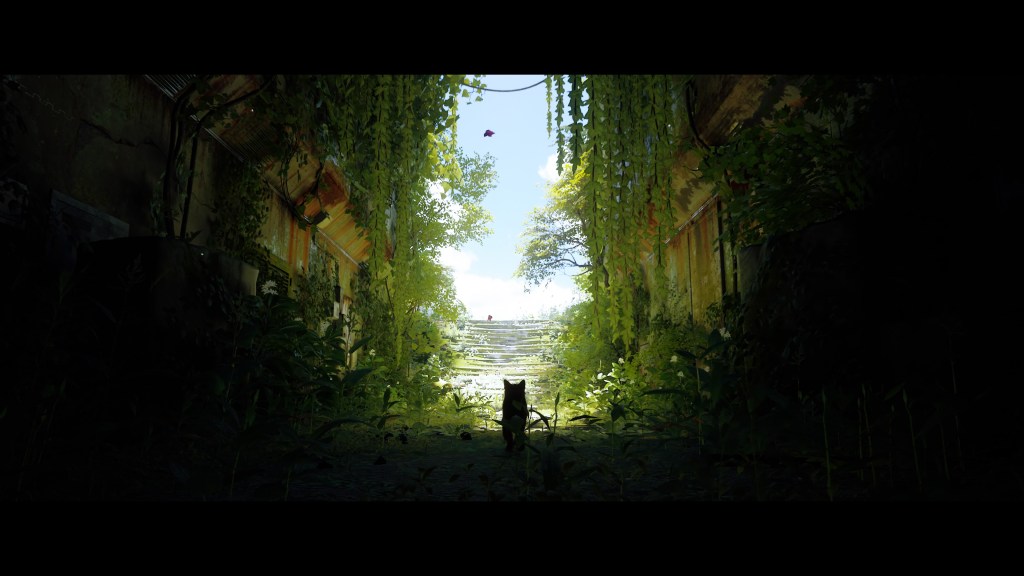
Some of you out there may have longed for a simulation game where you get to be a cat strolling around leisurely, meowing away with all your cat buddies and having an all around good time. If so, I would highly recommend steering away from Stray. If however you are looking for a dark and gripping sci-fi adventure that is sprinkled with horror elements then go right ahead. Stray exceeded my expectations in many ways, the story was dense and lively, the visuals were murky, interlaced with broken neon from days gone by, and the gameplay was wondrously simple yet consistently engaging. Games like this fall into a sleeper build of a sub-genre, more like an interactive, harrowing piece of cinema. The best example in mind to explain this sub-genre would be Journey, however Stray is thankfully overflowing with dialogue, making it even better for all you linguists out there. Definitely one for everybody to play through and experience at least once in your life.

Platform and Languages
Stray is readily available on all platforms aside from mobile. The price fluctuates depending on sales and platform. As of today you can pick it up for just over £20 on Steam.
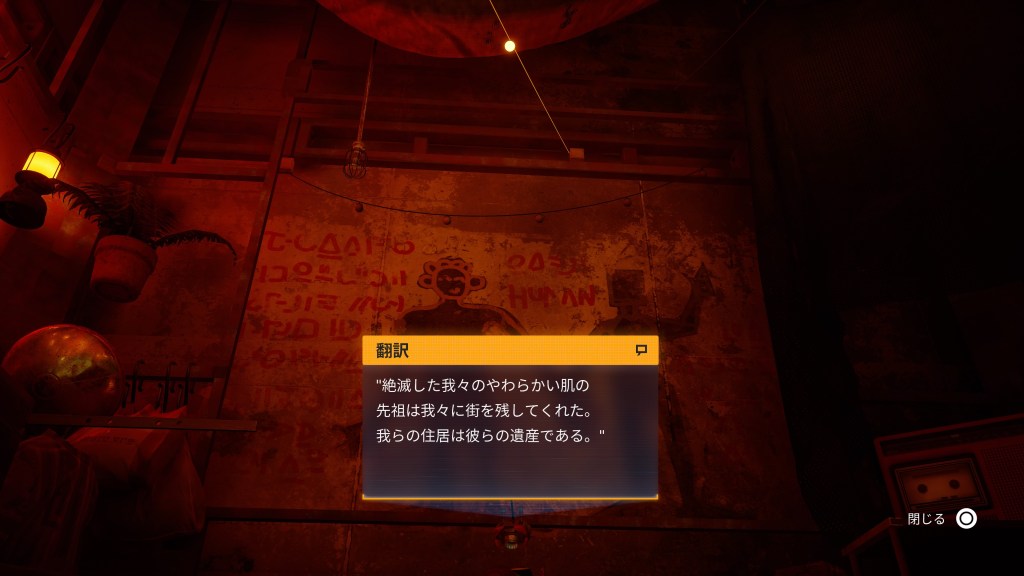
The language options are broad and easily accessible. You can either set the language before you start using the main menu settings, or set them on the go while in game. This gives you the added advantage of being able to check some dialogue in your target language and confirm your understanding in English without ever needing to return to the main menu.
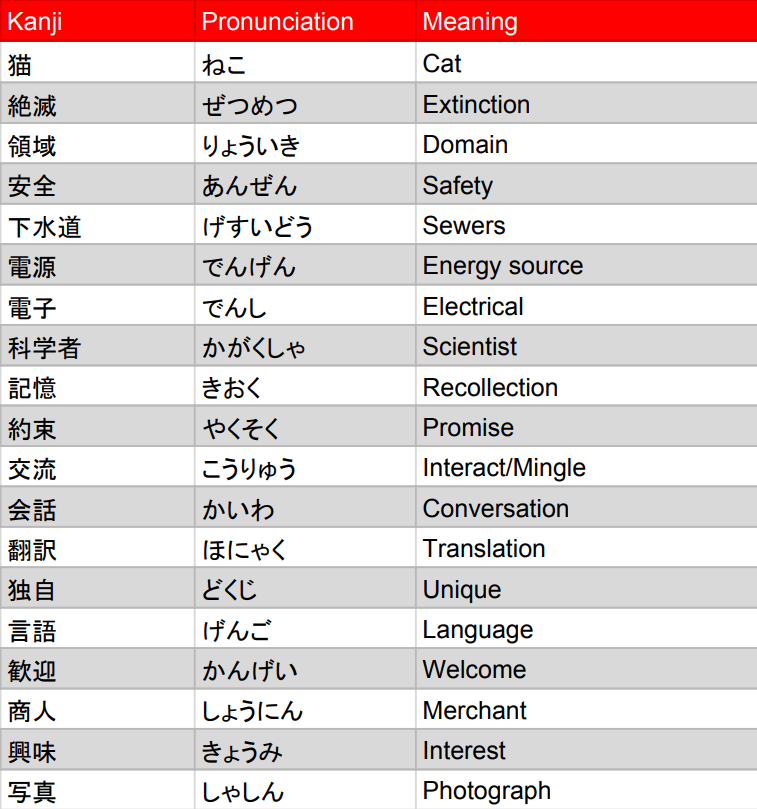
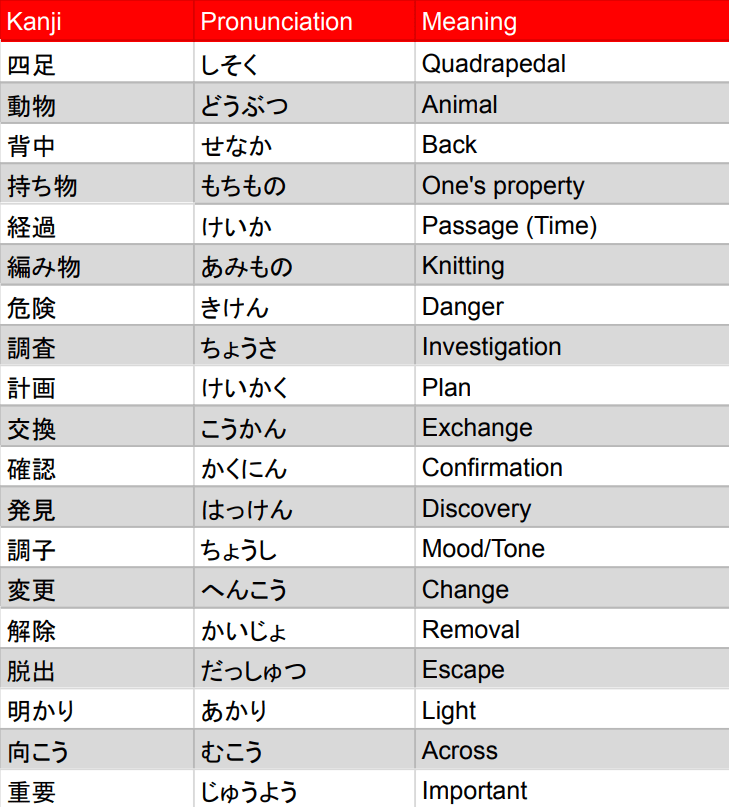
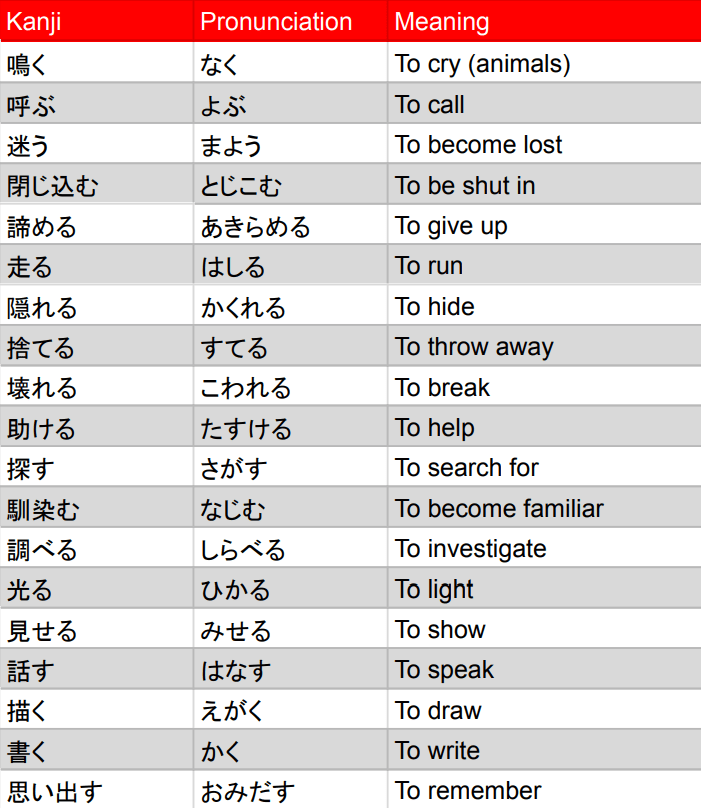
Glossary
Usability
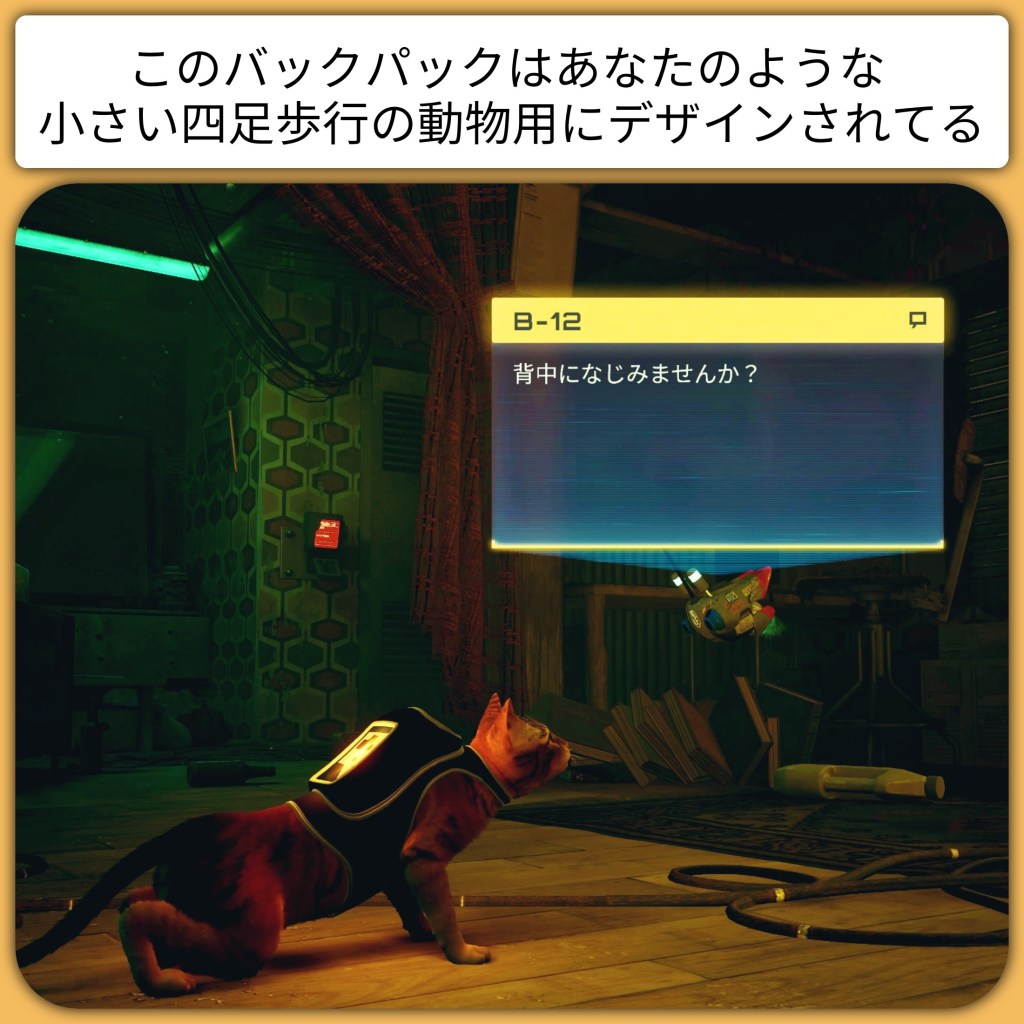
The opening sequence for Stray not only sets up a bit of an emotional rug pull, but also features no language (aside from the action prompts). There was a part of me that thought this would be the case. The game’s protagonist is a cat after all so I wasn’t imagining there would be reams of text. I had initially put this game to one side based on this expectation as I had only seen brief glimpses of the neo-dystopia that would follow. With all that in mind, you can imagine my happiness then when our quirky little bot buddy, B-12, decided to join us.
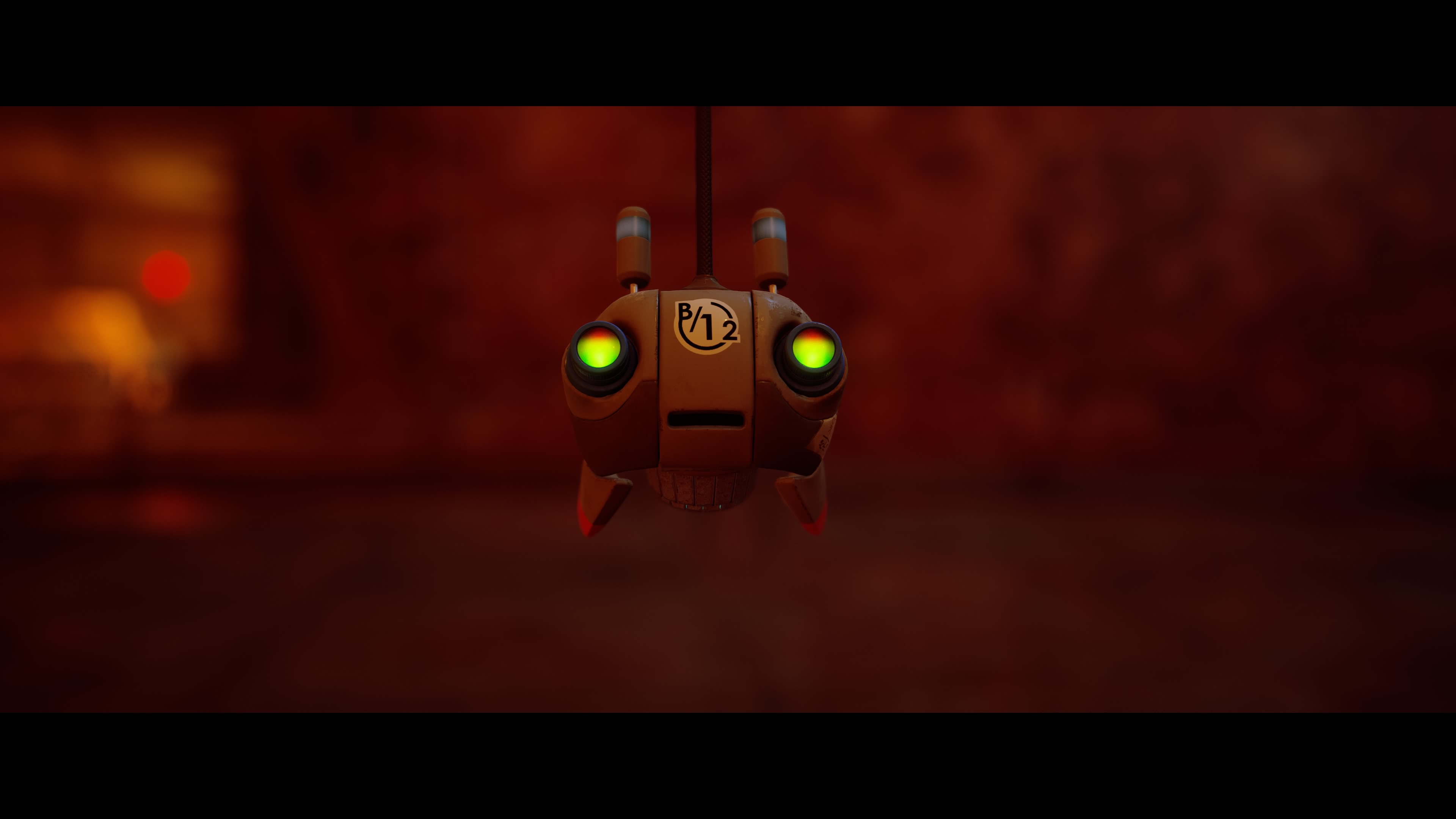
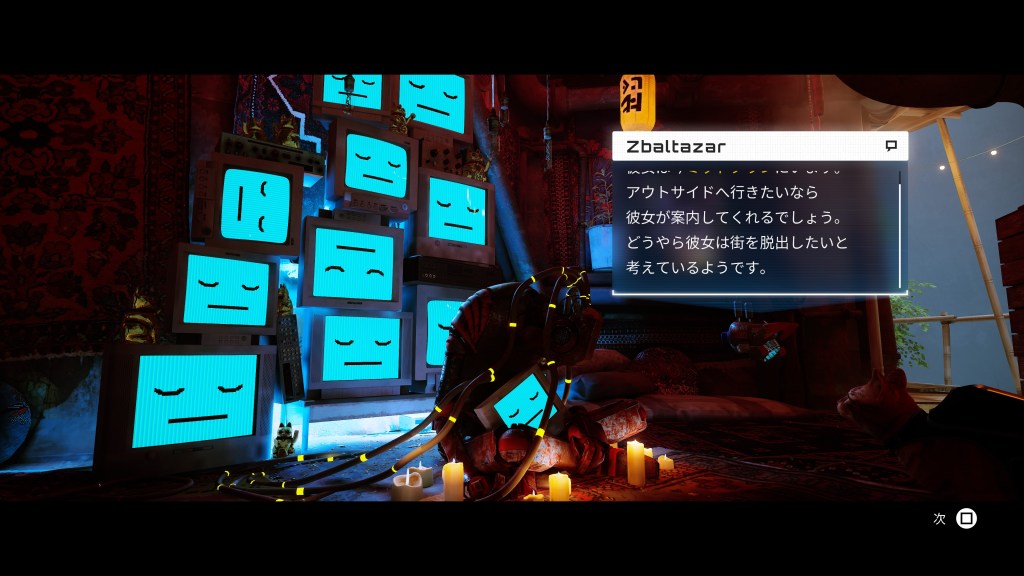
From the first chapter onwards B-12 will be your translator for the world around you. As you enter the slums you start to see sparks of life as the bemused robot citizens run in fear from you but, with B-12’s help, you can interact with each and every one of them and steadily become their friend and saviour. This is an interesting dynamic as B-12 acts not only as a character in his own right but also as your interface, inventory and companion, providing insights wherever you are at the push of a button. Amusingly enough, this is also used as a brilliant mechanic utilised at several points throughout the story to add to the feeling of loneliness and helplessness in the instances where you and B-12 are separated. It’s almost as if your dependency on B-12 to communicate with the world leaves you mute in his absence. The flip-side to this wonderfully smart and useful mechanic is that it is pretty much the only thing aside from the start menus that give any digestible language in the whole game.
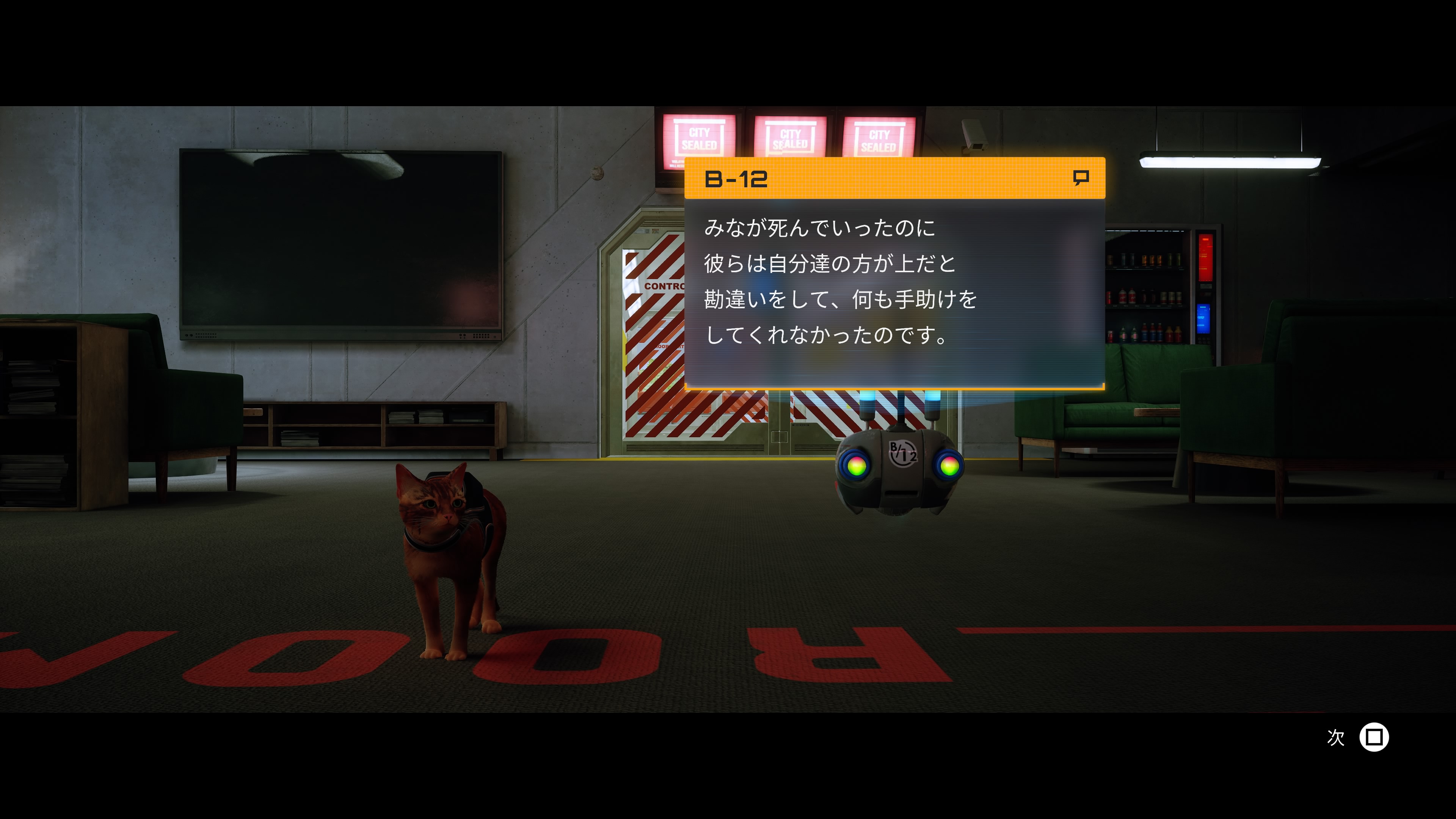
The text throughout Stray is clear. B-12’s interface is bright against the dark backdrops and the font is easy on the eyes. The style of language throughout the story is predominantly colloquial, and the types of speech you can come across typically fall into one of two factions. A small portion of robots are newer or less humanoid and use synthetic and mechanical speech. These will be bots seemingly built for one task, like the cleaning bots of the control rooms or some of the guard bots. The other faction, and the vast majority, are significantly more chatty and have clearly spent long enough in the slums to develop their own styles and roles. It’s actually quite charming that each interaction seems so unique and memorable, meaning you can invest in each of these characters and build a stronger interaction between what they’re saying and who they are. These different manners in speaking make for a beneficial divide in the type and level of language you come across, spanning ranges of politeness, simplicity and themes.
Aside from announcements and the previously mentioned menus, technically, all language in Stray is speech. There is no non-corporeal narrator to speak of, as everything you read is essentially translated on the spot by B-12, meaning every piece of text, written or otherwise, will be reflective of either that particular characters manner of speaking or B-12’s. This is a rarity that even some visual novels don’t achieve, creating an unusually conversational feeling and further adding to the before mentioned reliance on partnering up with B-12. Stray doesn’t feature any spoken dialogue, however I don’t see this as too much of a negative. The feel of the game is made somewhat sweeter and more wholesome by the chirrups and beeps of the residents and I feel like a lot of the charm and isolated feel of the city would be lost with voices. It also forces you to engage with the text in order to ensure you are understanding what you are reading.
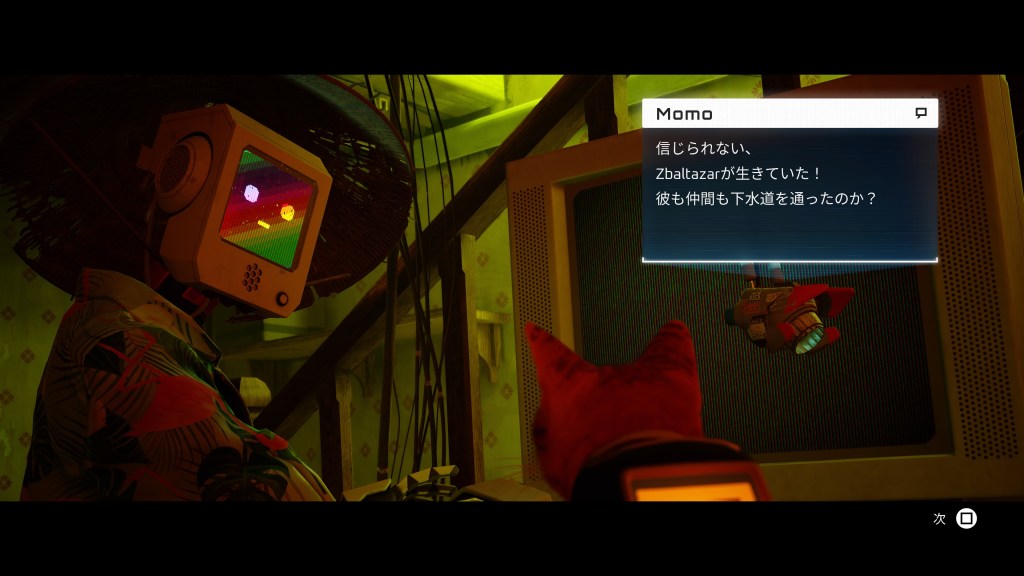
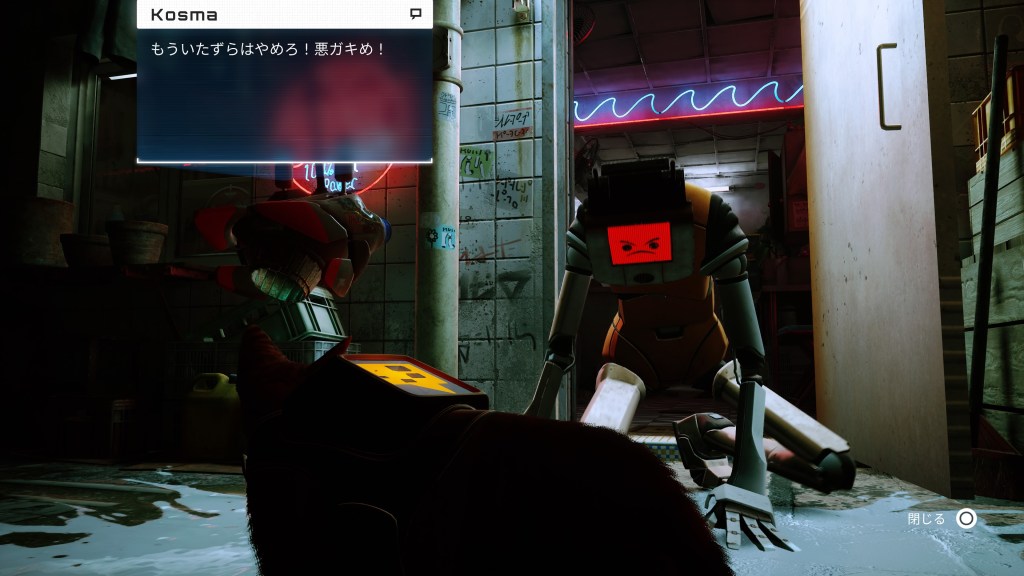
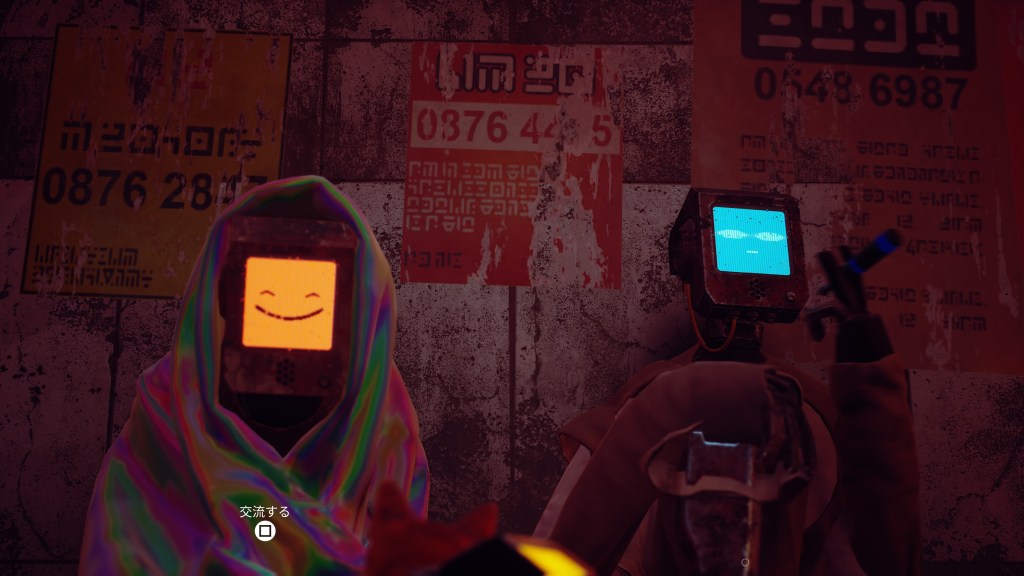
In order to progress through each chapter comprehension will be vital. Certain sections can be navigated simply based on visual cues however these parts tend to be the action sequences and wouldn’t be suited to stopping and reading anyway. The remainder of the game is open spaces with many winding alleys and an excess of robot people to speak to. The objective is frequently unclear until you’ve spoken to a sufficient number of the available NPCs. You may even find yourself cycling through the same areas a number of times until you’ve solved the fetch quests that bind everyone together. It’s balanced well enough that it is incredibly unlikely that you’ll just stumble your way through the story without a bit of mental acuity. Don’t fear for getting stuck though as you can repeat dialogues as and when you need to by interacting with the residents or by checking in with the latest clue with B-12 using the up button. There is also no rush whilst you’re reading as all of the text boxes will remain on screen until you push a button. This allows you to keep text on screen so you can look up any new vocab with your trusty dictionaries.
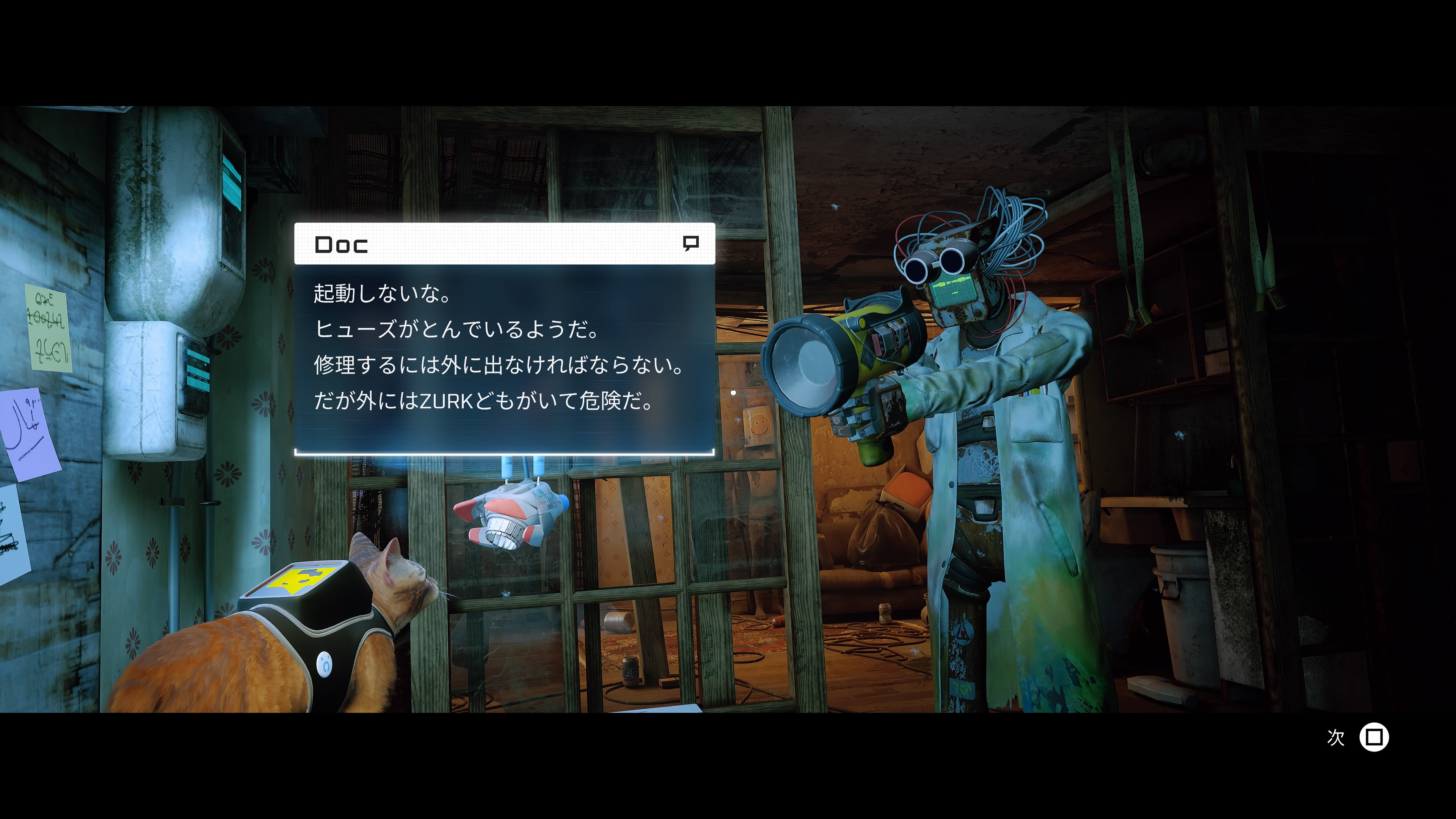
The language being necessary isn’t the only caveat that makes a game great for learning. You also need a game that makes you really want to read and Stray is fantastically built to encourage this. It’s been a little while since a story has gripped me like this and from the very start. I was invested in getting our hero back to his friends and helping the robots of the slums learn more about their past and potential freedom. Another great point is that the pacing is perfect. Memory plays a big theme throughout Stray so as each chapter progresses it drives the narrative and the reasons for the Outsiders wanting to explore. This pace is also exponential, with the later moments seemingly going a break neck speed. By the end of the story you’ll feel a connection to quite a few of the main characters, you may even grow to care for some of them. Without giving too much away there were a few moments where my heart was in my mouth so I was fully inspired to crack the mystery and make the slums safe again.
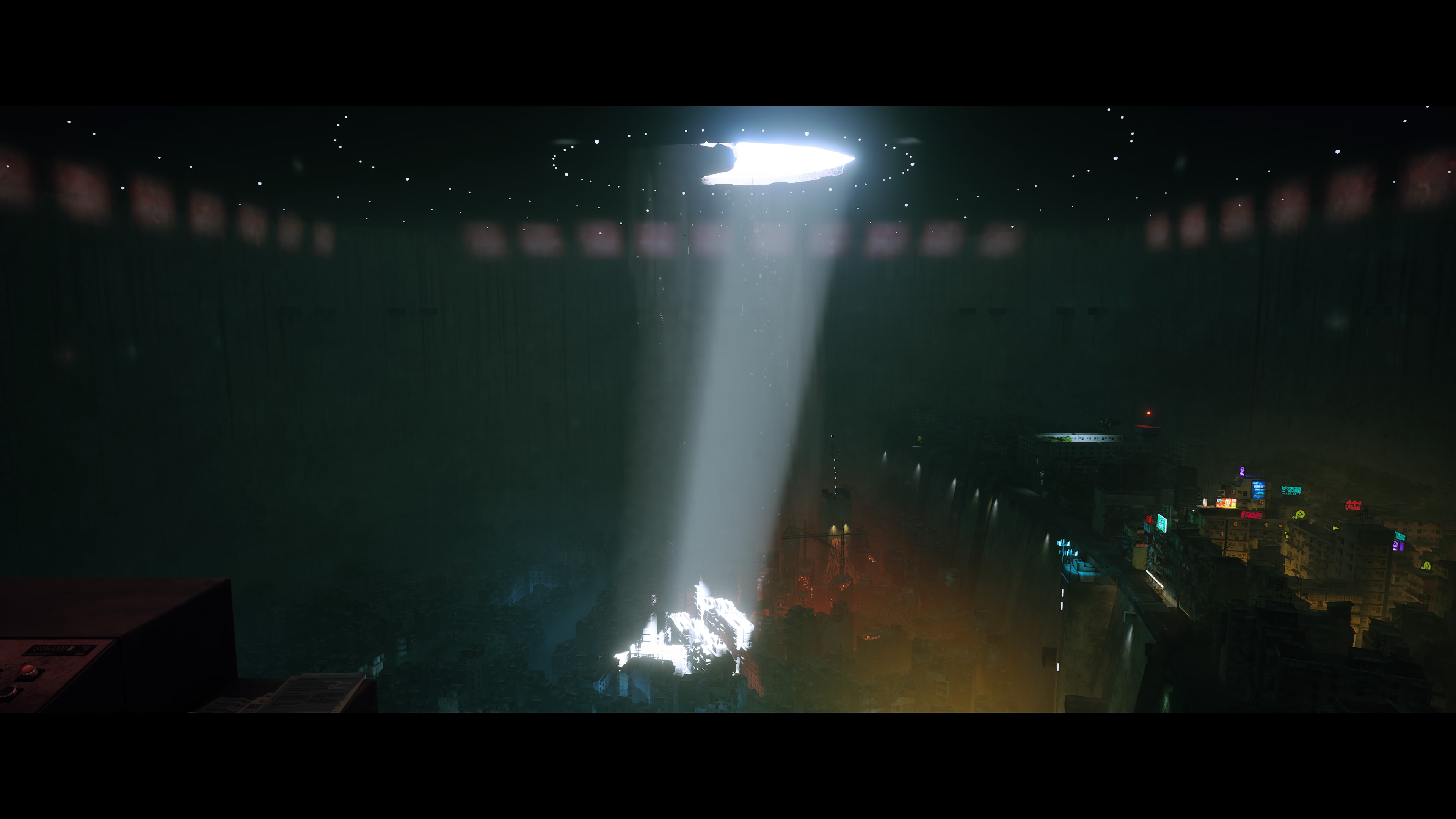
I was enamoured by Stray, playing it little an often before and after work. It’s a title akin to a good book, with twists and turns in every area and a full roster of deep and well developed personalities. I wanted to soak up every word and found myself learning more and more new vocab without it feeling like a chore. This sort of balance holds so much value and so I cannot recommend it enough. It’s also short enough that you can play through multiple times, allowing for revision and spaced repetition. I hope you can all pick this one up and enjoy.
Challenges and Methods
Getting to know the neighbourhood
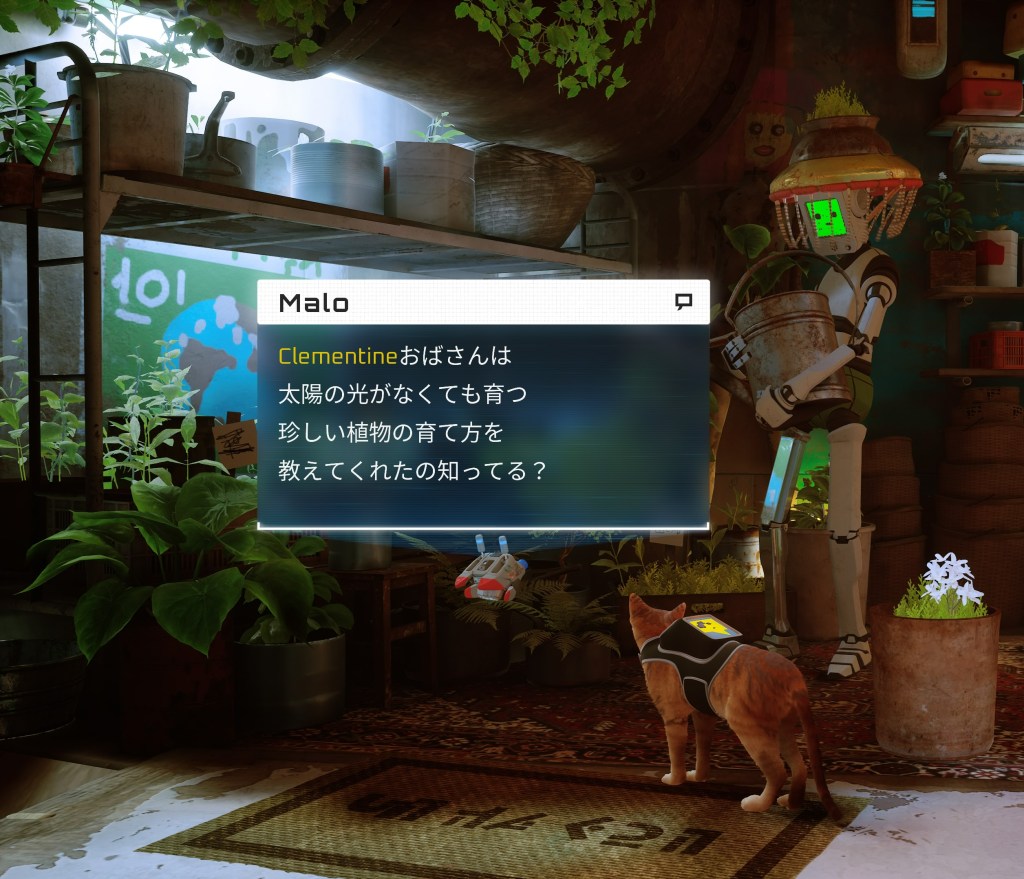
As stated, Stray is incredibly conversational. Trying to pin point each individuals personality type is a fun little game and can build your deductive reasoning in another language. Try using the topics and visual cues to discern what new words may be prior to looking them up and see if you can build your kanji knowledge based on themes that they appear in.
Chatty Catty
While you are discerning what each of the characters are saying, try your best to also vocalise what you are reading. As all of the language is essentially dialogue it’s likely that the structure of many of the lines would fit every day speech. Because of this it can be even more beneficial to practice speaking out loud to help with committing vocab and grammar to memory and practicing your speaking skills.
Previous Posts

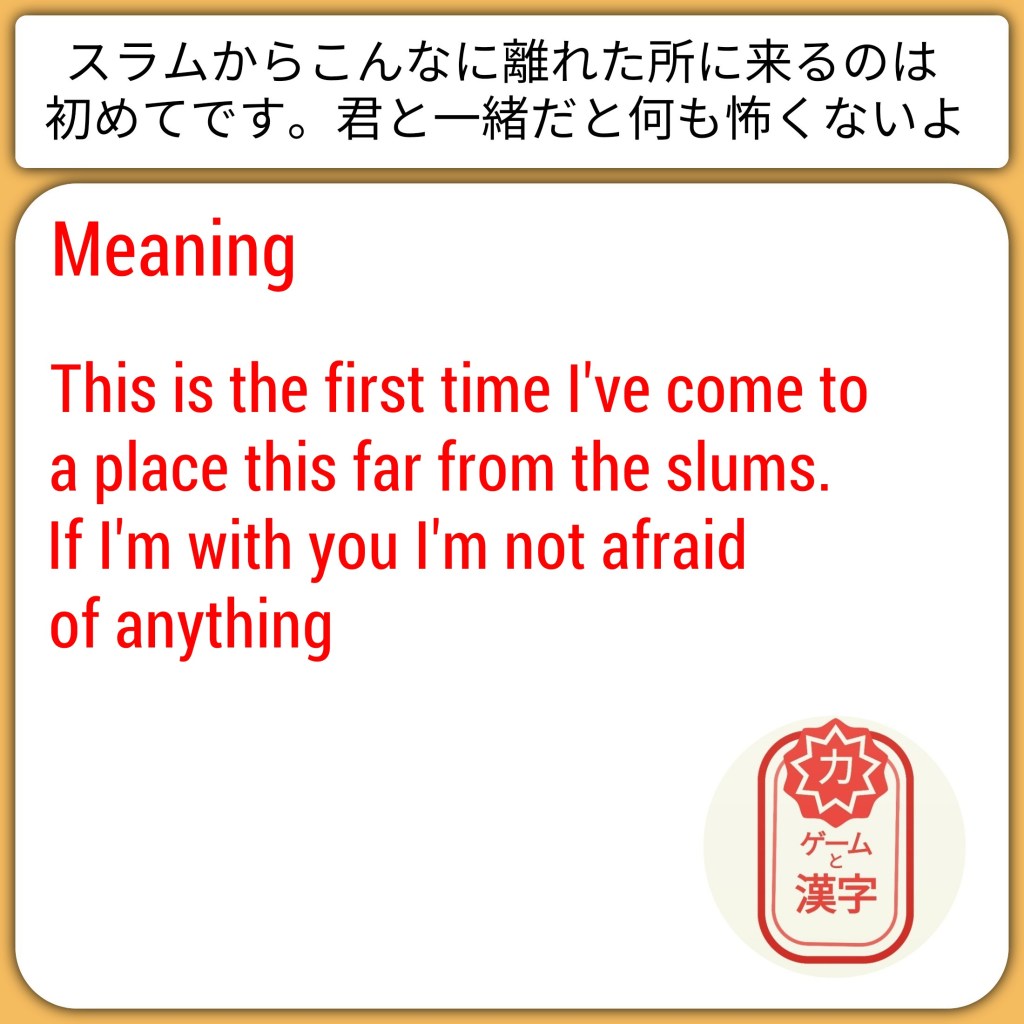
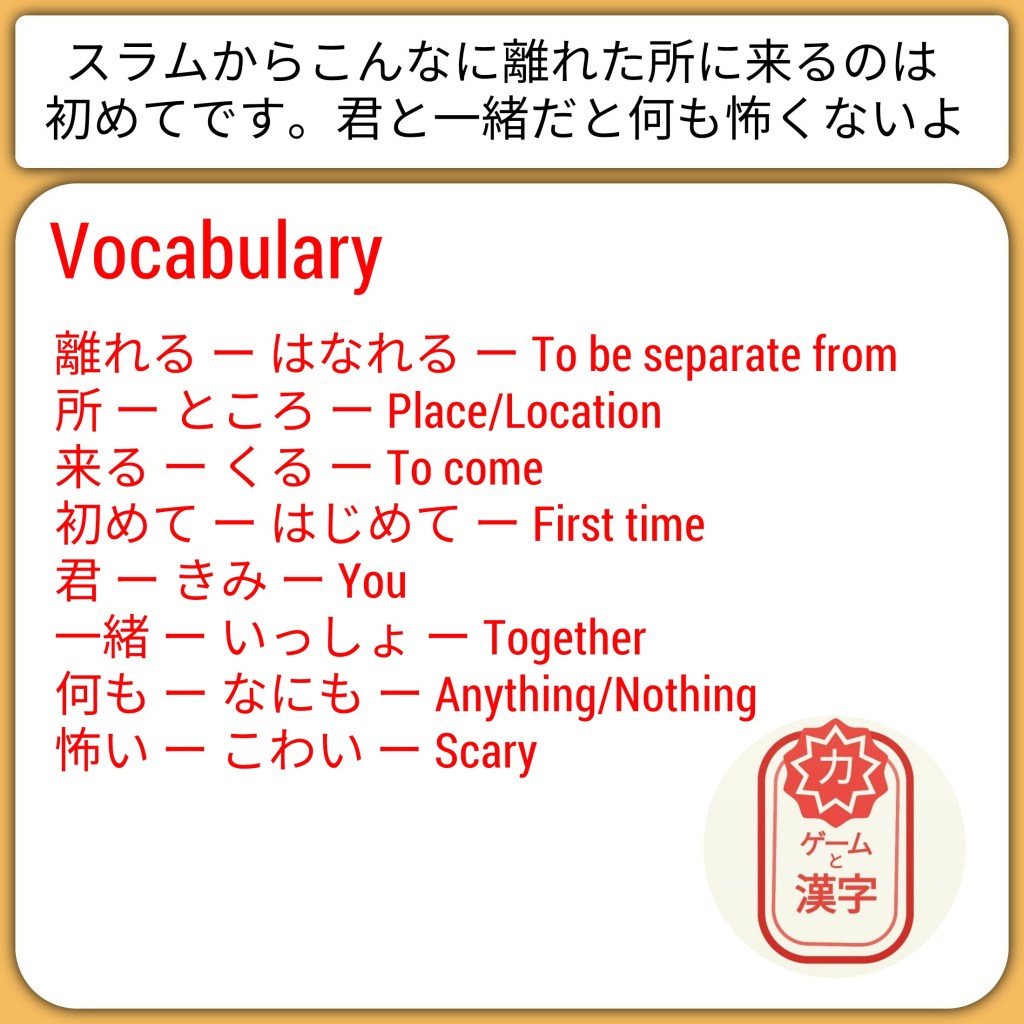
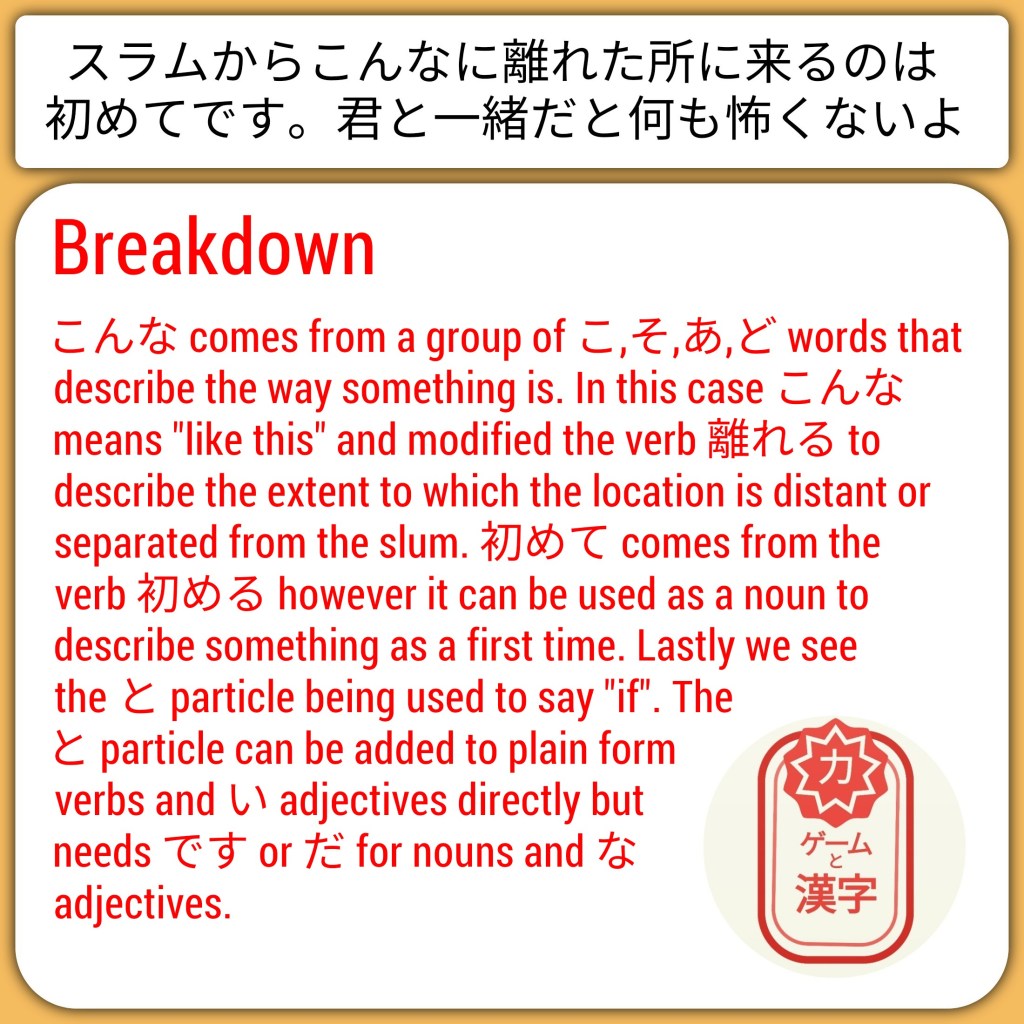
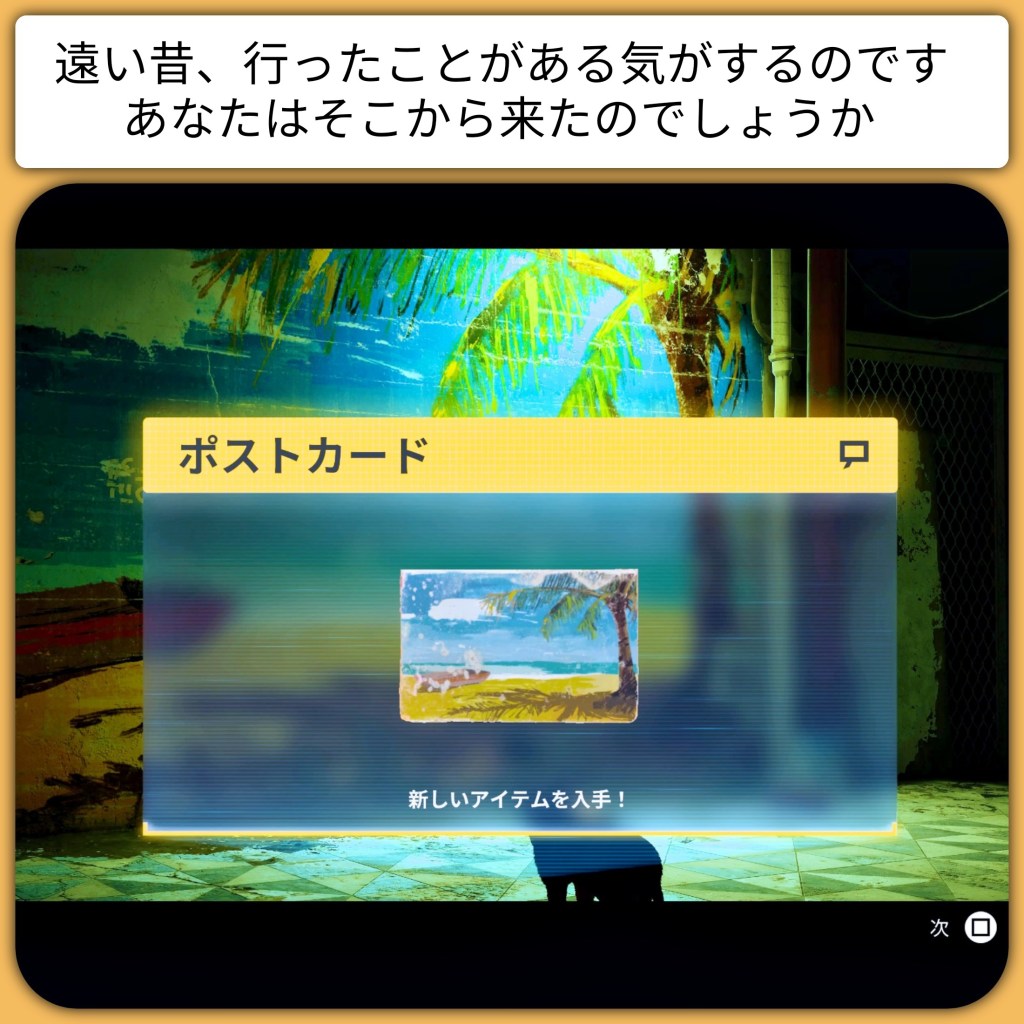

Additional Images

 Games & Kanji