
If you’re here it’s likely that you’ve learnt hiragana and are moving on to Japanese’s second script, katakana. As such I would recommend reading through my previous guide to hiragana if you haven’t already. You can find it here.
Katakana shares many similarities with hiragana so at first you may be wondering why it exists at all, however, it holds many of its own benefits and functionalities and is especially useful when it comes to playing video games. Buckle in and get ready for a very valuable lesson!
The use and rules of Katakana
カタカナ
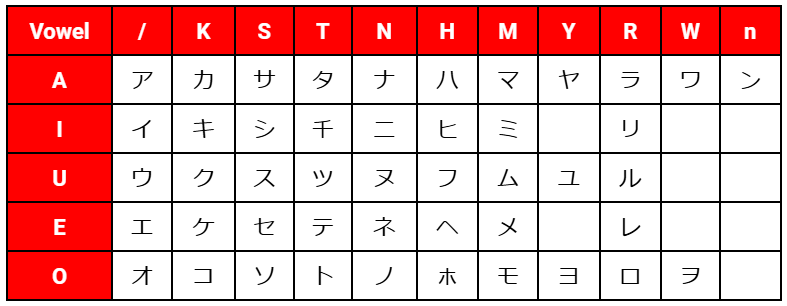
Katakana is made up of the same 46 mora (characters containing vowels and consonants that show the smallest unit of sound in a language) as we see in hiragana. These are also referred to as kana and follow the same basic pronunciation rules that we learnt in the hiragana lesson. As with hiragana we still have the usual exceptions. Firstly, the line marked with a “/” doesn’t contain a consonant and a number of kana may have either multiple consonants, such as チ and ツ, or no vowels, such as ン.
At first glance you’ll likely notice that katakana is much more angular than hiragana. This isn’t just because it differentiates it from hiragana but also because katakana was derived from Chinese characters (Hanzu) when they were “borrowed” and integrated into the Japanese language. Some katakana are still very reminiscent of the kanji they’ve been stripped from and are even indistinguishable in some cases without adequate differences in size or context clues.

The above katakana examples are famous for being incredibly similar to kanji counterparts. This may seem a bit daunting but again, it’s unlikely you’ll get these mixed up in actual Japanese writing. Not only will the size differ slightly but the context won’t typically allow for a random “ka” or “ta” to sit in the middle of a sentence on it’s own. As a good rule of thumb, if a character that may or may not be a kanji sits outside of a word written with other katakana you can almost always assume they’re kanji. If you see a collection of consecutive katakana then you can be fairly confident it’s katakana too.
As with hiragana, there are a few kana to keep an eye out for. Certain kana are written in a very similar fashion in both scripts, such as へ/へ or リ/り, and some katakana are incredibly similar to each other so are worth committing to memory.

Above is another famous example that you may even be familiar with already. The katakana シ (Shi) has been used numerous times in usernames and other media as a make-shift emoji simply for looking like a smiley face. These 4 kana differ only in the number of strokes or angle of the strokes and as such can be easily mixed up. If you look closely シ (Shi) and ン (n) have short strokes that face more horizontally, towards the 4 o’clock, while ツ (Tsu) and ソ (So) have more vertical short strokes, aiming towards 5 o’clock (subtle I know but you’ll swiftly become familiar).
Exceptions and usage
例外 と 使い方
The readings for katakana’s kana and the rhythm in which they are read in is exactly the same as hiragana. For instance a ま (Ma) in hiragana will be read as マ (Ma) in katakana, the only difference is the way it’s written. There are still some other modifications exclusive to katakana that we’ll look at in a second but do keep in mind that the exceptions and rules we looked at previously, such as dakuten and compound kana will still apply (all bar one, which we’ll address in a second).
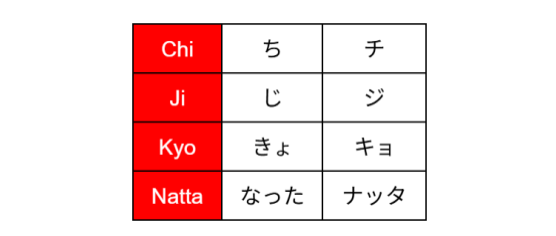
At this point, unless you already have some familiarity with katakana, you may be thinking “Why would the Japanese want a second script that’s essentially read in the same way?”. It’s a valid question but katakana more than earns its place within the language, especially for us gamers.
Katakana is used to denote a number of things but is predominantly used for “loan words” or 外来語 (がいらいご), which are words taken from other languages. For instance, the word “wine” is written in Japanese as ワイン. You may see that many frequently used words in the early stages of your studying utilise katakana. Don’t be fooled that this is only for words taken from english however. Japanese uses a multitude of other languages too. For example the word for bread (パン) taken from the French word pain or the word for part-time job (アルバイト) taken from the German word arbeit.
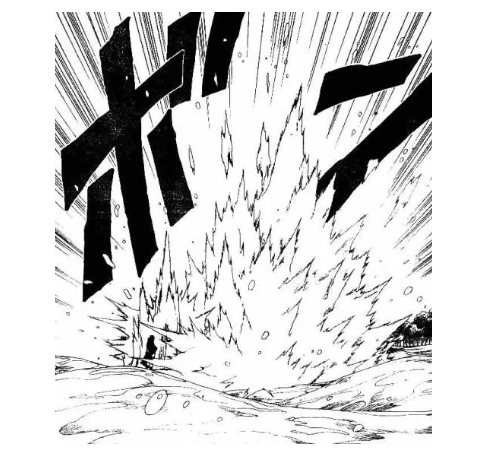
Additionally katakana is also used for emphasis or unusual manners of speaking. You may find that a robot in a comic or TV show will have their lines written in katakana to give a more inanimate feel. On the topic of comic books, sound effects will also often be written in katakana so keep an eye out for that too!
Modifying the kana: Extended vowel sounds
長音
As stated above, the rules for katakana match that of hiragana. I did mention “all bar one” so we’ll address that first. Previously we used similar sounding kana from the non-consonant row to extend the ending vowel sound of some kana, however in katakana it’s even easier to do this. We simply use a dash after the mora being extended and it does the same tasks with a single stroke. Loan words such as “beer” may have been written in hiragana as びいる, using an い to match the ending sound of ひ, but in katakana it’s simply written as ビール.
This is an easy rule to apply and is used for all extended sounds in katakana, including the sound effects and unusual manners of speaking mentioned above. The only thing to be cautious of is that the dash can (in very rare circumstances) be mistaken for the kanji for the number 1 (一) however, similar to identifying katakana in sentences, with practice and familiarity it’s unlikely that this will trip you up.
Modifying the kana: More compound kana
拗音
On to the new rules. In the previous lesson we saw that we could take smaller versions of the kana from the “Y” row of the hiragana chart and add them ahead of some of the other kana to make a compound sound. All of these sounds exist in katakana too but we also have a few more compound kana that have been introduced over time in order to match some of the sounds that Japanese lacked, but needed, for loan words from other languages.
Luckily these aren’t too expansive and typically involve adding smaller versions of kana from the “/” row ahead of other kana in much the same way as you’ve seen so far. Here are some of the most prevalent examples below:
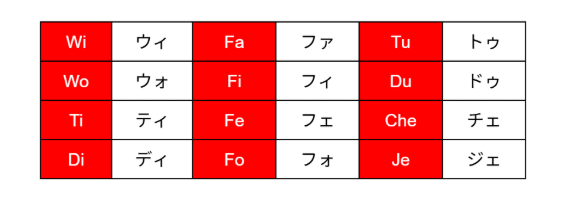
If you’re really clued up on your hiragana you may notice that some of these sounds have existed within hiragana, or are similar to what you’d expect other characters to sound like, such as ウォ and ティ, however these sounds don’t appear in Japanese derived words (at least not anymore) and as such have been replaced by their katakana counter parts.
Modifying the kana: More dakuten
濁点
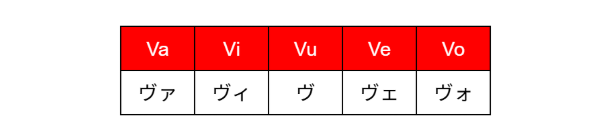
As with the other rules above, katakana has a teensy bit of expansion on its kana that can be dakuten’ed too. One consonant that Japanese is missing is the letter “V”. There are Japanese words where this has been worked around, using a “B” instead, such as the word テレビ which comes from “Television” however in the end katakana has since been used to rectify this. By adding dakuten to the ウ kana we can make a “V” sound and then we can further modify this with compound kana to make the below possible combinations.
Putting it all together
あわせて いこう
Essentially, that’s it. With just a handful of new, exclusive rules and a bit more time invested to learn the characters you’ll have two of the 3 (technically 4) scripts done and dusted. As mentioned before, katakana is exceptionally useful for gamers and lovers of all things fantasy. Katakana is used to write out loan words but it’s also used in a lot of cases for fabricated words. This means odd and unusual monster names, fantasy locations, spells, weapons, materials, potions, races, technologies and more. By investing in, an arguably simple script when compared to kanji, you can reap countless rewards while playing your favourite games.
I started my japanese journey playing Monster Hunter, and believe me, being able to read the vast majority of the available equipment within the first weeks of learning the language was infinitely useful and confidence boosting. You may find that not all katakana words are easily decipherable and may differ from the exact English pronunciation (to be expected with the more limited phonetic range) but with time and a few tricks you’ll soon learn to overcome these hurdles. One of the best pieces of advice for ensuring you’re reading something correctly in katakana is to read it multiple times, getting progressively slower, to see if it starts to sound familiar, and if not, consider that it may be an abbreviation for the full word. For instance, a word like アパート may seem completely alien to begin with but as you read it slowly you may realise it’s missing the back end of the word and actually means “Apartment”.

Another thing you may notice is that some katakana words don’t match what you’d expect. They may have either a slightly different vowel sound to what may sound more natural in English or be oddly shortened or mis-matched from their source. This is inherently because the katakana words were created in the Japanese language, and match their expectations, and have now been established and rooted over time. You may at some point either try to guess a katakana word or try to pronounce it in a Japanese accent with a “more corrected” pronunciation that still fits within the rules of the kana. Best advice, don’t do this. Not because people are arrogant and want to stick to their own ways, but because they may not have any idea what you’re talking about. It’s best to learn the genuine Japanese readings, even if they seem a bit odd, and stick with them.
Katakana is an entirely unique beast but well worth the time investment. See a collection of below examples and test out your recognition and some of the new rules you’ve learnt above:
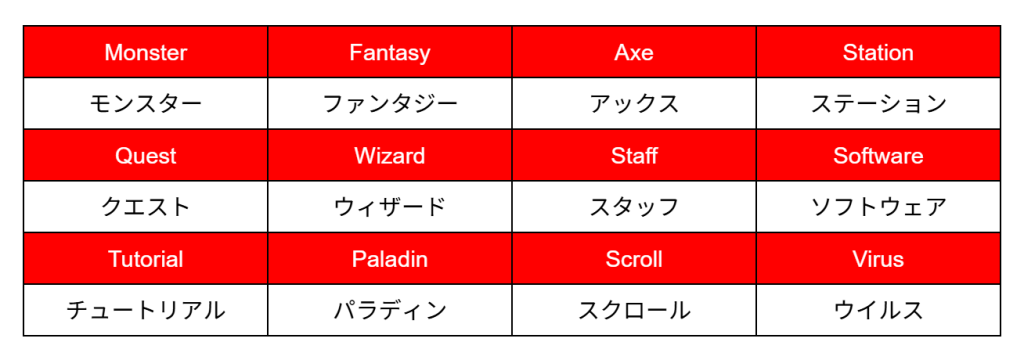
I hope you’ve all been enlightened to the benefit and return on investment that is katakana. Please do let me know how you get on with reading all manner of fantastical gaming vocabulary and do prepare yourself for the next steps of Japanese scripts. We’re moving on to some of the quirks of kanji next, strap in ‘cus this is where things get a little bit more daunting…
Glossary of terms 用語集
Mora = A symbol denoting the smallest unit of a phonetic language. Can show phonetic timings such as sounds shorter than a single syllable.
Phonetic = Relating to pronunciation.
Kana = A word that references a character from either hiragana or katakana, made from the ending of either word. and other Japanese scripts.
Hanzu = Chinese characters brought over by the Japanese and used a basis for Kanji
Stroke = The brush or pen strokes used in order to write hiragana, katakana and kanji.
Gairaigo = The Japanese word for words loaned form other languages but written in Japanese script. E.g アパート for Apartment.
Chou-on = The Japanese name for a lengthened sound made by adding kana of the same or similar vowel sound after the first kana.
You-on = The Japanese name for compound kanji, where small versions of the “Y” line of kana are added after other kana to make a compound kana that last for just one beat.
Dakuten/Han-Dakuten = A small double dash added to the top right of certain kana to soften or change the sound.
 Games & Kanji