
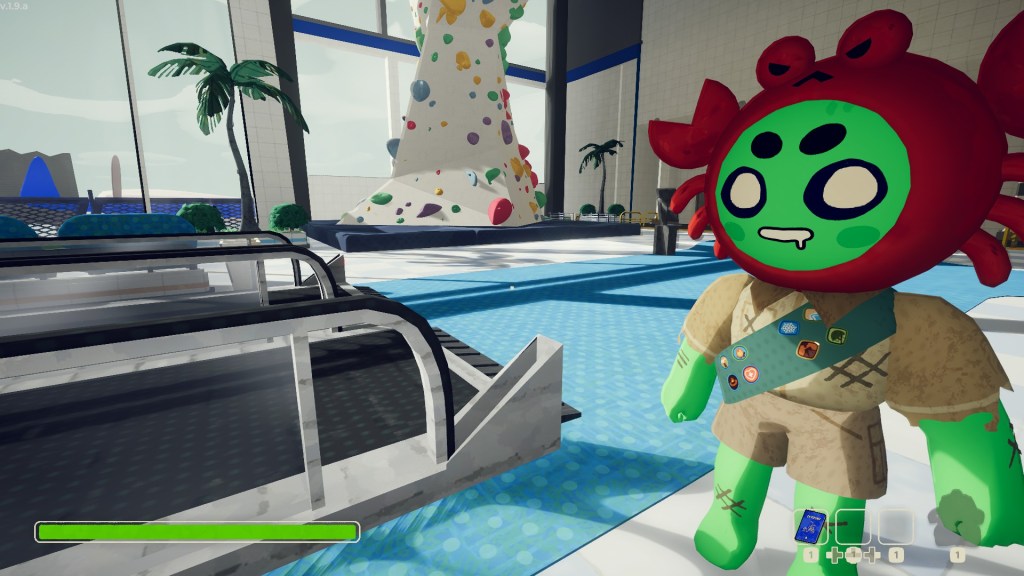
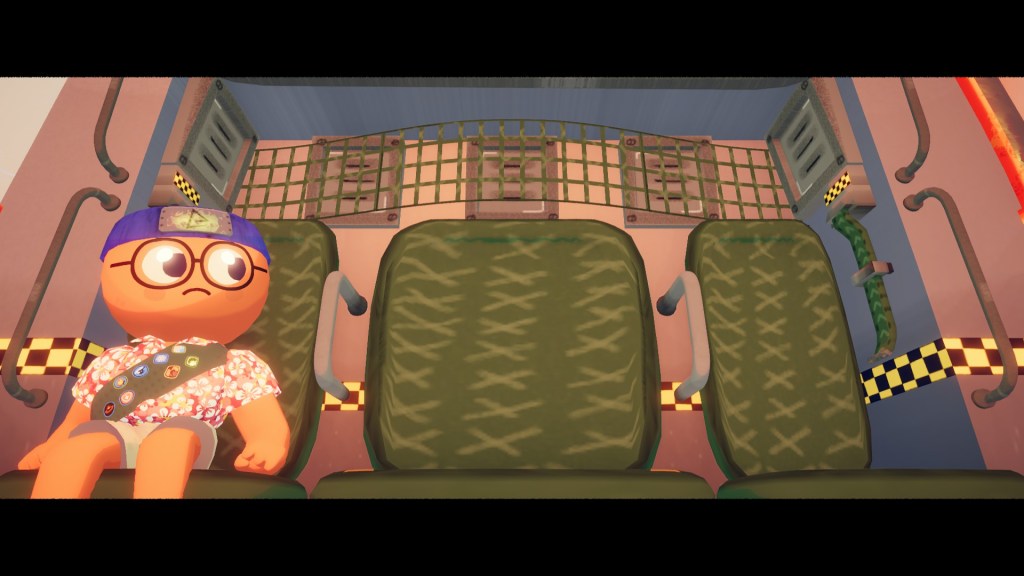
Day 1, I wake up on an unknown beach, a surprise considering my plane was bound for civilization. Before me lies an enormous mountain, scattered remains of suitcases flung from the burning wreckage of what was my comfortable plane, an unusually charming green plushy (I think I’ll call him Bing Bong…) and a little pocket manual. I open it, seeing imagery of a scoutmaster from a distant past and a collection of beautiful Japanese writing, and I begin to read until the hunger starts to slowly seep in…
I think I may be a little too into this but since Peak’s release I’ve played it almost every day. Not only has it cemented itself as one of the most popular games on Steam right now, it’s also become somewhat of a societal icon, hilariously coupling itself with the sounds of Wicked’s “Defying gravity”. Comedy aside, the game stands as a fantastic metaphor for perseverance but allows enough levity for you and your friends to still be a raucous, laugh-a-minute party game. I really wasn’t expecting too much in the way of a language learning experience but boy was I wrong, and that’s fine by me as it means I get to keep on climbing!
Platform and Languages
At the time of writing this Peak is just a PC exclusive however, given its popularity I don’t imagine that will last. You can pick it up on Steam for around £6 (Around $8).
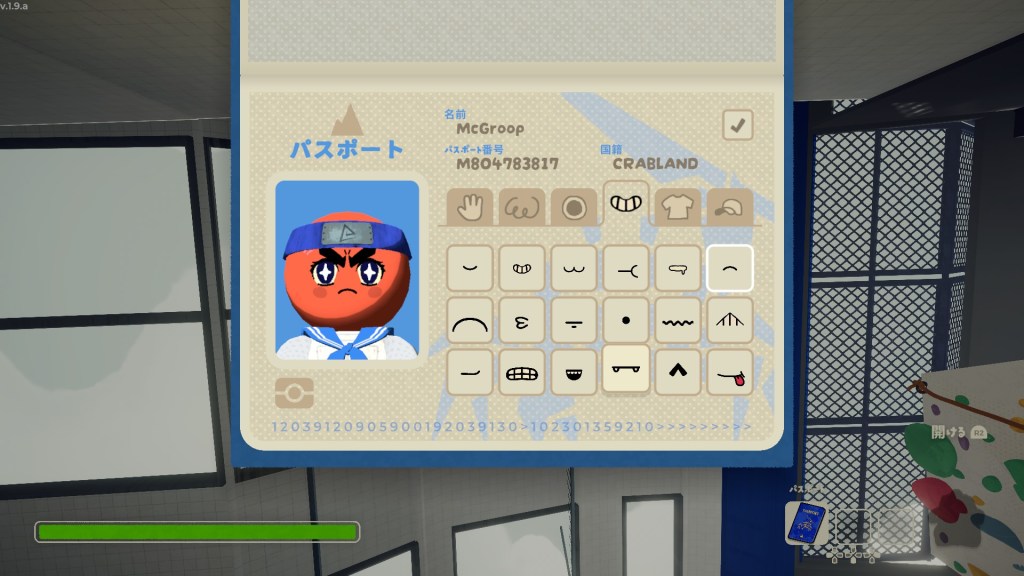
When Peak came out it was depressingly only available in English which put me off it for some time, however shortly after we received the language patch, adding the usual selection of popular languages. The language can be changed at any point from the main or pause menu, meaning you can quickly swap back on forth mid-game if you need to.
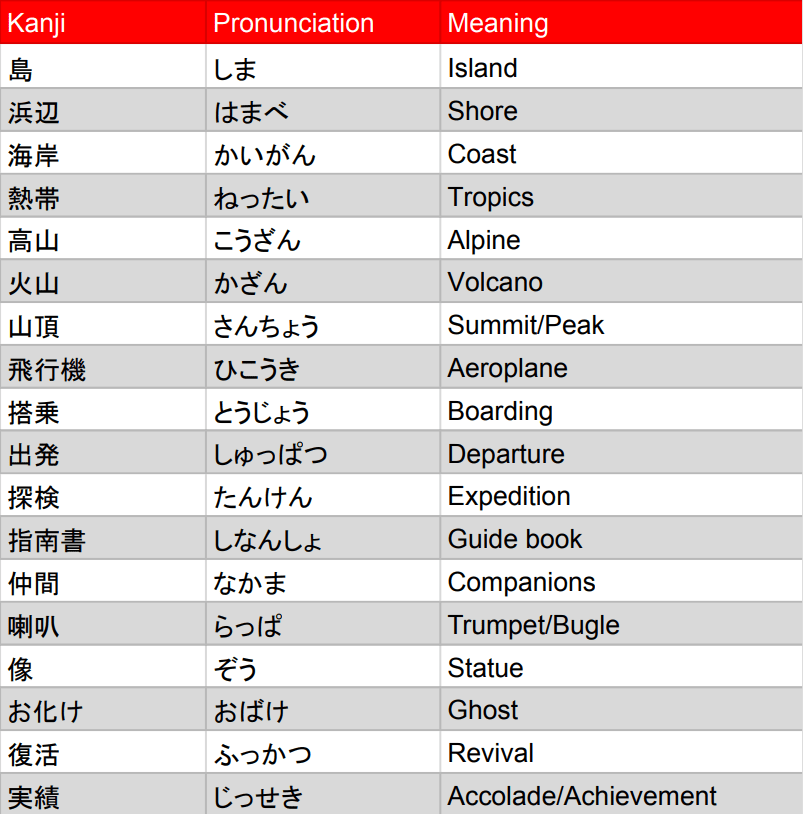
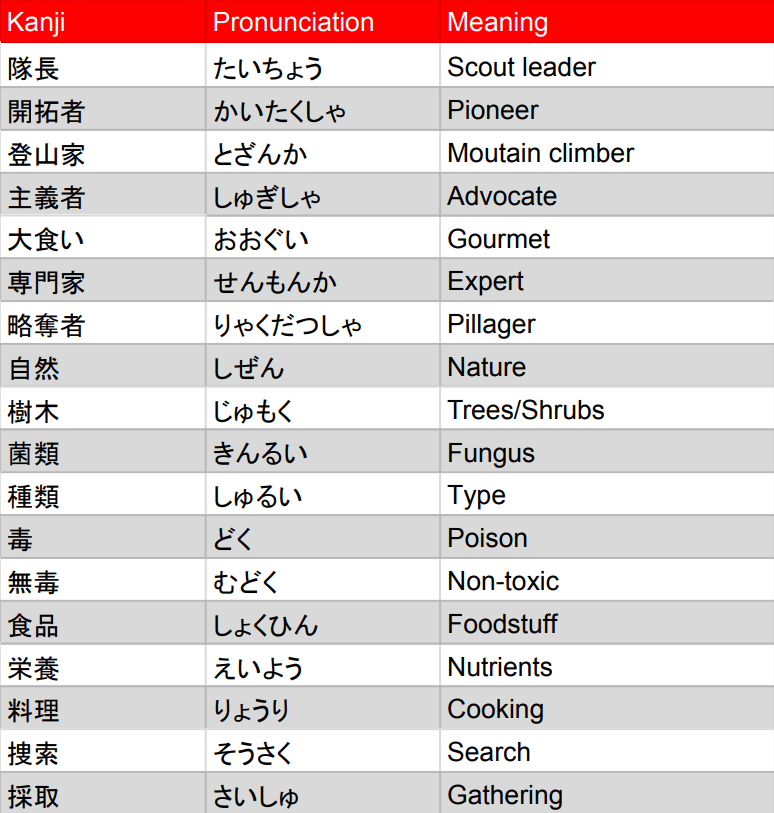
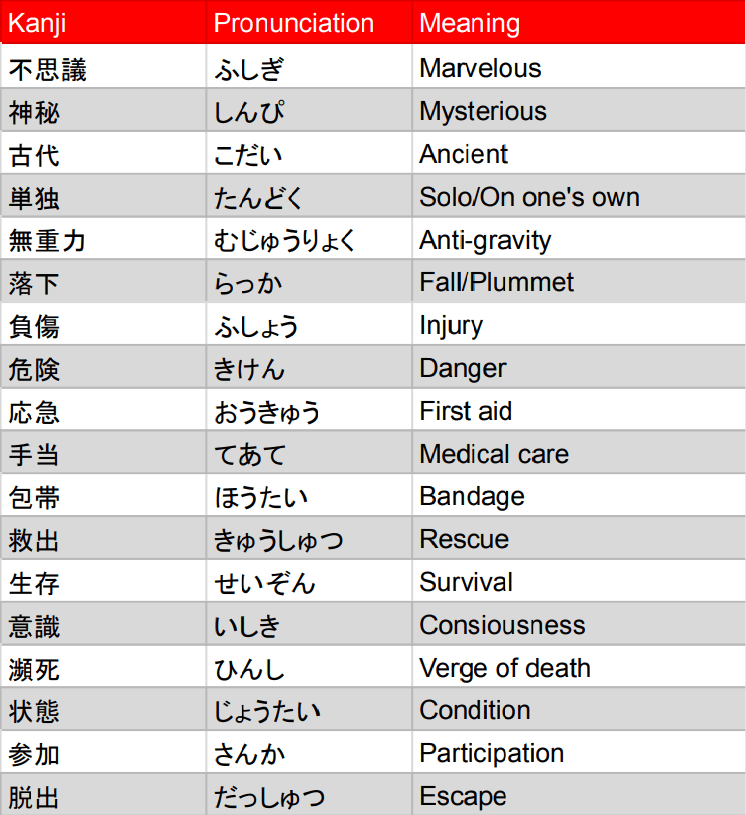
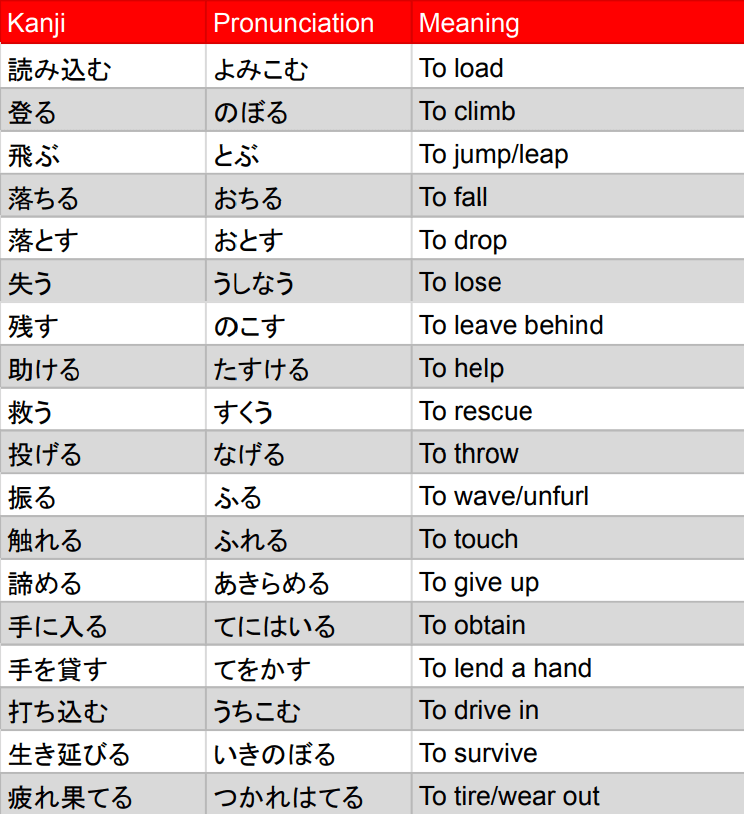
Glossary
Usability
Now, Peak doesn’t have too much readable language when compared to other games. The format of the game and length of the levels (peaks, rounds?…) is remarkably short, and while you’re clinging to the side of a frozen waste with a blizzard in your one ear and your screaming companions in the other it’s hard to focus on reading.Everything for this game was earmarked to be bad for business. And yet the repeatable charm and usage of language makes it remarkably inviting and infinitely humorous.
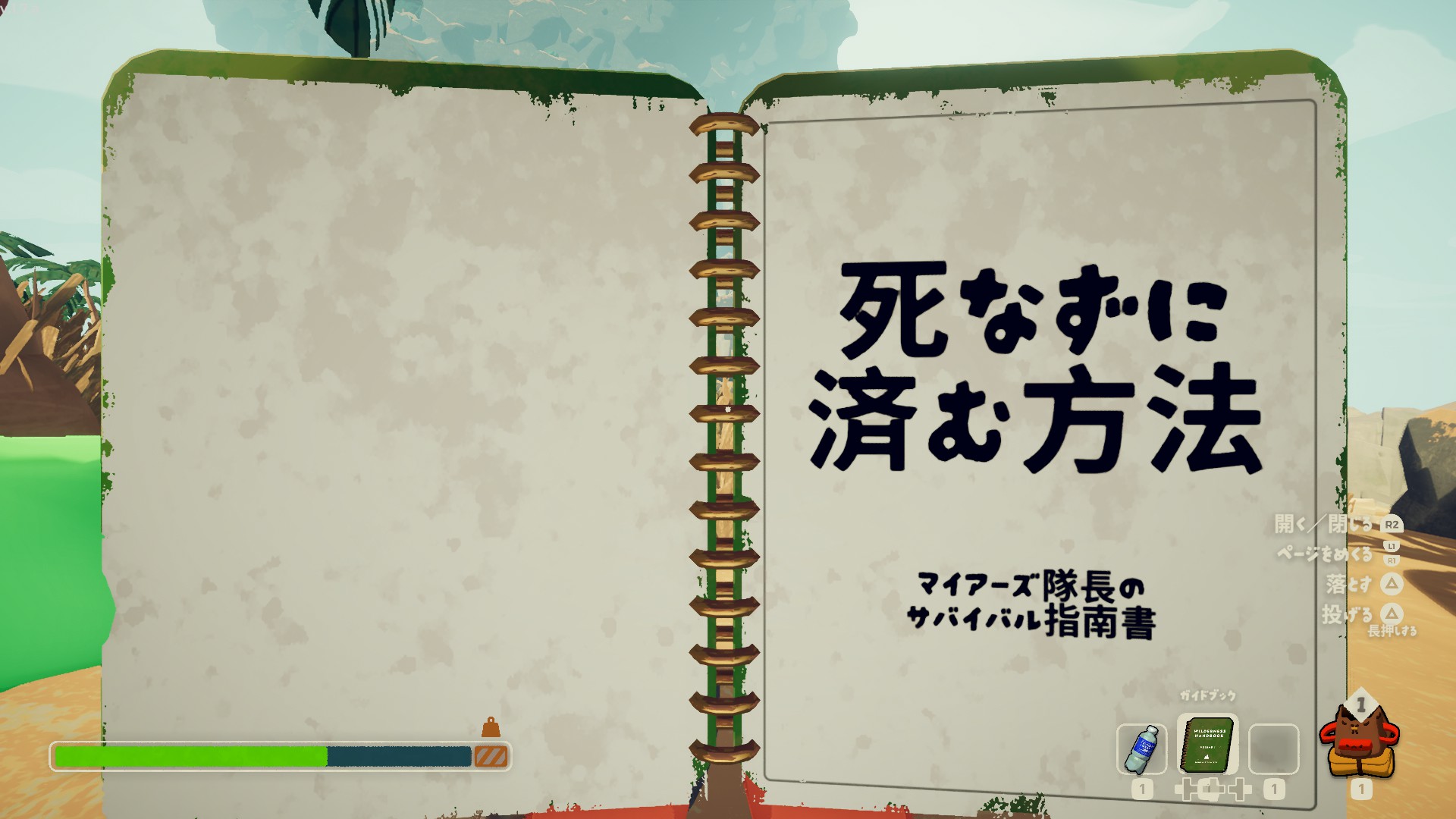
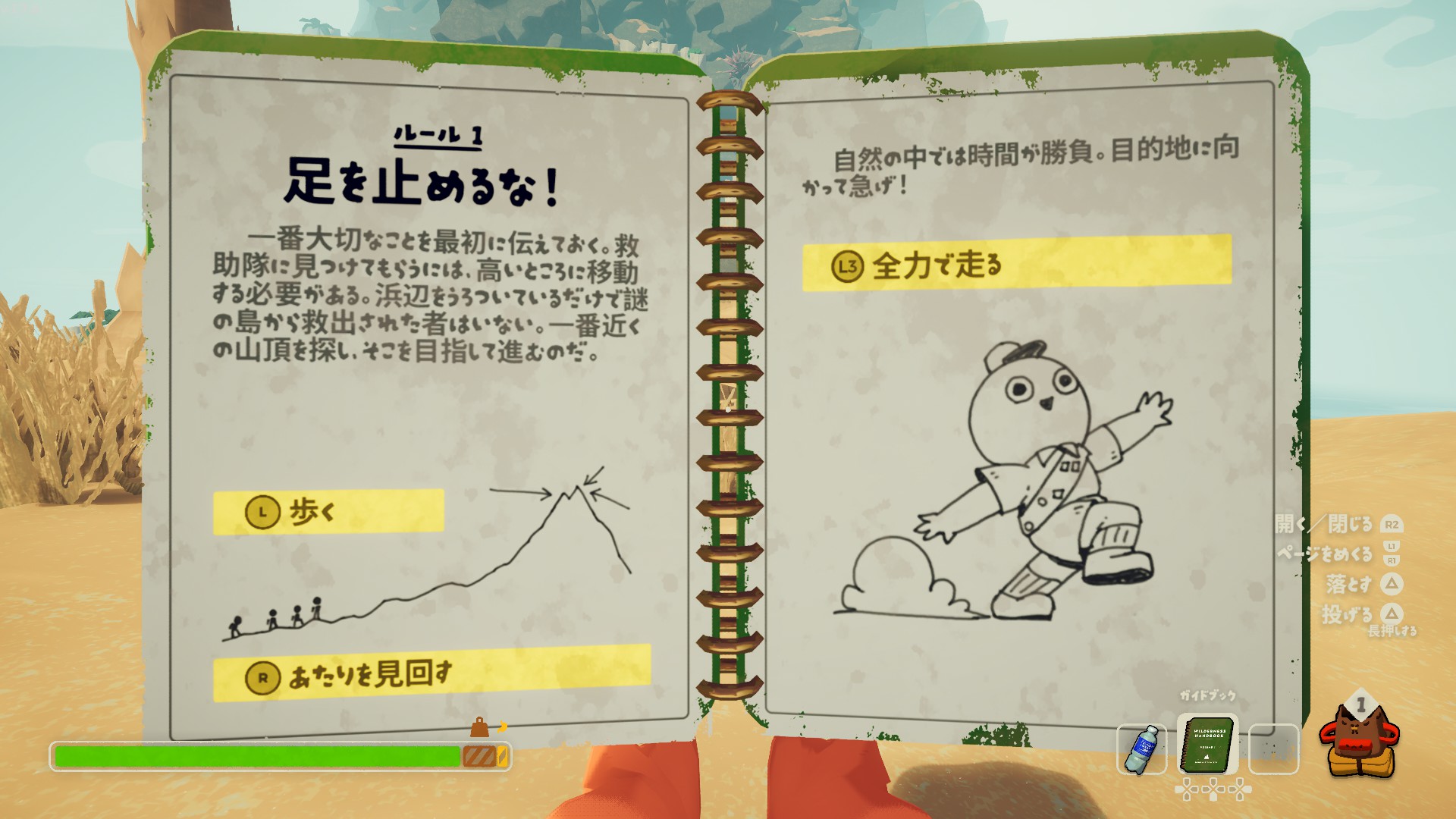
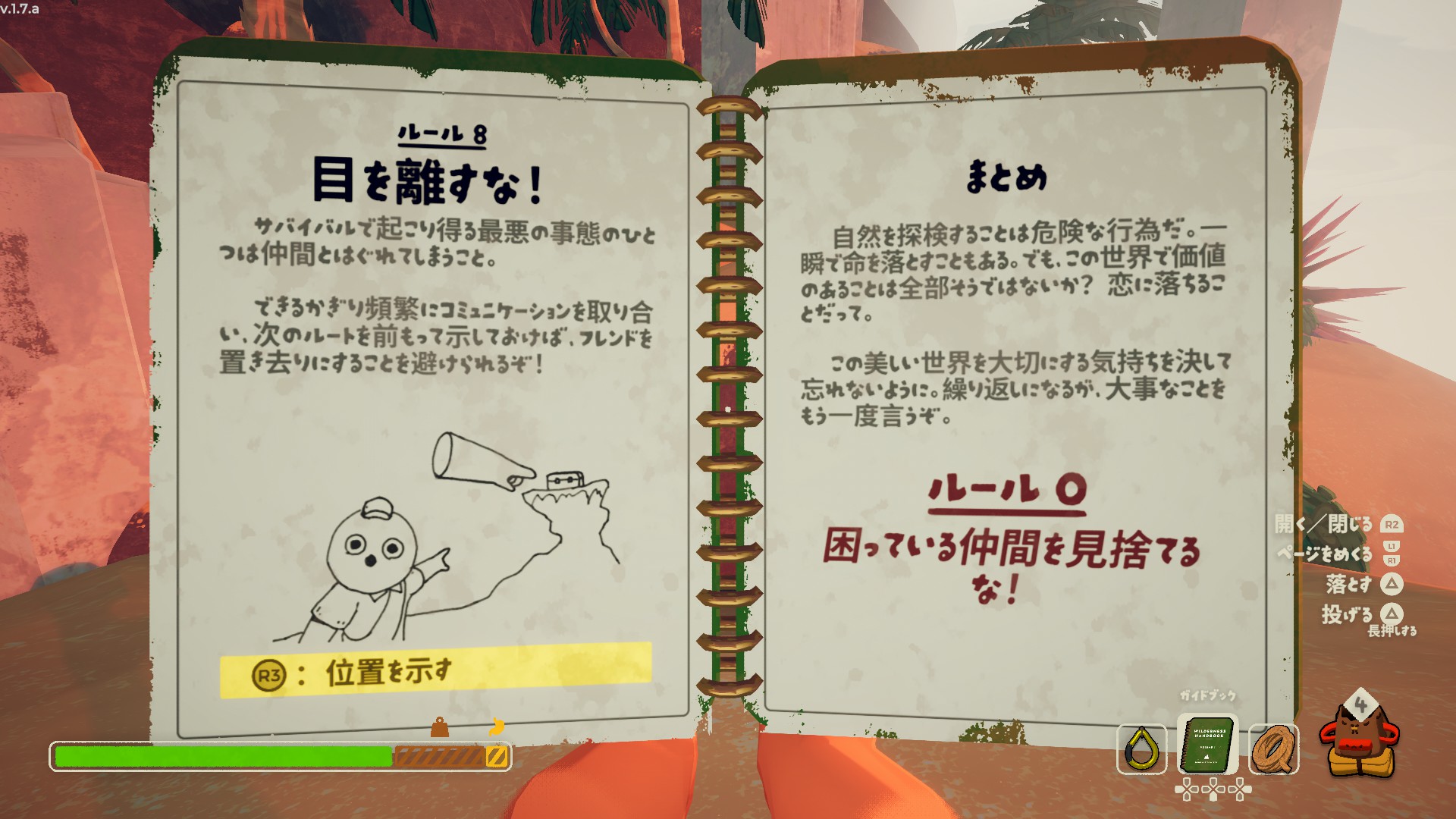
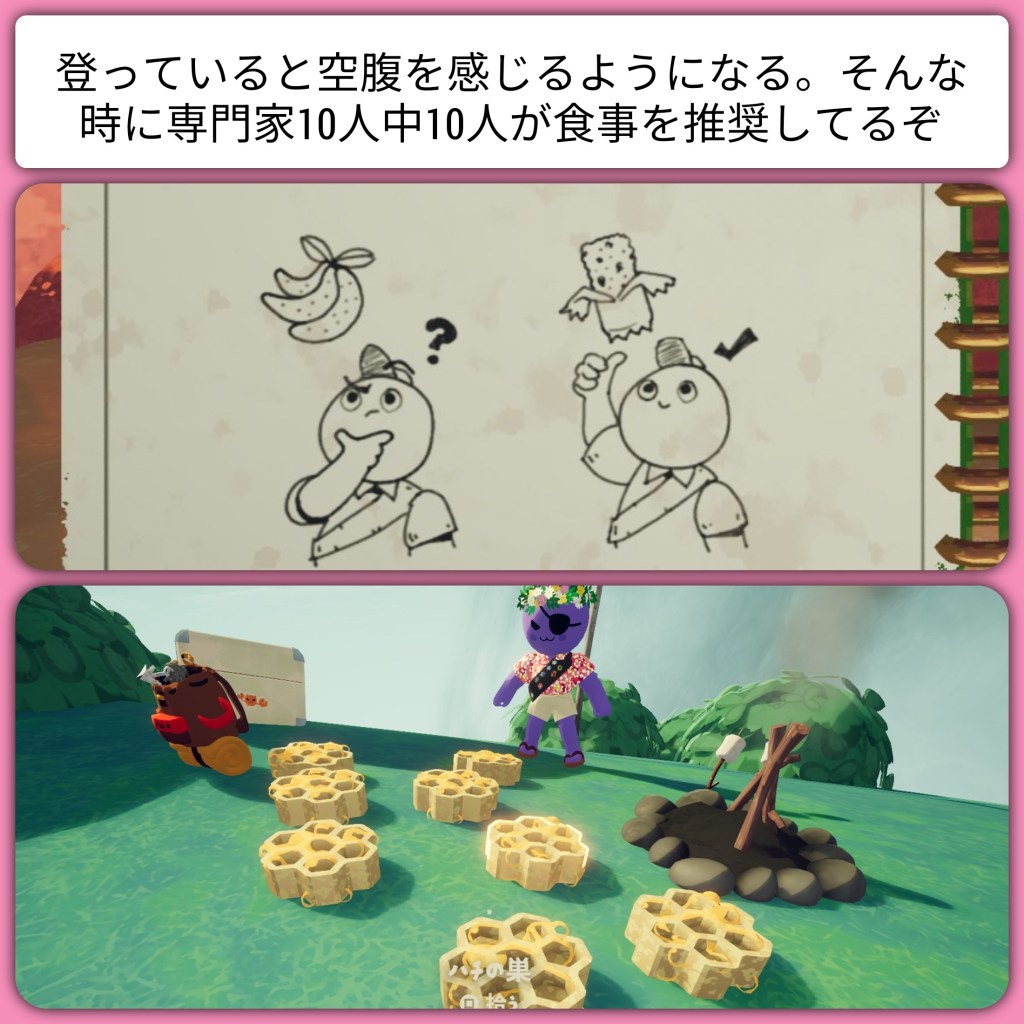
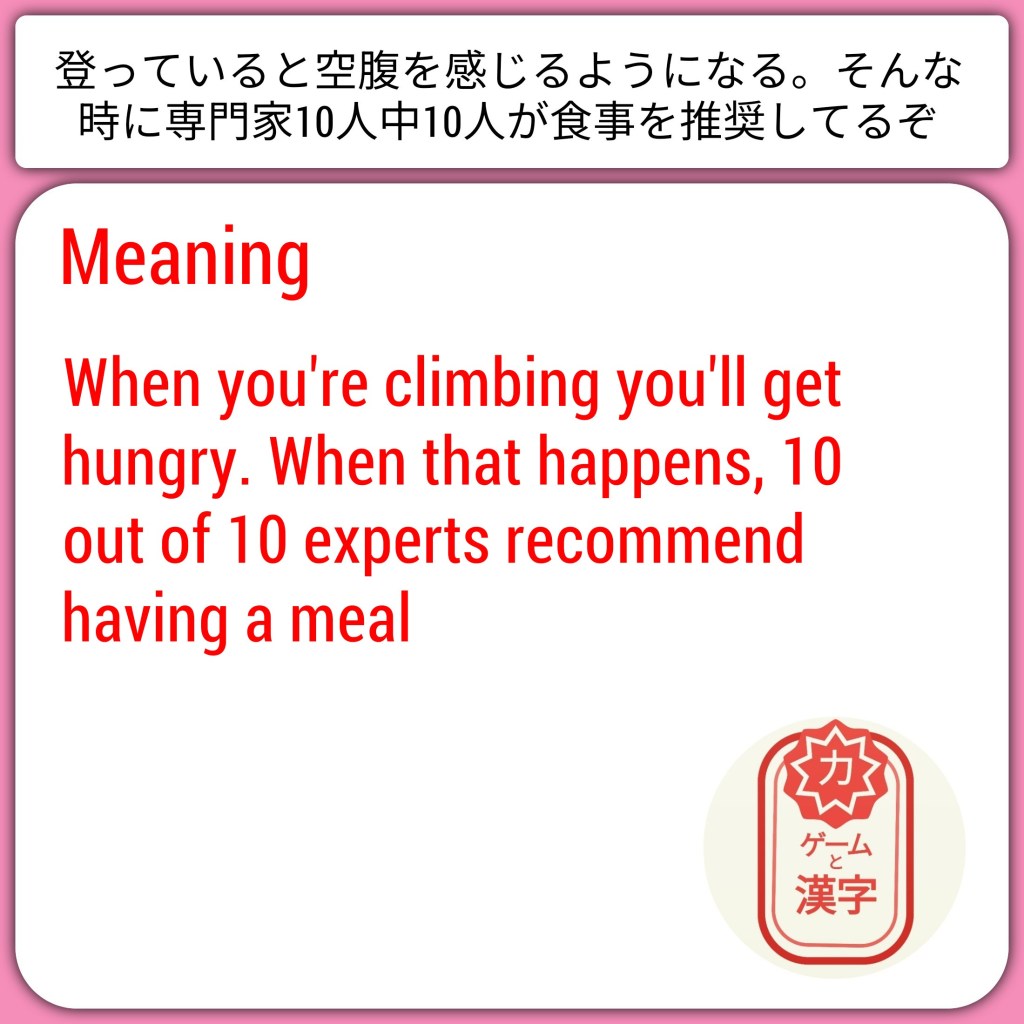
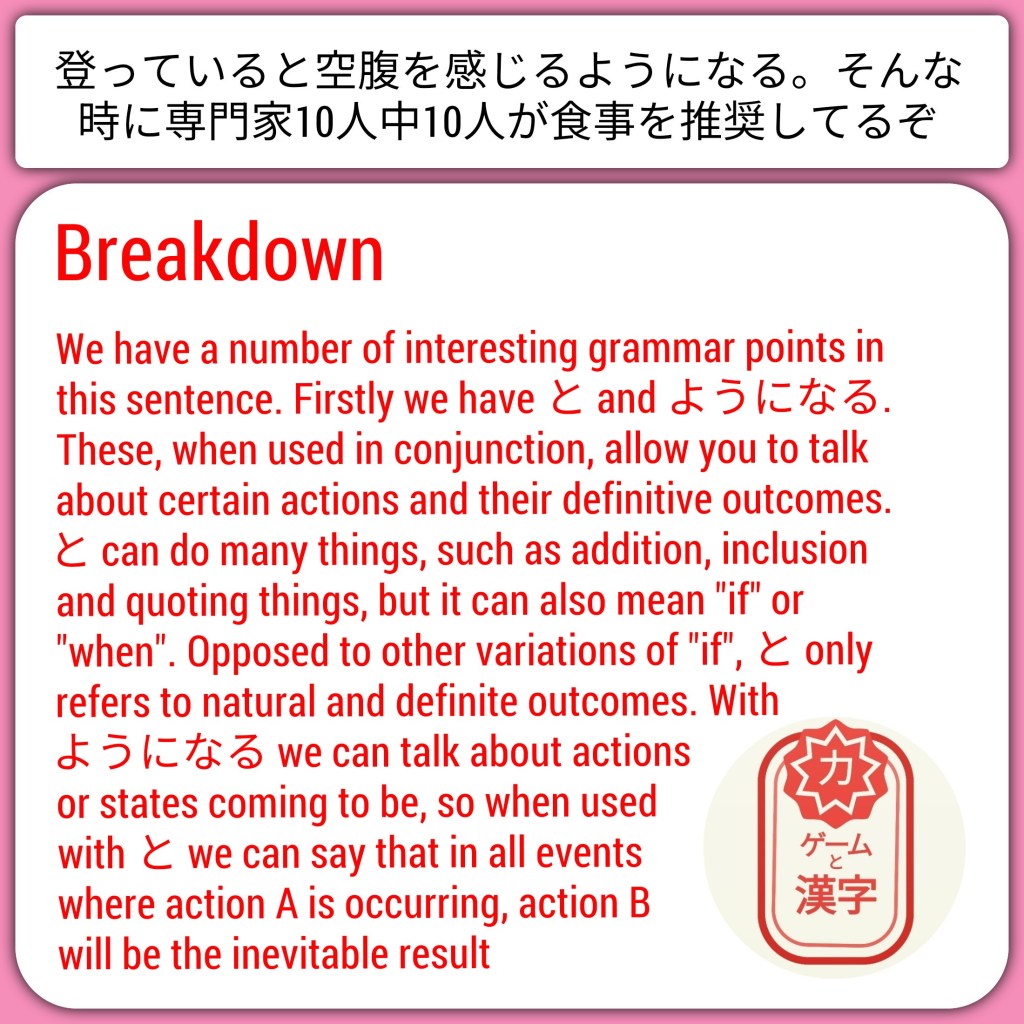
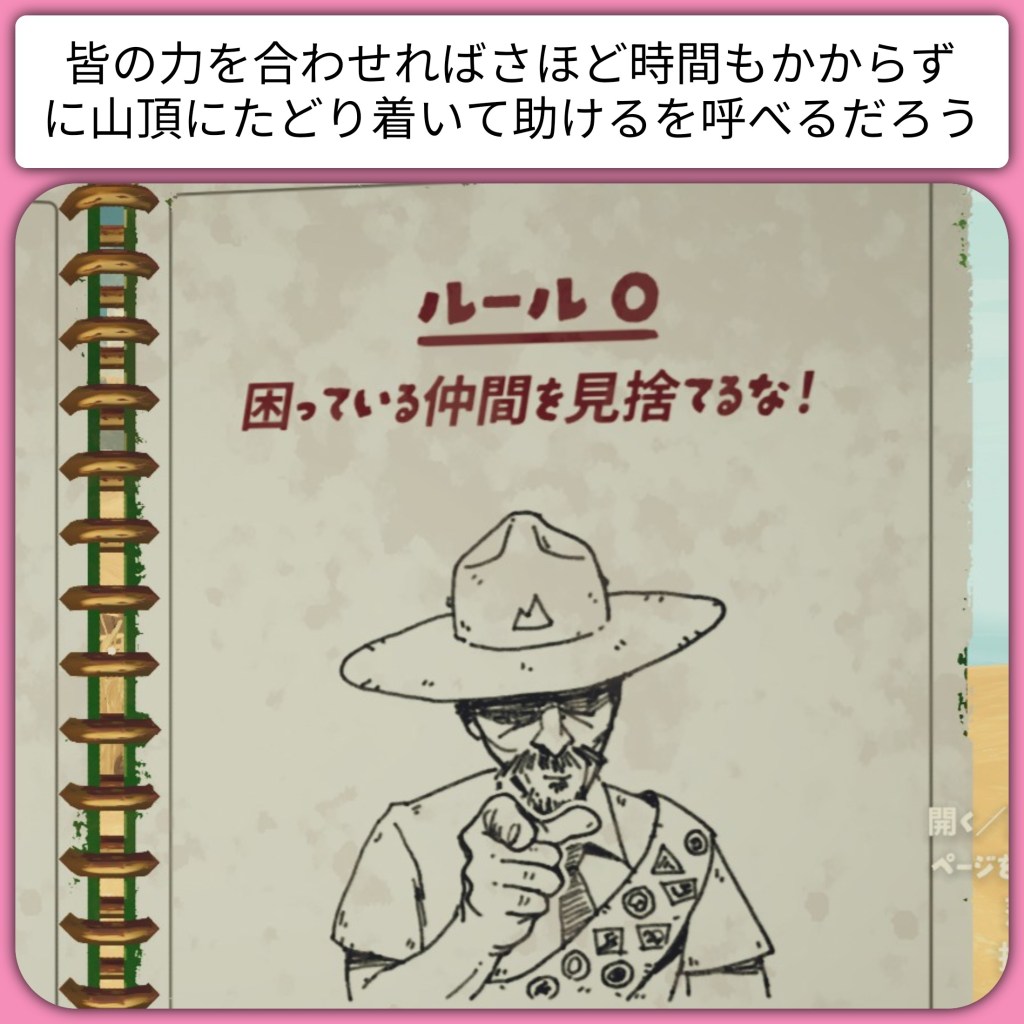
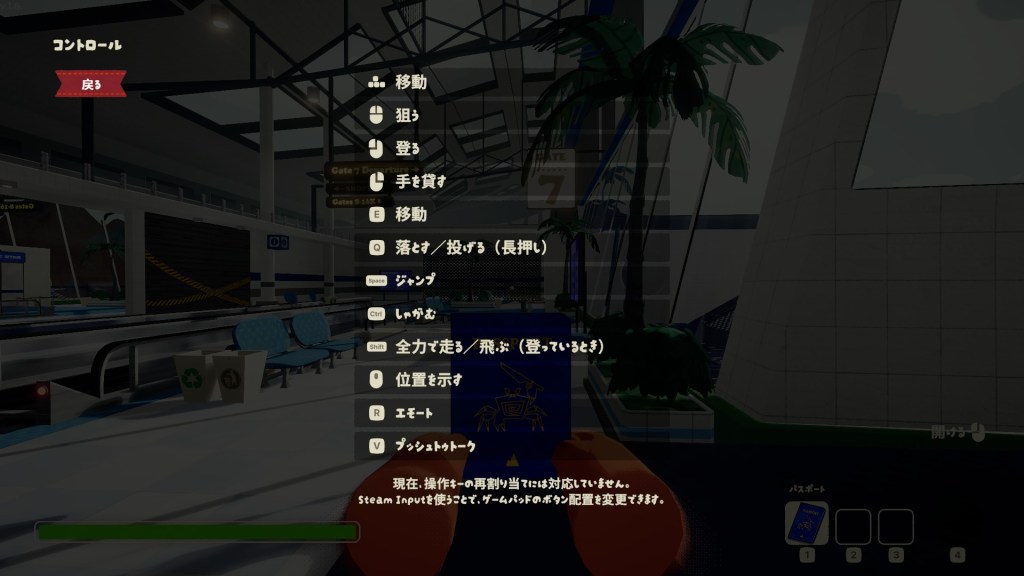
The points in which you’re climbing aren’t worth talking about too much as I say, you’ll get a few UI prompts and a selection of item names (most of which are fairly mundane) and that’s about it. You will however find an intriguing guide book on the sands beside you once you wake up. This was the first clue to me that this would be worth the time to sit and read. The notes left behind by Scoutmaster Myers not only help to tell you the mechanics and controls for the game, but also add little sprinklings of lore and comedy. The imagery in particular is chibi-ish and reminiscent of the hoor you and your friends experience on each cycle up the mountain. Additionally, while the book is brief, it’s almost detrimental to read it in one sitting as your hunger steadily grows. This reminded me of when I was studying with Subnautica (still an absolute hit if you haven’t played it) where I would be reading data entries between ventures to capture my next round of lunch.
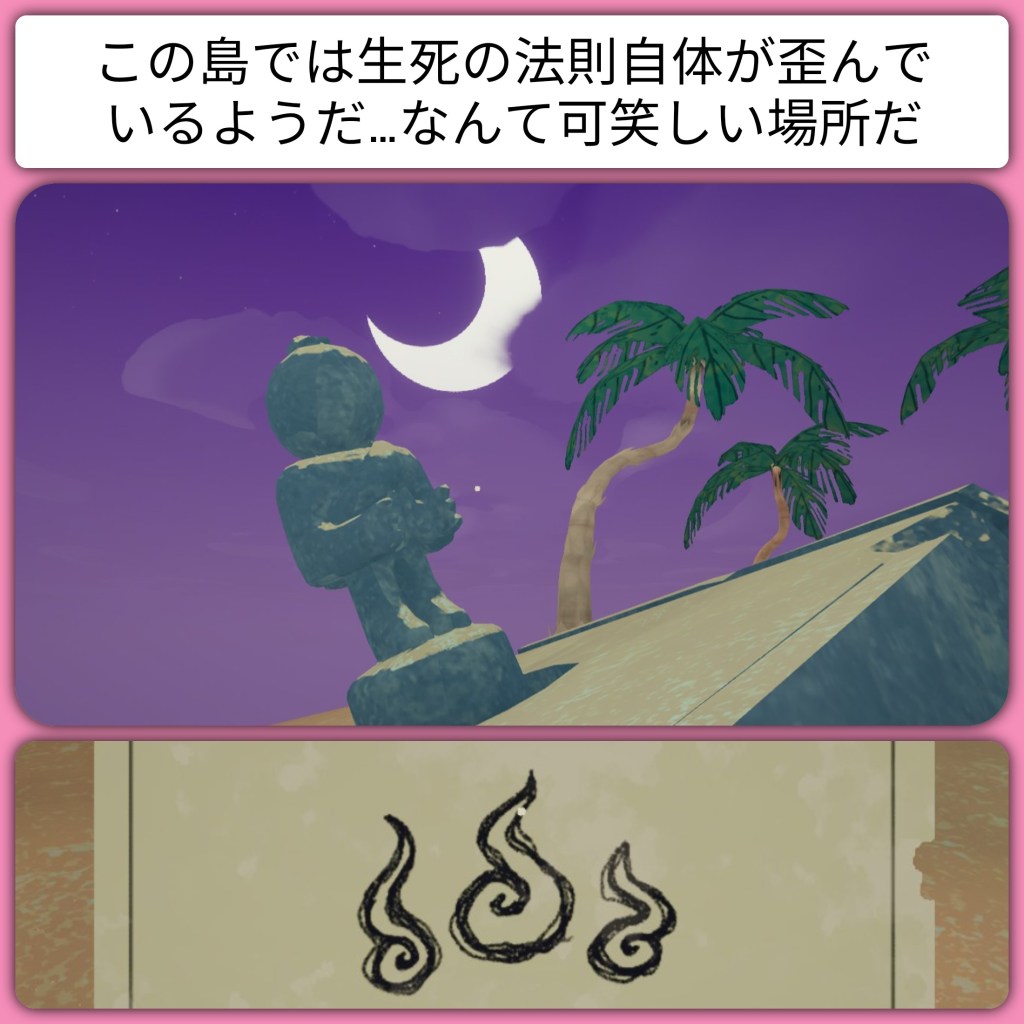
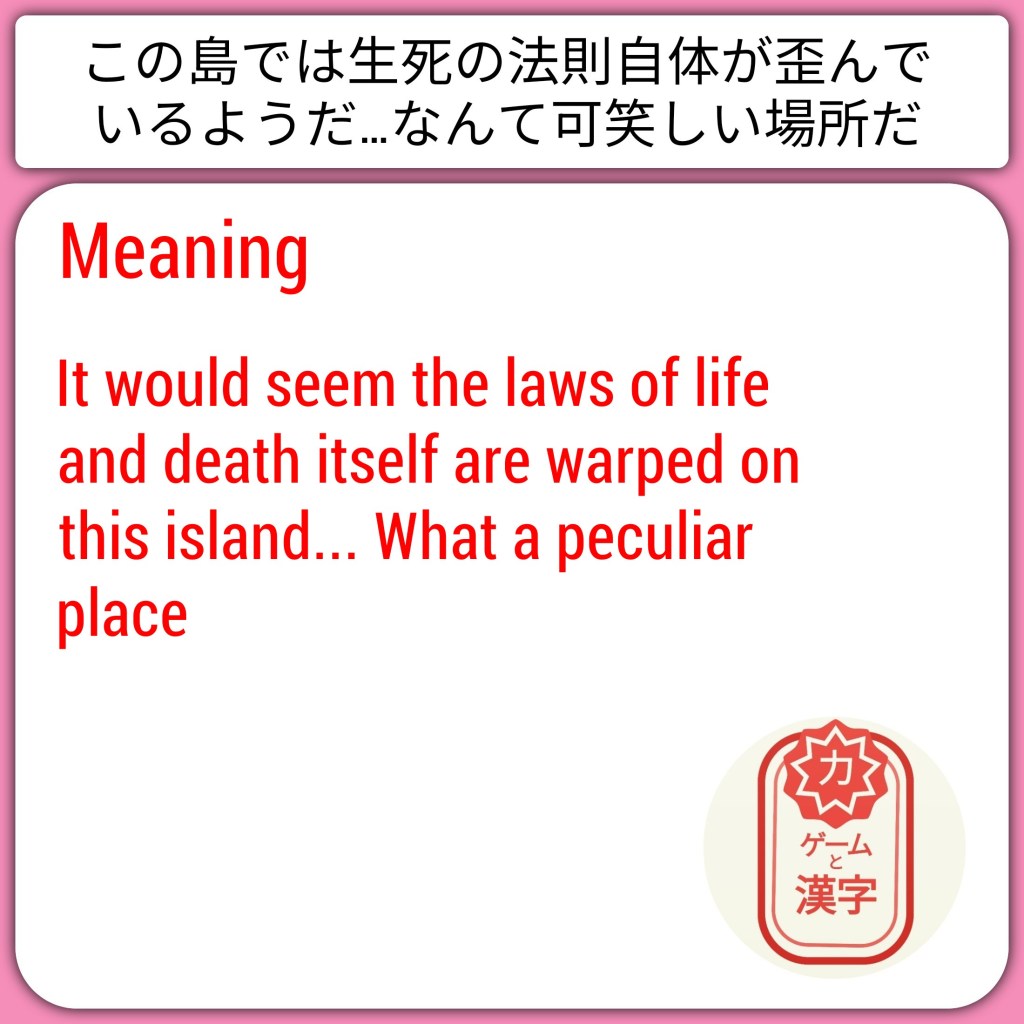
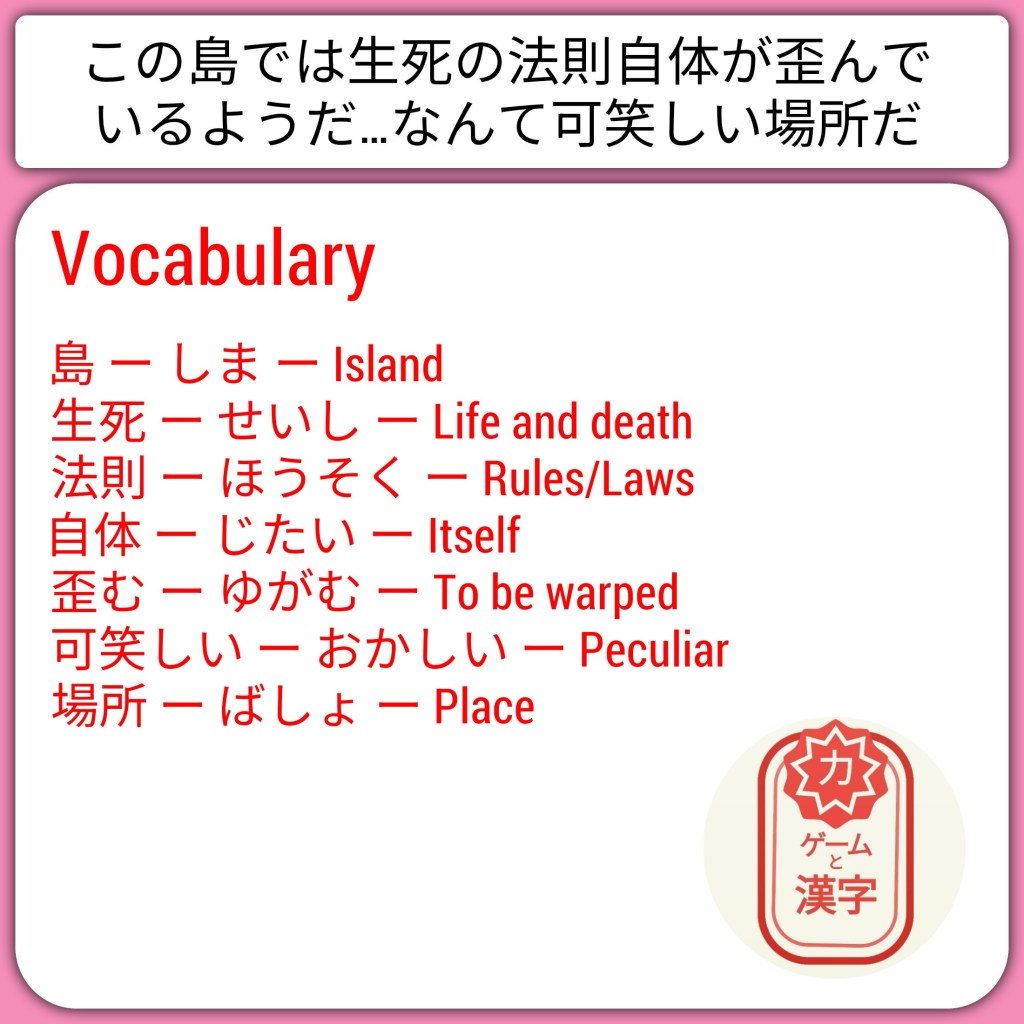
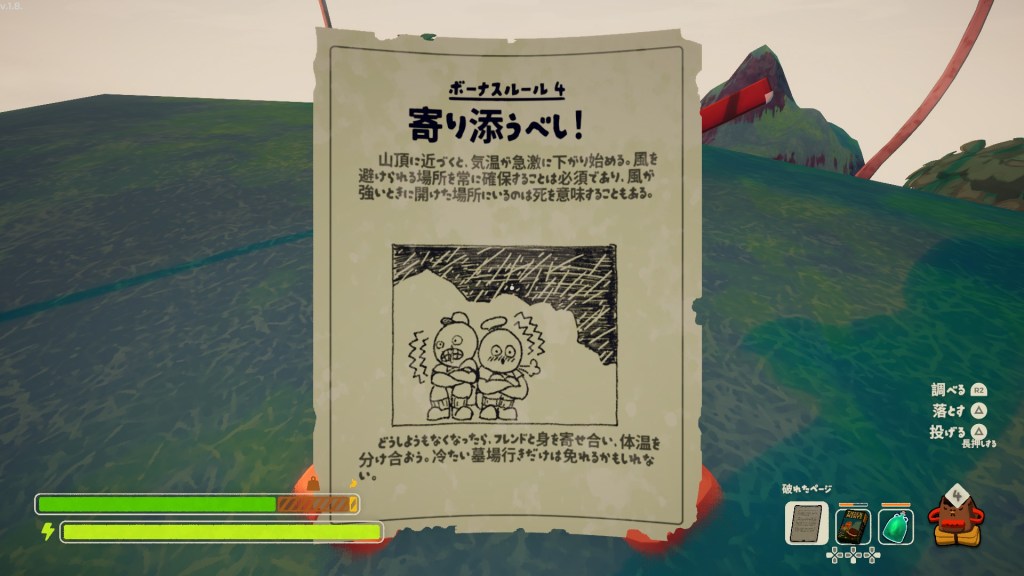
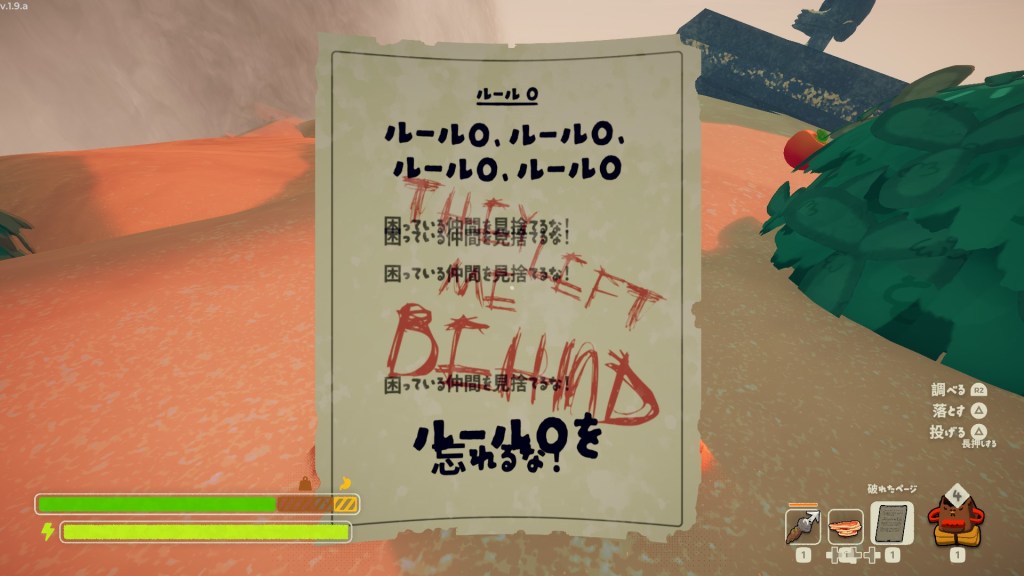
As if one handy dandy book wouldn’t have been enough fun, for sequential ascents of each area, you’ll receive further scrolls left behind by the now decrepit Myers. These are more brief but contain what feels like easter eggs and more expert-centric clues. The rules you can gather from these methods feel like your rules to live by as a new-found climber. If you’ve never played the game in English and you digest them in your target language they become even more rewarding too as an positive outcome becomes validation to you reading comprehension. I know it’s not everyone’s cup of tea, but I personally love it when reading material is used as a reward in games. Especially in a game like this where the lore isn’t typically shared through the gameplay itself (Aside from the monstrosity awaiting for you if you stray to far from your chums…), so it makes it all the more engaging to be drip fed information in this way.

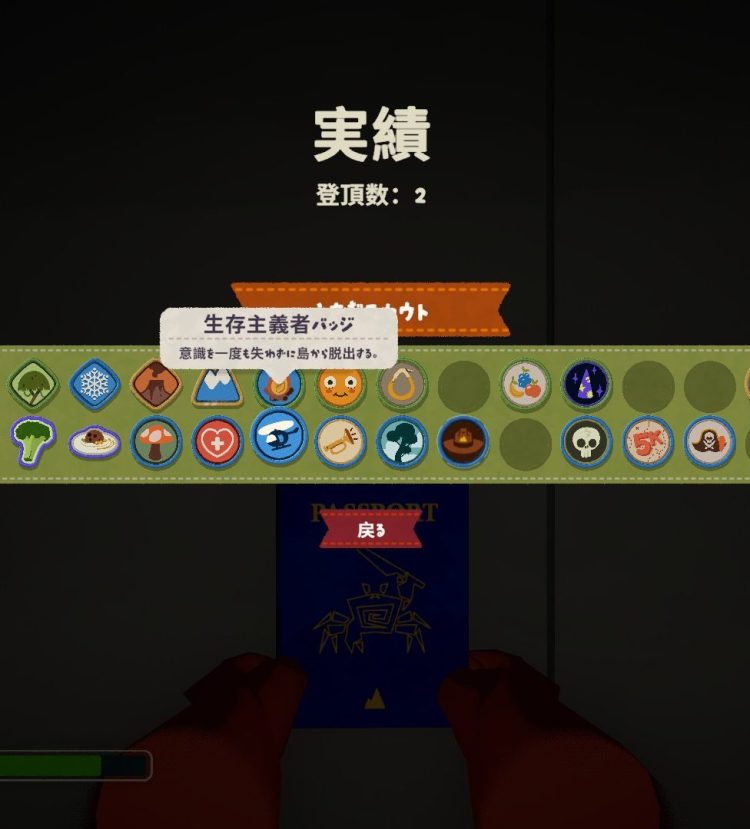
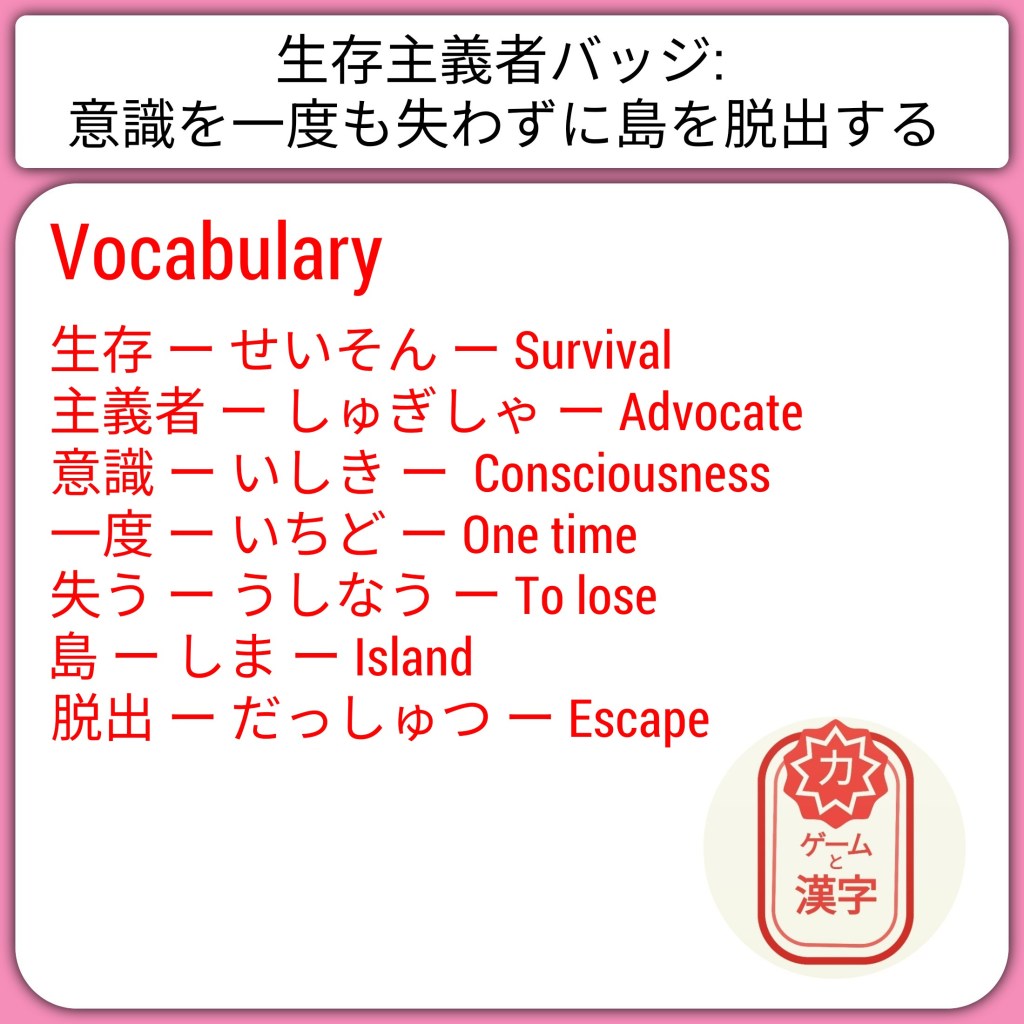
Another fun mechanic that has been put together perfectly is the accolades menu. Here you’ll find a selection of achievements, made even more thematic and adorable by being made into visible scout badges, that can be unlocked for traversing the mountains in a variety of ways. Before every climb, my friends and I would gather in the airport, sporting a cacophony of terrible outfits and discuss what achievements we had left. For me this was even more amusing as when asked if I had a badge in English I’d have to go through and read through in Japanese before I could confirm (again, further validation). The descriptions for these badges are super short but nonetheless worth reading. You’ll likely also revisit this screen countless time to both check your progress and confirm your next “mission”.
I would say unfortunately that’s your lot, but honestly, I think the balance of language and gameplay fits really well for the style of game here. At no point is the language intrusive but you can absorb as much or as little as you want. The font and UI are really charming and encourage you to read on, the variety is wide enough to help with new word acquisition but not so broad that it’s disheartening and the whole game can be “read” in a very short lengthy of time. It’s worth taking some time in solo play to build a strong familiarity with the vocabulary ready for when you’re playing with others. While everyone is gathering their coconuts or cooking their marshmallows you can refresh for 5 seconds and read some of the rules, making you a bet scout and a better linguist. Just don’t keep the book in your inventory for too long or you’ll be scolded for not being able to carry more rope cannons for your chums!
I truly loved this game, and will continue to play it. I still have 4 badges left to get and am only ascent 3 so couldn’t be forgiven for quitting now. Whilst the level of content is perfectly placed, if any patches or DLC decide to expand on this, matching the already high level of quality, then Peak may even surpass itself. I can say without hesitation this is a highly recommended language learning game. Happy climbing friends!
Challenges and Methods
The first rule of scout club
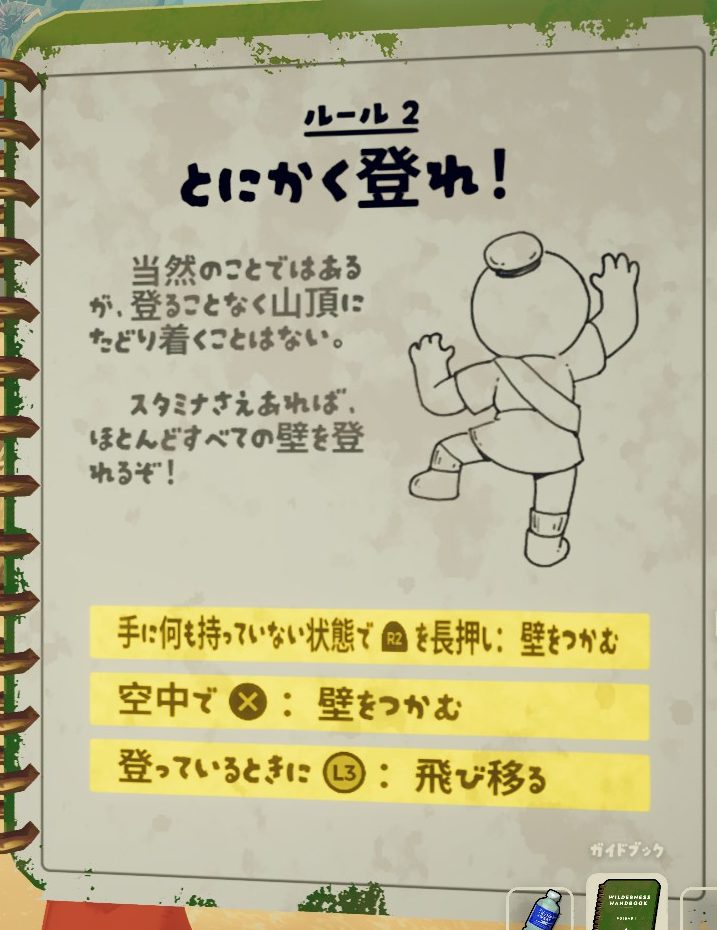
I’ve spent most of this review gushing over the guide book so surprise, surprise it’s here too. The language in this book is of a reasonably intermediate level. There are many colloquialism and natural manners of speaking, so take the time to digest it whenever possible. See if you can read at least one rule at the start of each ascent. The same goes for the logs from Scoutmaster Myers. Everytime you find one, see if you can read it. If you can do it without the help of a dictionary then all the better.
A few badges of honour
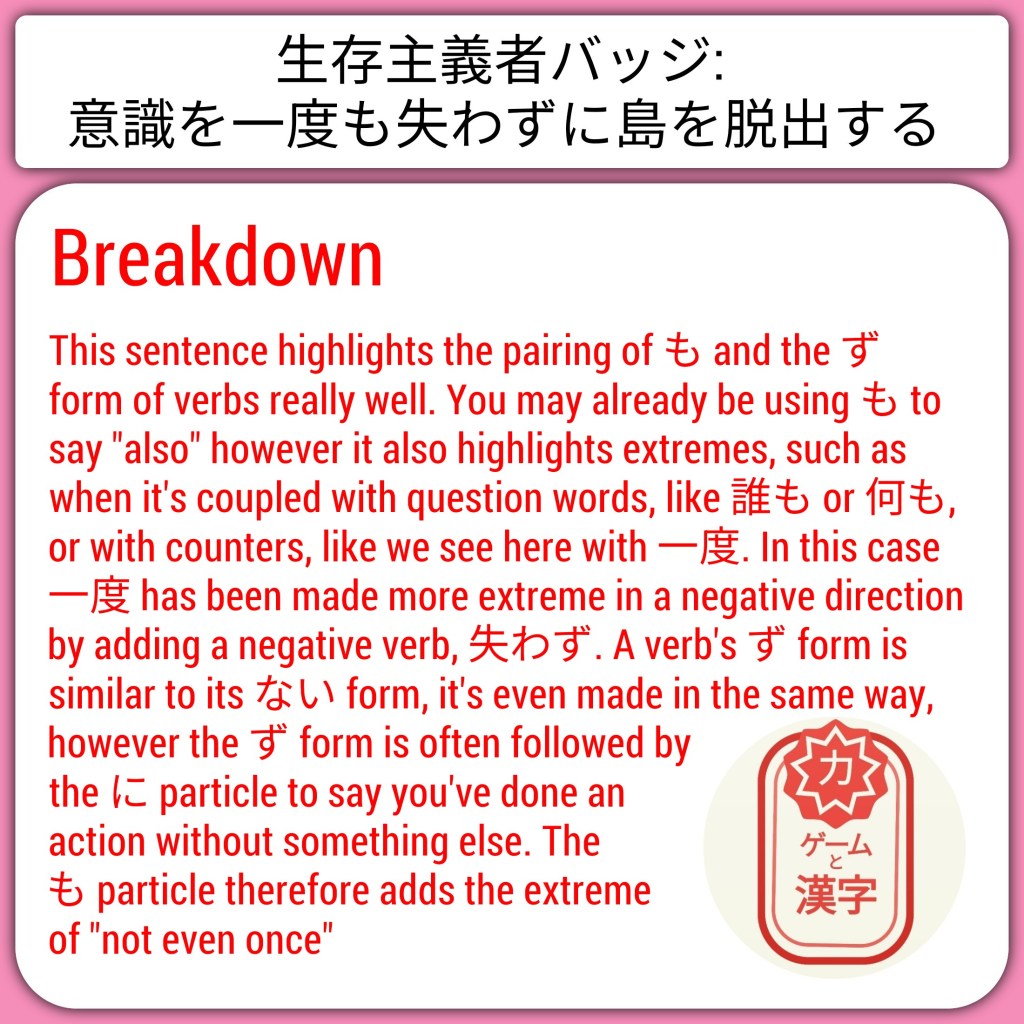
What I found amusing about the badges was that the descriptions were all visible from the start, helping you identify the task at hand, but the names of the badges were blocked out. This encouraged me to want to know what each one was, and when I found out, the names were comparatively complex words, such as pioneer and advocate. Try reading each challenge and then giving the names a go when you unlock them. If you can read them all consecutively then you’re a true scout master.
Previous Posts



Additional Images

 Games & Kanji