
So I’ve been learning Japanese through video games for a long time now. Most of my time spent outside of work is spent playing games and, in an effort to make myself feel less guilty or lazy, changing it into Japanese to ensure I am still building my language skills because I want to avoid the intangible horrors of wasting any time being a slob as I approach my 40’s. That last bit probably says a bit more about my psyche than my methods but regardless, I took the time recently to review how effective this actually was. The story goes that I’m due to go to Barcelona for a friend’s wedding next month and I’m always eager to ensure I know at least a handful of the language before I go anywhere. As such I thought it’d be good to learn some Spanish in preparation and questioned “…How may I go about this?” as I slowly switched on my Playstation…
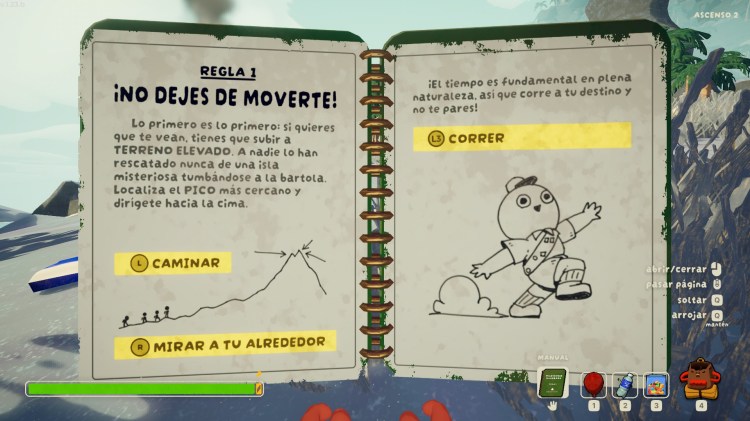
The elephant in the room is that Spanish and Japanese are fundamentally different (spoken like a true professional linguist). My almost 10 years in Japanese are caveated by the fact that it’s an entirely different script, nearly exactly reversed grammar to English and a whole ‘nother continental culture. On the other hand, with a bit of a Spanish lilt to my voice and some effective deduction I can “speak” any Spanish that I read from day one… in theory… Spanish is marked as a category 1 language for English speakers, essentially learnable within 500-600 hours if you’re willing to dedicate yourself to it. Japanese on the other hand is category 5, requires 2,200 hours or more and is famously one of the hardest languages on the planet. All this means that, if I’m unable to get to a decent level in Spanish before my trip then we’ve established my methods are bogus, so there’s a lot on the line.
The most interesting thing for me was going back to square one. While I had had some familiarity with Spanish from my high school days and a little bit of dabbling in my pipe dream to become a polyglot, I had never really gotten past a few short sentences. I went into this with a bit of blind confidence, thinking that the sheer volume of language and joy of playing games would make the exercise a breeze, at least compared to Japanese. I was swiftly proven wrong. Seeing the flood of Spanish vocabulary wasn’t terrible, I could quickly read aloud as described above (probably a few pronunciation mistakes in there) and found a large proportion of words could easily me deciphered once I took off the “tante’s” and “mente’s”. The trouble was that some of the simpler words and verbs were not so decipherable. Outside of the quite formal and complex language, the fillers and action words were significantly more “native” and departed from my English knowledge. My closest comparison to this would be trying to read a Japanese sentence without kanji. The rough idea is there but the aspects that add nuance are now less clear.
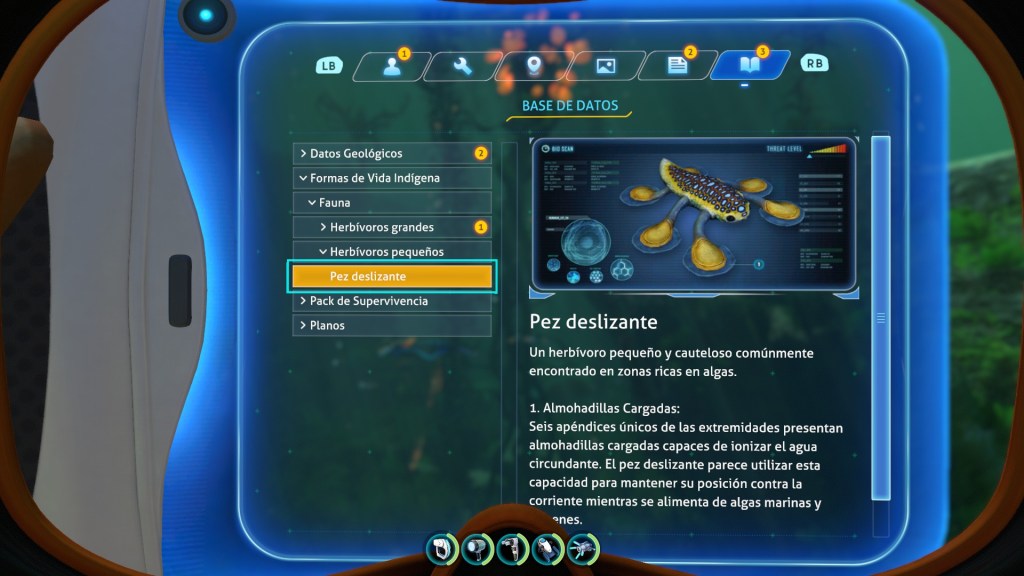
The next major factor was the familiarity of previously played games. In order to carry out this exercise I simply changed the language of a number of games I had to hand, almost all of which I have either reviewed in Japanese or completed in English (back when I actually played games in English). This meant that I could use a larger vault of prior knowledge to help with some of the translation, which could be seen as a bit of a cheat sheet but arguably aids in language acquisition as it makes denser text more comprehensible. I did also try to include a variety of levels of language. For instance the simpler and shorter text of mobile games and the broader descriptions from RPGs and sims. It was also more excuse for me to play Subnautica again (a personal favourite) and read through some of the descriptive data logs. These contained a lot of “useless” vocabulary, not in the sense I would never need it but in the sense that it likely wouldn’t appear in conversation and certainly wouldn’t benefit my trip to Spain in less than a month.
Quite interestingly this is the first time in a long time where I have used some of my methods from a perspective that someone else might take. Most of the time I am trialling methods with the intent of reviewing them, always having one eye on the language and the other on how I’ll write my remarkably humorous blog!… But this time I was fully focused on the language, rereading items without hyperfocusing on the fonts, accessibility or theme, just reading and taking in what I could understand. As with any game in any language there were moments where I did slip into autopilot as my brain started to burn but the motivation came in ebbs and flows. As above, I found myself coming across words that I was not yet sure were beneficial or not and got a bit of what I would define as “dictionary fatigue”. This resulted in me sitting back a bit and scoping not one, but multiple games for common themes and good word frequency which proved to be more rewarding and more fun.
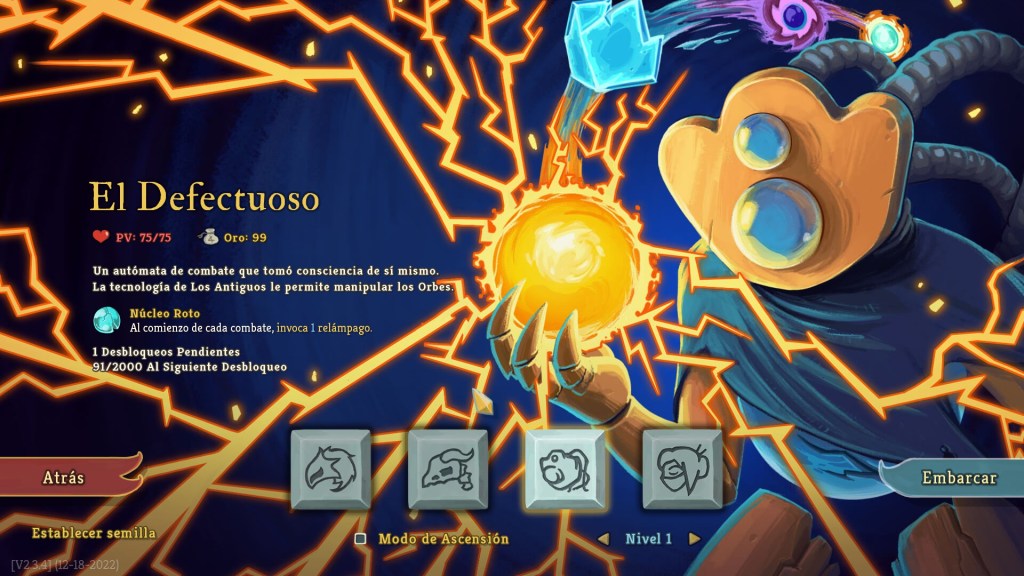
To give an honest overview, the motivation of ensuring I can speak the language while we’re there has been a driving force in this and it’s not just the games that have been switched into Spanish in the short term. I’ve also been listening to Spanish podcasts, watching language tutorials online and have taken to watching Money Heist on Netflix for even more exposure to the language (it’s totally for the plot). Games are a fantastic tool in my heavily biased eyes but I am not one to advocate only using games at all. Variety is incredibly useful and especially when I have a 500-600 hour target to hit I’ll be using every waking hour to achieve it (I know that’s not literally how it works). I have garnered a lot of benefit from the other sources and can feel a noticeable difference when turning on a game again after listening to grammar lessons or reading similar vocabulary. Some of the shorter grammatical words that add the all important nuance and context make details and objectives infinitely clearer. Understanding the different verb endings and definitive articles means I can be more certain of who or what is being referred to and the pronunciation continues to improve, even if I still suck at rolling my R’s.
The conclusion to this then, I’d say great success so far. The most important thing in any language is getting as much content in front of you as your brain will frequently allow. That is to say, to a level where you’re still able to enjoy, take in and benefit from the learning experience. As with the Japanese, I felt really motivated to switch on a game for the sole purpose of being better at reading it than I was before. In the few days since coming up with this idea I’ve built heavily on my Spanish knowledge and feel more confident that I could navigate the streets of Barcelona, and while I may not be able to hold a full conversation yet I am excited to see how much progress I can make before the big day comes. I especially look forward to visiting some video game shops and buying myself some well deserved games to play through and review. Here comes “Juegos y Español“
 Games & Kanji