
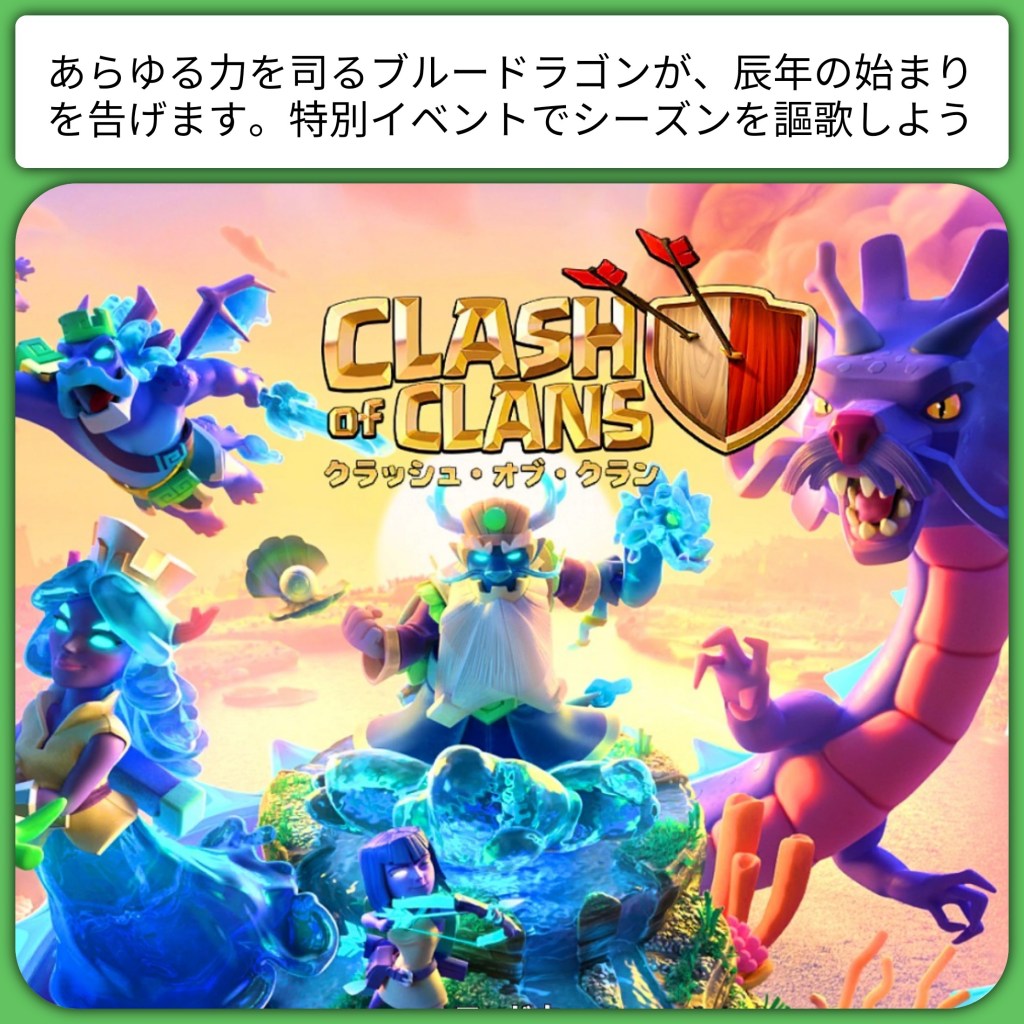
Clash of clans is about as quintessential as mobile games get. Back when iPhones were still reasonably new and mobile games were in the dozens of choices, not thousands, all your mates would typically have 4 games; Cut the Rope, Angry Birds, Where’s my Water and Clash of Clans. It is easily recognisable by its Hulk Hogan-esque barbarian figure head and delightfully vibrant ads, even so far as making it onto terrestrial telly due to its popularity. Clash of Clans is so popular in fact that it has grossed billions (with a “B”) since its inception and is marked as one of the best selling mobile games of all time. While Command and Conquer is still the grand-daddy of unit based RTSs, Clash of Clans changed this format into a daily reward, live service tapathon that you can play on the go, paving the way for a long list of copycats. The gameplay is easy to understand, even easier to play and encourages you to swap and change your base layout and armies frequently. This free-flowing levity matches the art style. The fantastic design of the game keeps things fresh, with numerous events and an ever evolving roster of readable content! I can say for sure that Clash of Clans is timeless and definitely worth playing, especially if you’re one of the rare people out there that’s somehow hasn’t played it so far!
Platform and Languages
Clash of clans is a mobile exclusive meaning you’ll only be able to download it from the Apple store or Android store for your phone or tablet. It is free, which for the volume of content is very welcome, but there are micro-transactions. These are mostly just cosmetic and don’t add any readable content.
The language options can be changed from any screen showing the options menu and features around 15 Asian and European languages.
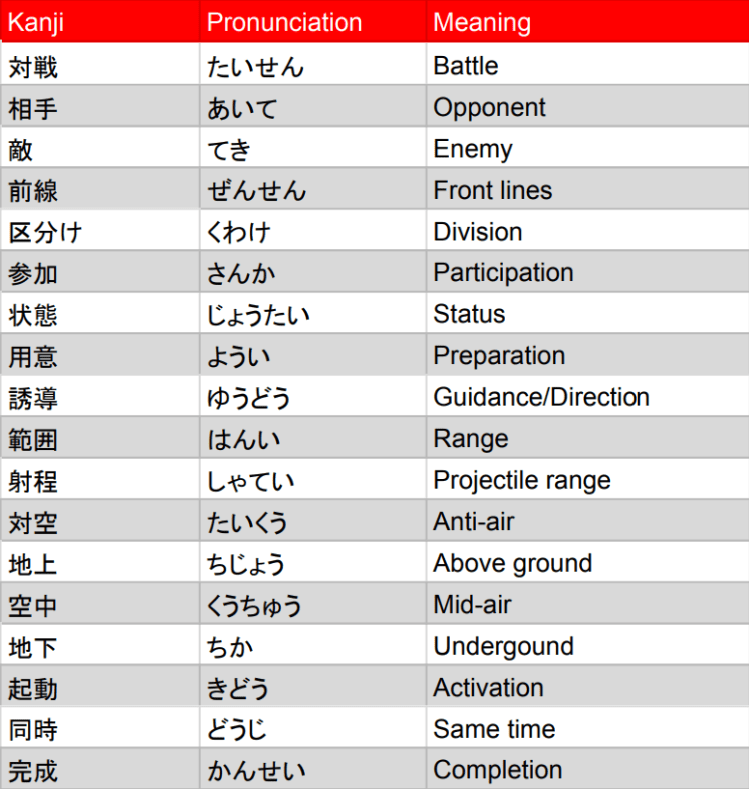
Glossary



Usability
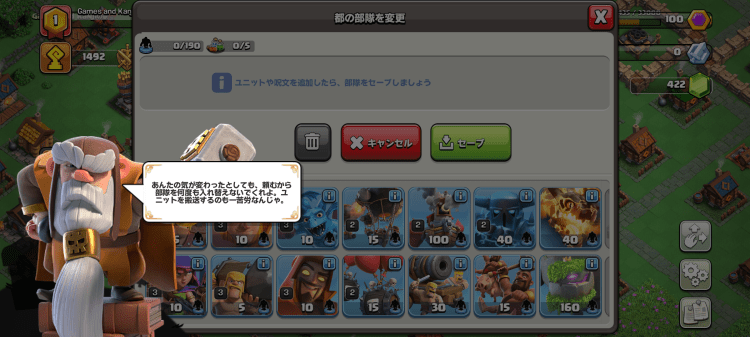
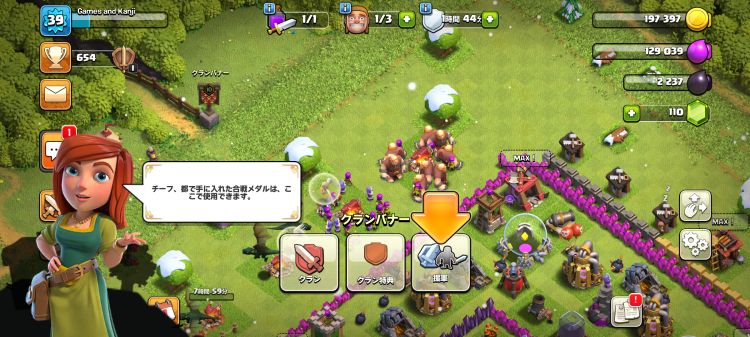
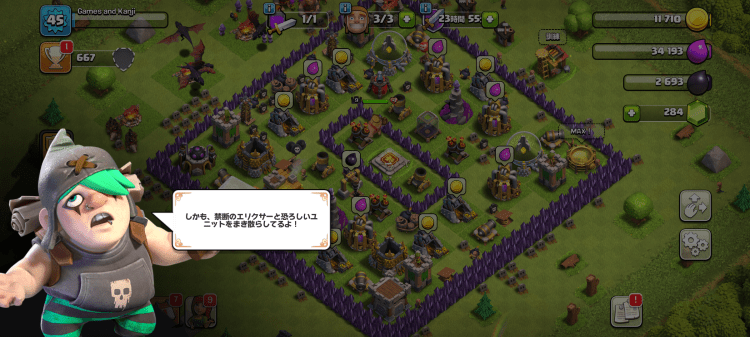
As mentioned, the UI for Clash of Clans is incredibly clean. Text can be found in every corner of every screen. The font is a little unusual and in some cases can be a little bit small depending on your device, which can make discerning radicals of unknown kanji a bit of a difficult task, but the hiragana and katakana are pretty clear so shouldn’t cause any headaches. Your first interaction with any sort of dialogue or description will likely be the narrative. From the start of the game and many milestones throughout a small selection of familiar characters will pop up in the bottom of the screen, lead you around to new locations or functionalities and provide informative breakdowns of the activities needed in your role as chief. These interactions are well paced, feature push-to-proceed text boxes and are not too long or complicated that they might cause any frustration. The only downside is that they aren’t replayable, which would make them increasingly valuable, however this is essentially the norm now so I’m not overly disappointed. It definitely does make it worth your time though to savour these short cutscenes and jot down any new words that might be of interest.
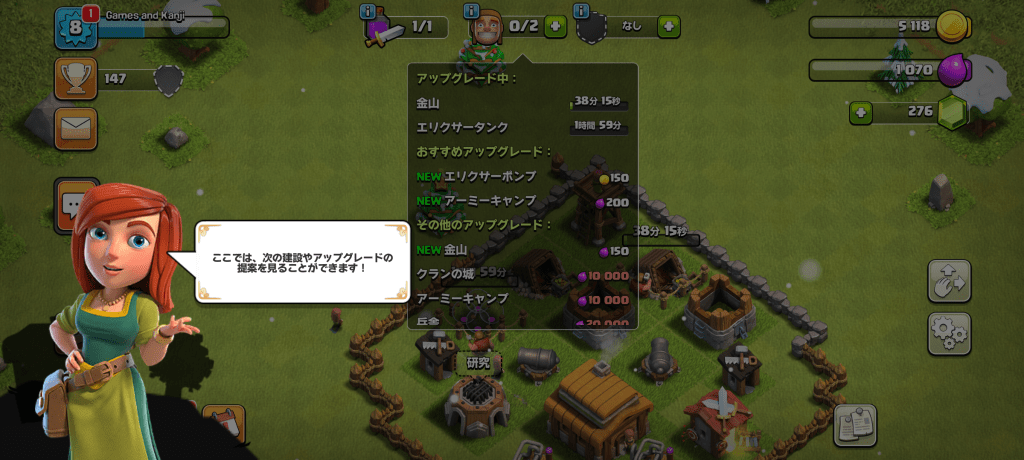
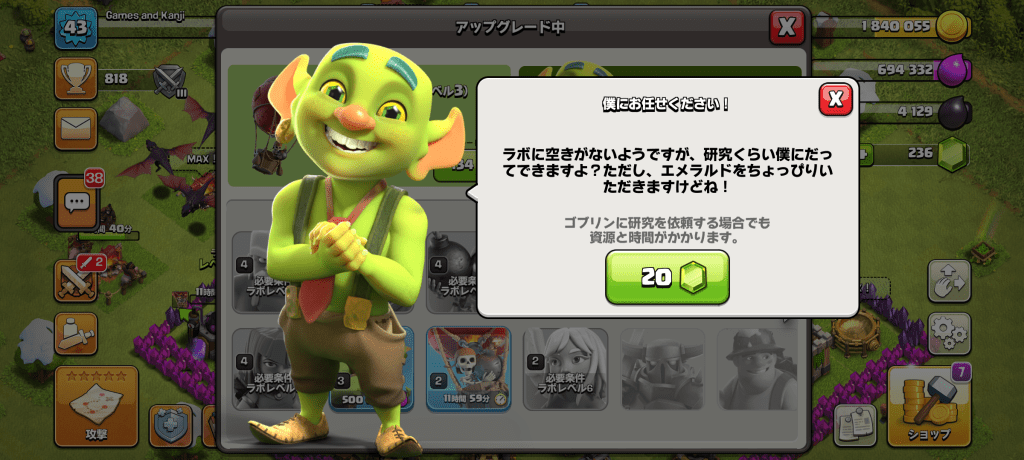
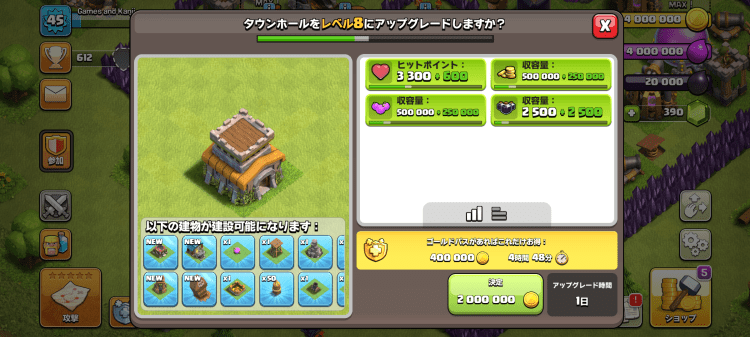
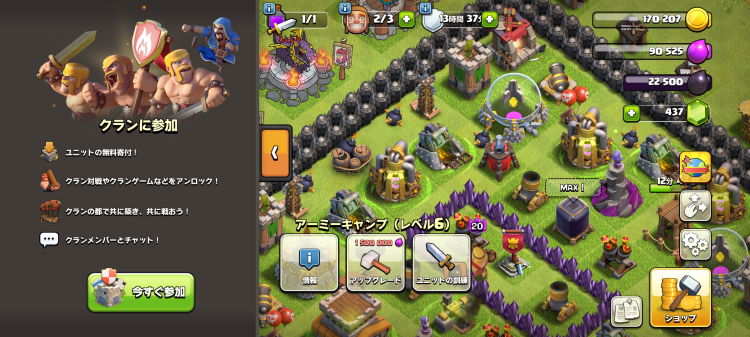
Outside of the dialogue, the next most frequent aspect would be the names of the different buildings, units and actions on the main screen. The double edged sword is that everything you tap on will provide text in some measure, but the game is visually very intuitive and can also be played with very little need to read. There’s benefit to reading the UI in most cases, as imagery isn’t always available (take the pending upgrades drop down as an example), it’s just that you will need to make a conscious effort to engage with it. It’s very rare that you’ll be severely hindered by not being able to read, and in situations where there is a risk to you failing a mission or not getting the most out of your troops, you’ll likely have the above mentioned narrative guidance to help you through in the first instance anyway. That being the case, if you’re here for the reading (which I would hope so if you’re on this website) then let’s look at what’s in store (ha, pun…).
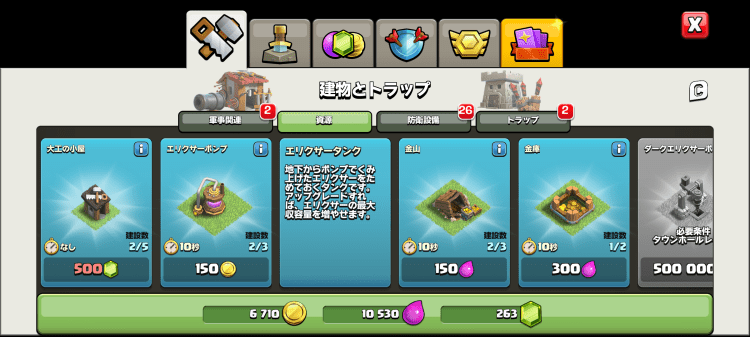
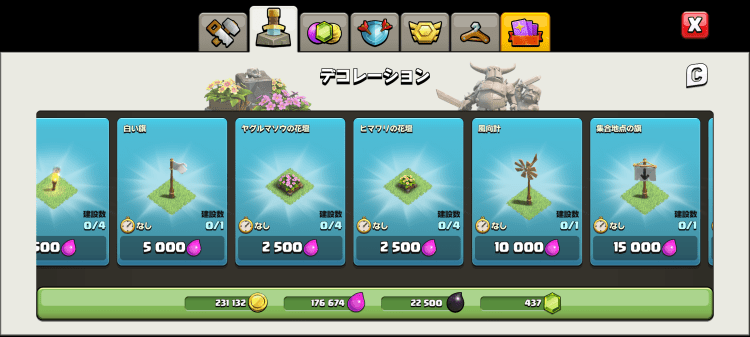

As your village starts to grow you’ll sequentially be introduced to a number of menus. Many of these can be found under the “Store” button on the bottom right side of the screen but many select buildings also have their own menu containing purchasable units or upgrades, such as the barracks and laboratory. One example a particularly large menu is the buildings menu, where by tapping on the little “i” icon of each selection you can flip the card and read about their functionality. These descriptions are brief but encompasse a combination of interesting lore based descriptions of how the tool, trap or weapon works, followed by a more literal, game logic description of the stats or resource it effects. You can also access these descriptions by tapping on each individual building around your camp and hitting the 3 bars below the stats.
The units menu is much the same, although i would argue, while there are fewer units than buildings, the language is more stylized and quirky. These descriptions makes for a nice balance of types of language compared with the buildings menu as they offer new textural and behavioural vocabulary, such as the armour or manner of fighting for each unit. For all menus mentioned they are readily and conveniently available from the start of your playthrough and even allow you to read the descriptions of items you haven’t unlocked yet, this means you can read in depth about future units and their abilities, giving you something more to look forward to.
Next up is something that surprised me, at least for the moment I hadn’t seen anything of the sort, but Clash of Clans includes a community tab that contains regularly refreshed links to video content about the game. This tab within the news and notification menu provides a variety of YouTube videos and links to show you interesting tactics and base plans, popular content creators and their latest invasion successes and more. The variety spans from beginner level descriptive content, explaining where you should be placing your walls and town hall, all the way up to entertaining, competitive level sieges.
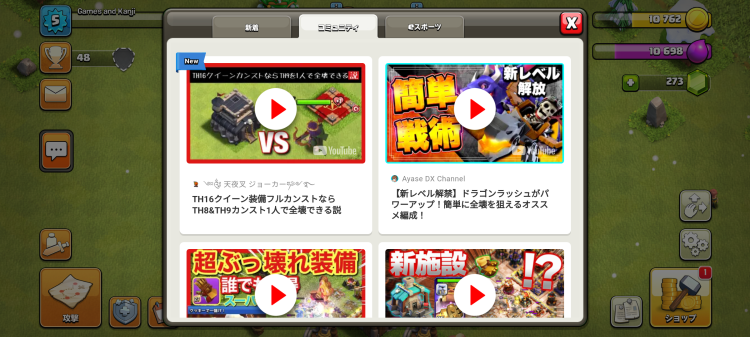
This is made all the better by the language being automatically updated per region based on your language. Again, I hadn’t seen anything like this before, and I’m a sucker for content outside of games that provides more context or opportunities to learn new vocab and grammar. This format in particular proves really effective as it’s made up of a combination of the games own terminology intermingled with natural, native level descriptive speech. As such I would highly recommend visiting this often to catch up on the latest news or content, especially if you could do with the tips as much as I could.
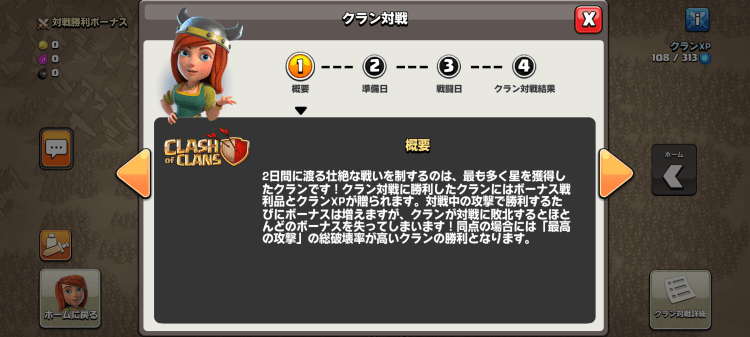
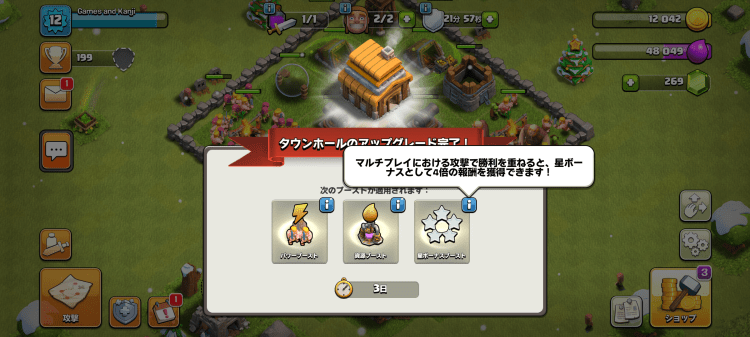
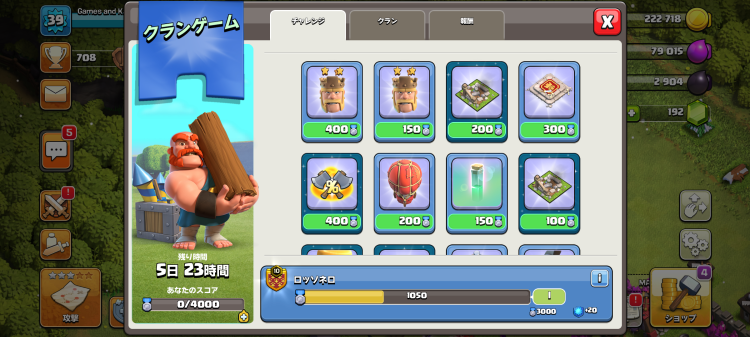
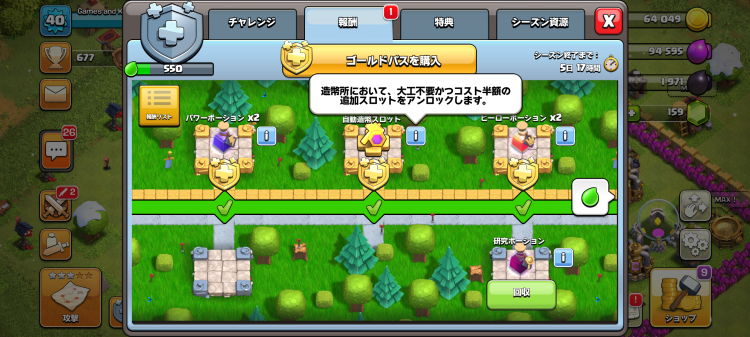
The beauty of Clash of Clans being both online and well established in its community is that there are frequent and very well built events and rewards. Everytime I put this game down and came back to it a new feature is included, and along with it more narrative and items to read through. As mentioned, you’ll also have daily targets and log in bonuses, each coming with an applicable menu, interestly varied UI and possibly a random new imaginary currency for the week. The before mentioned info buttons are included in almost all of these menus as Supercell seem unafraid to slap them on everything. Some may say this is due to the fact that Clash of Clans is the sort of game you can easily put down for 48 hours to wait for something to build…it helps to have a handy little text box to remind you of these things as you get older….
Clash of Clans is fantastic for language learning for a number of reasons. Primarily, even though this could be deemed a casual title the topics are infinitely useful for a wide array of other games. If you’re playing anything with a military theme or any semblance of magic and monsters you’ll find a lot of benefit from the units menu. If you’ve got an interest in architecture then the buildings menu has you covered. There’s nuggets of vocabulary everywhere that can provide for support for a variety of genres. Between the humour, styles of language, volume of text and overall aesthetic you can’t go far wrong with using this a language tool. There are however bad aspects, more so down to the style of gameplay than the content itself.
Clash of clans is a very busy game. You’ll have numerous builders and units running around your village at any one time, will need to keep one eye on being attacked relentlessly, all while waiting (so much waiting) whole days to get the latest upgrades. The nature of the game will have you logging on for short stints periodically rather than consistently playing for hours at a time (unless the pros play it differently to the way I do…), which lends itself to harbouring a mentality of quick check ins as opposed to any invested time to digest the wonderful volume of text available. I was particularly guilty of checking in before bed or after work to make sure I was progressing but would find myself heavily distracted by the number of plates I had to keep spinning and the aforementioned total lack of needing to actually read to engage with the content. There’s also no real story of any kind to warrant reading further like with other titles, but then again this isn’t that kind of game. As with most things it’s all about balance but there is a hefty amount of potential here. Highly recommended.
Challenges and Methods
Know thy neighbour
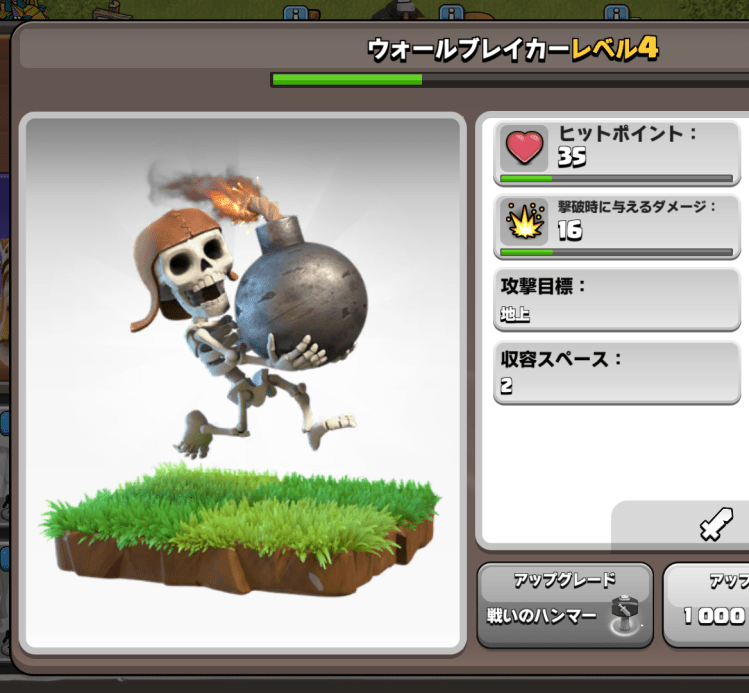
As mentioned, the units menu in particular is a favourite of mine. It helps to know what units you’re going to take in when you intend to attack your neighbours but it’s equally beneficial to understand what they can do fully to you. Take the time to read through each unit’s description. If possible see if you can do it unaided and in succession.
The path of the Chief
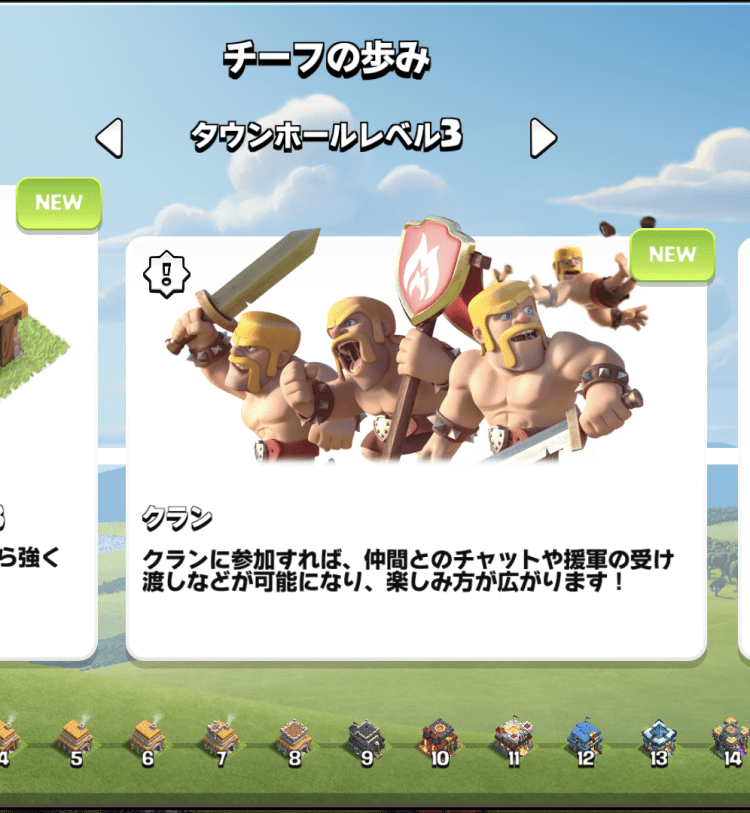
One lesser seen menu that has some interesting goals and descriptions is the path of the chief. This essentially shows every step and the caveat for that milestone in order to progress outside of the usual XP and unit level aspects of the game. Have a read through each and use your understanding of the goal to direct how you play, validating that you’ve gotten it right!
Previous Posts


Additional images
 Games & Kanji