
I had managed to go 27 fine years of life without witnessing the horror that is Mutsuとのほほん. I was recently approached by Longplay Archive, a group that archive full playthroughs of games from start to finish and share them on YouTube, in order to assist with a few Japanese games. Mutsu was the first game I was asked to work on but I feel that even though my time with it is short it will haunt me for some time. The various fish that you “control” on your adventure have one will and it is very much their own.

Platforms and Language – 1/10
Mutsu was released in 2002 exclusively for Gamecube and specifically for Japan and its surrounding regions. As such, unless you own a physically imported copy of the game and a Japanese region-locked Gamecube you will likely not be able to play this title. However, Mutsu is available on Dolphin Emulator for free and failing that you can watch the full playthrough on YouTube here
As Mutsu is exclusive to Japan it is entirely set in Japanese and cannot be set into other languages.
Usability – 6/10
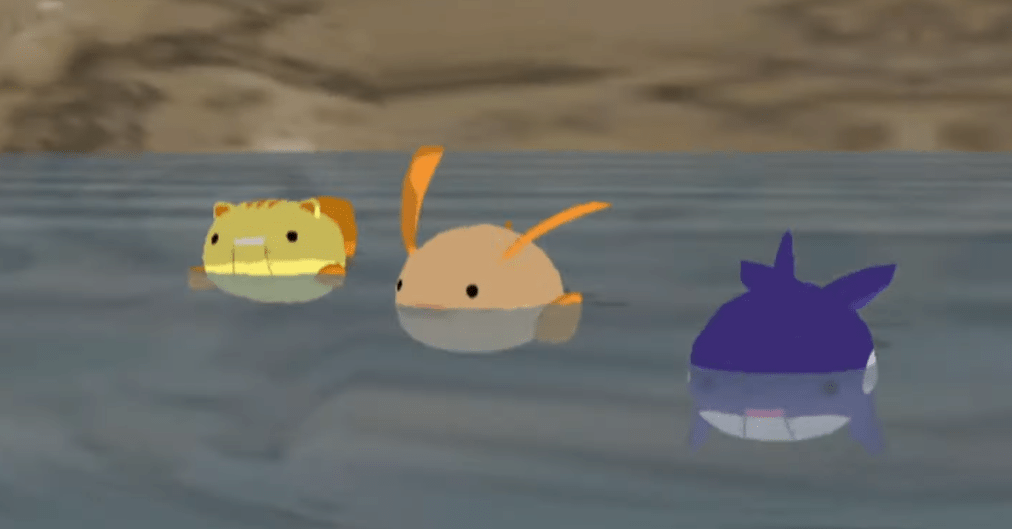
All jokes aside Mutsu is oddly charming. It’s not a pretty game but it is vibrant and comes with a lot of opportunity to interact with your Michi and other wonderfully strange characters. The setting of the game is based around 12 fish tanks, each of which has been decorated in the style of the months of the year. Each level, or tank, is fully self contained with decor matching that of the season or holidays in each month. The objective throughout is to find keys in each area that will unlock the next tank. Each Tank also holds its own shard which when collected will complete a picture of Mutsu and complete the game.

From the start of the game you will find that text entry and interaction with your fishy companions is alarmingly necessary. Each Michi that you interact with can be fed, given items to change their colour or shape, or most importantly, taught words that they can remember and recall. At random intervals your Michi will ask you to teach them a word that fits within a certain category or describes an item they have just collected. This is beneficial for forming relationships between phrases and categories of vocabulary. For the later stages of the game, the number of words that your Michi knows will be graded. In order to ensure this grade is improved you can use the radial menu to teach the Michi words at will and through this option you can choose the category yourself. It is rare in games that you are called to think of words from your existing vocabulary so this was an interesting and very useful exercise.
Dialogue wise, you will interact with between 2 and 6 characters for each stage (sometimes a few hundred times if the Michi doesn’t want to play ball). Character dialogues range from a few textboxes to interactable puzzles and challenges. The most notable challenges for me were the quizzes from the November tank and the fetch quests such as in the June Tank. These kinds of challenges force you to interact with the language and ensure you understand the task at hand. The November quizzes in particular require you to work out puns based around the Japanese language and remember and apply knowledge from other tanks meaning you will need to retain information as you play.
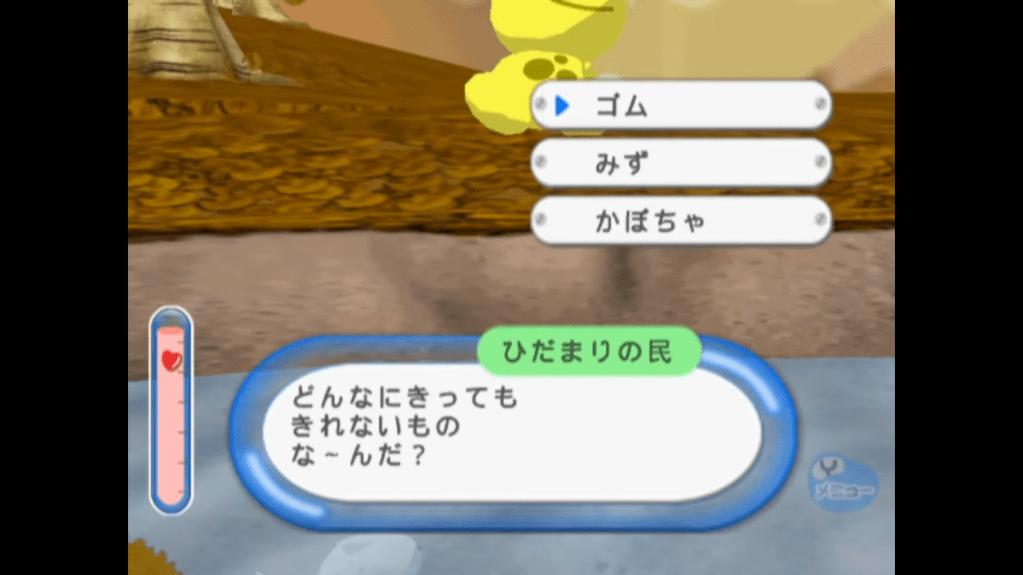
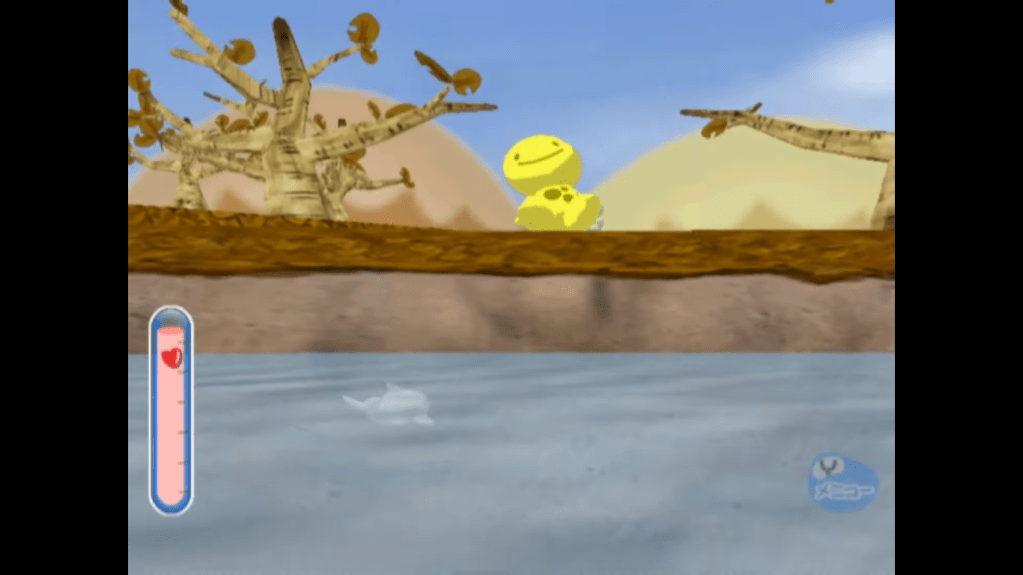
The overall presentation of the game is clean for its time. The game is approaching 20 years old now so the characters and areas aren’t perfect but this can be forgiven. The text is clearly displayed at all points in the game with the bulk of what you will read coming in the form of text boxes on a white background as above. The most abundant reading material comes from the collection menu in the home tank, here you can read descriptions of all of the items you have collected and all of the Michi’s you have found.
Mutsu is definitely a game I think that everyone should experience as it has to be one of the most unique experiences I have had in all my years of gaming. It is almost like an open world homage to Tamagotchi, you will quickly get attached to your favourite Michi, especially when you have changed it to an animal of your choosing. The manner in which you play the game will likely affect the benefit you get from the language, personally I completed the game quite quickly in one sitting and as such read a lot but didn’t learn a lot. If you were to interact with your Michi intermittently and teach it words that you learn day to day you’ll likely get more benefit. Due to the relatively low use of kanji and the frequent requirement to enter simple hiragana words, this is a good recommendation for Japanese beginners.
Challenges and Methods – 2/10
Enter your vocab
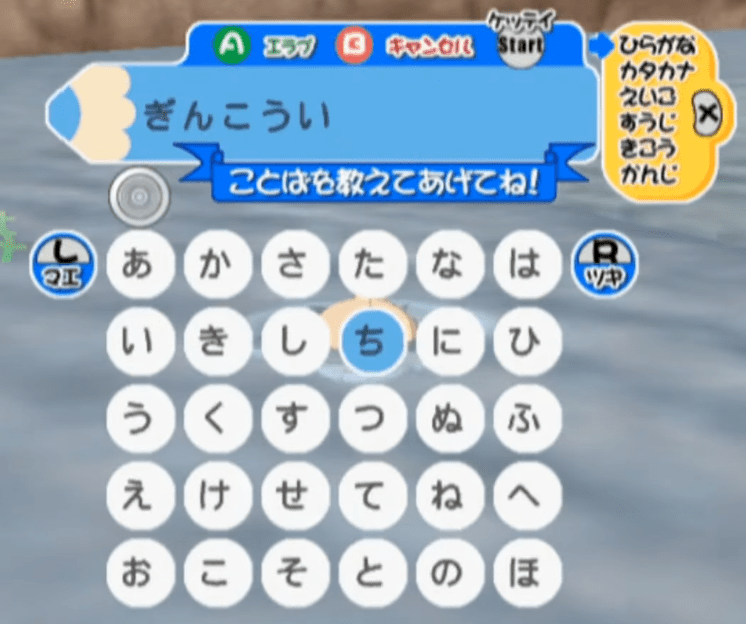
In all honesty I think the biggest challenge here is actually playing the game as it’s not that accessible but if you do happen to get your hands on it the before mentioned word learning is a good challenge to go through. The categories to choose from range from food, drink and vehicles all the way through to greetings, vocations and toys. See if you can go through and teach your Michi 10 words for each category. You’ll find that certain categories are quite easy to complete but others may need you to wrack your brains a little more. if you can’t think of any then look to fill the holes in this knowledge in order to round off your noun vocabulary.
 Games & Kanji
great longplay and review! I think this game looks absolutely charming and im interested in potentially trying to make a translated patch for it. I wouldnt even say its started yet but was wondering if you could clarify some words and phrases used in the game as they dont appear to have clear and coherent translations to english words. If you are interested please get back to me and ill send the words over. Kind regards, Alfie
LikeLike
Hi Alfie, thank you for your comment. That’s such a cool project. Of course I’d be happy to help. Send over what you need to gamesandkanji@gmail.com and I’ll get some translations over to you!
LikeLike
brilliant! I sent everything over via email! Thanks again, Alfie
LikeLike